[Eng Sub] Lidar(Light Detection and Ranging): Apple iPad Pro, iPhone 12
TL;DR
LiDAR uses lasers for mapping and is integrated in Apple devices.
Transcript
Hello everyone, welcome to Semicon Talk! Today’s topic is lidar. Lidar is a well-known technology in science for mapping of earth's surface by using laser, airplane with GPS, and sensors. And it became popular by Google self-driving car. But I will talk about lidar for mobile devices like smartphone and tablet because you can experience it ... Read More
Key Insights
- LiDAR is a technology that utilizes lasers to map surfaces, originally popularized by its use in Google's self-driving cars.
- Apple integrated LiDAR technology into their devices, starting with the iPad Pro in 2018 and later in the iPhone 12 in 2020.
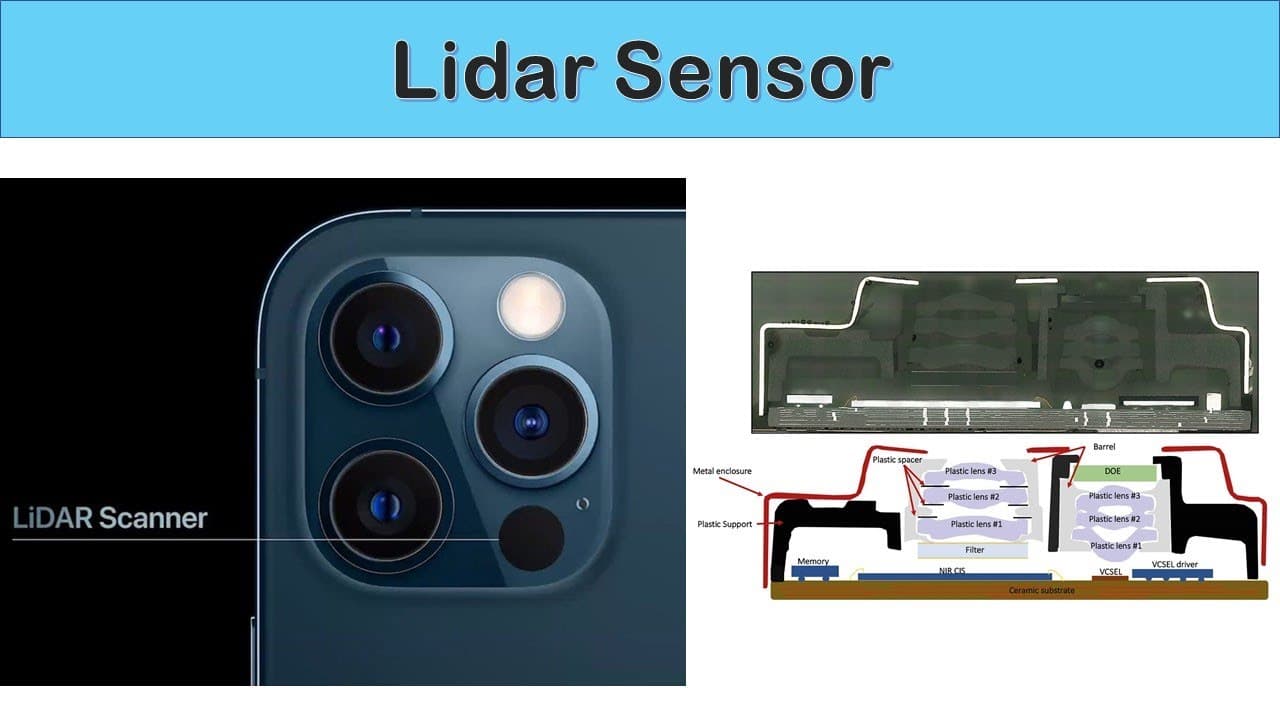
- The LiDAR module in Apple devices consists of key components such as VCSEL, DOE, and CIS, each playing a crucial role in its function.
- VCSEL, or Vertical Cavity Surface Emitting Laser, is responsible for emitting infrared light, crucial for LiDAR's operation.
- DOE, or Diffractive Optical Element, is designed to diffract infrared light into a matrix of dots, enhancing the LiDAR's scanning capability.
- The CIS, or CMOS Image Sensor, detects the infrared light reflected back from objects, allowing for accurate distance measurement.
- LiDAR technology is invisible to the naked eye as it operates using infrared light, but its effects can be observed using an infrared camera.
- LiDAR's applications extend to augmented reality, allowing users to visualize furniture placement or engage in AR gaming experiences.
Install to Summarize YouTube Videos and Get Transcripts
Explore YouTube Video Summarizer or Get YouTube Transcript Extractor
Questions & Answers
Q: What is LiDAR and how does it work?
LiDAR, or Light Detection and Ranging, is a technology that uses laser light to measure distances. It works by emitting infrared light from a laser source, which travels to a target object and reflects back. The time it takes for the light to return is measured to calculate the distance between the LiDAR system and the object.
Q: What are the main components of the LiDAR system in Apple devices?
The LiDAR system in Apple devices consists of three main components: VCSEL (Vertical Cavity Surface Emitting Laser), DOE (Diffractive Optical Element), and CIS (CMOS Image Sensor). VCSEL emits infrared light, DOE diffracts this light into patterns, and CIS detects the reflected light, allowing for accurate distance measurement and mapping.
Q: How is LiDAR used in augmented reality applications?
LiDAR enhances augmented reality (AR) applications by providing precise depth mapping and object detection. This allows users to place virtual objects in real-world environments accurately. For example, users can visualize how furniture will fit in a room or engage with interactive AR games that track physical movements and positions.
Q: Why is infrared light used in LiDAR, and can it be seen by the human eye?
Infrared light is used in LiDAR because it can provide accurate distance measurements without being visible or intrusive. It is not visible to the human eye, which means it can operate unobtrusively. However, its effects can be observed using specialized cameras that detect infrared light, such as IR cameras.
Q: What advancements did Apple make by integrating LiDAR into their devices?
By integrating LiDAR into devices like the iPad Pro and iPhone 12, Apple enhanced the capabilities of these devices in terms of depth sensing and spatial awareness. This integration allows for more advanced applications, such as improved AR experiences, enhanced photography with depth effects, and innovative uses in fitness and gaming.
Q: What role does the DOE play in the LiDAR system?
The DOE, or Diffractive Optical Element, in the LiDAR system is responsible for diffracting the emitted infrared light into a matrix of dots or patterns. This diffraction enhances the scanning ability of the LiDAR, allowing it to map surfaces more accurately and detect objects with greater precision, which is crucial for applications like AR.
Q: How does the CIS contribute to the LiDAR's functionality?
The CIS, or CMOS Image Sensor, contributes to the LiDAR's functionality by detecting the infrared light that is reflected back from target objects. This detection is essential for calculating the distance between the LiDAR system and the object, enabling precise mapping and measurement necessary for various applications, including AR and spatial analysis.
Q: What are some potential future applications of LiDAR technology?
Potential future applications of LiDAR technology include advancements in autonomous vehicles, where it can provide enhanced object detection and navigation capabilities. Additionally, LiDAR could revolutionize industries like construction, agriculture, and urban planning by offering precise mapping and analysis tools. In consumer technology, it may lead to more immersive AR and VR experiences.
Summary & Key Takeaways
-
LiDAR technology is used for mapping and measuring distances by emitting and detecting infrared light. Apple has incorporated it into their devices, starting with the iPad Pro and iPhone 12. It consists of components like VCSEL, DOE, and CIS, enabling various applications such as augmented reality and body tracking.
-
The structure of LiDAR includes VCSEL, which emits infrared light, DOE, which diffracts this light into patterns, and CIS, which detects the reflected light. This complex system allows for precise mapping and measurement, making it useful in everyday applications like AR and gaming.
-
LiDAR's operation involves emitting infrared light, which is invisible to the human eye, and measuring the time it takes for the light to reflect back from objects. This technology has practical uses in AR, enabling users to interact with digital elements in real-world environments.
Read in Other Languages (beta)
Share This Summary 📚
Summarize YouTube Videos and Get Video Transcripts with 1-Click
Try YouTube Summary with ChatGPT & Claude or YouTube Transcript Generator
Explore More Summaries from Semicon Talk 📚
![[Eng Sub] TSMC SOIC thumbnail](/_next/image?url=https%3A%2F%2Fi.ytimg.com%2Fvi%2F3pXrcWs8BqQ%2Fhqdefault.jpg&w=750&q=75)

![[Eng Sub] Wafer Sawing Process: Blade saw, Laser saw, Plasma saw thumbnail](/_next/image?url=https%3A%2F%2Fi.ytimg.com%2Fvi%2FJh4uJZR_OYs%2Fhqdefault.jpg&w=750&q=75)
![[Eng Sub] Car semiconductor technologies-2: Infotainment, Sensor, Electric car thumbnail](/_next/image?url=https%3A%2F%2Fi.ytimg.com%2Fvi%2F8YUJNtg4kBw%2Fhqdefault.jpg&w=750&q=75)
![[Eng Sub] Stealth Dicing thumbnail](/_next/image?url=https%3A%2F%2Fi.ytimg.com%2Fvi%2FMhY8RPREI_c%2Fhqdefault.jpg&w=750&q=75)

Summarize YouTube Videos and Get Video Transcripts with 1-Click
Try YouTube Summary with ChatGPT & Claude or YouTube Transcript Generator