Which Stocks Could Benefit in November 2025?
TL;DR
The bullish case for November 2025 rests on easier Federal Reserve policy, stronger-than-expected technology earnings, a reported US-China trade agreement, and historically favorable year-end momentum. The highlighted opportunities center on rare-earth supply-chain companies, AI infrastructure beneficiaries, selected earnings trades, and Meta after its sharp decline, while rising debt-funded AI spending remains a significant concern.
Transcript
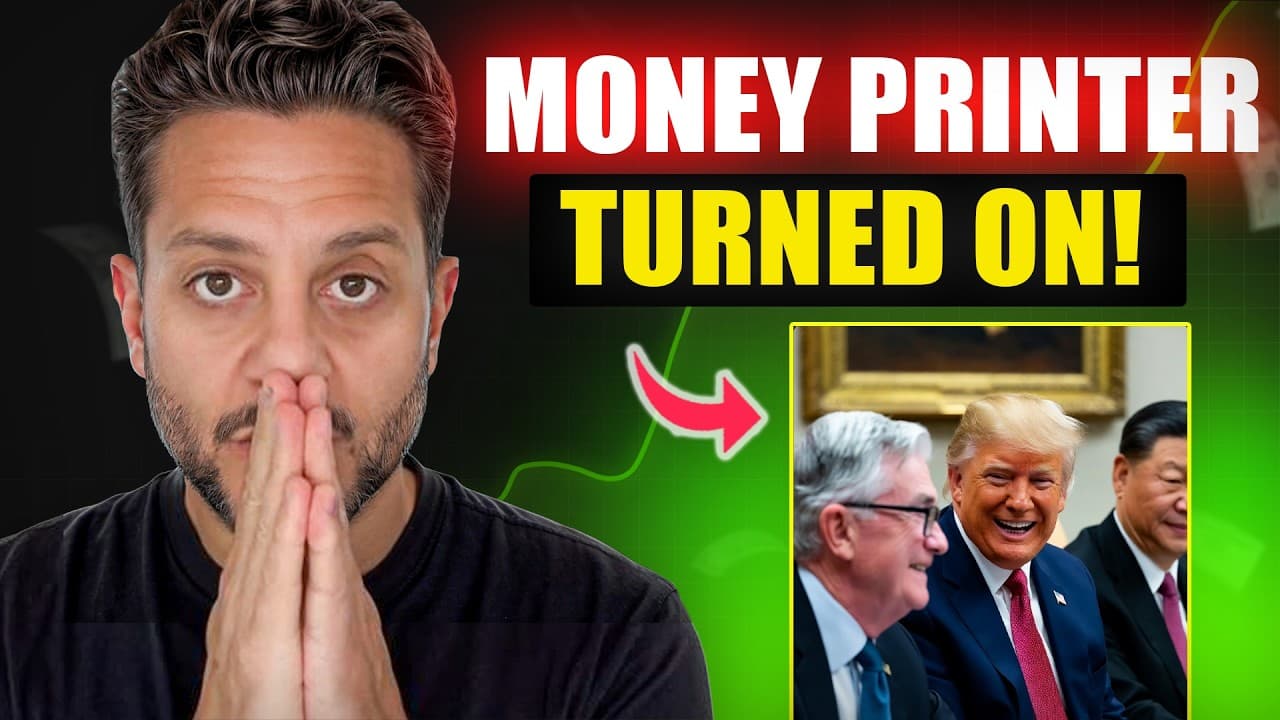
What is going on traders? The Fed just turned the money printer on last week. The China deal seems to be done as of this weekend. Tech earnings grew by almost 27% when there was an expected 21% growth. And get this, Nvidia, AMD, and Broadcom haven't even reported yet. We are also entering the best month historically for the stock market, which is N... Read More
Key Insights
- Federal Reserve policy became more supportive after a 25-basis-point rate cut, confirmation that quantitative tightening would stop in December, and an approximately $50 billion banking-system injection involving Treasuries and mortgage-backed securities.
- A December rate cut remained uncertain because Jerome Powell described it as far from a foregone conclusion. The presenter nevertheless expects another cut and interprets Powell's caution as an attempt to moderate enthusiasm after announcing both an October cut and a firm end date for quantitative tightening.
- The reported US-China agreement includes continued Chinese soybean purchases, suspended retaliatory tariffs, halted rare-earth export controls, and lower US tariffs on Chinese imports. The effective tariff on China would be 10%, with the arrangement unlikely to be revisited for another year.
- Rare-earth companies may benefit from efforts to reduce dependence on Chinese refining and supply chains. Energy Fuels and USA Rare Earth are specifically mentioned as possible opportunities while the United States, allied democracies, and India pursue alternative supply networks over the next one to two years.
- Technology-sector earnings growth reached 26.5%, exceeding the expected 21%, even before Nvidia, AMD, Broadcom, and other companies reported. Most sectors also exceeded expectations, while industrials and communication services were identified as the principal laggards.
- November and December have historically been especially strong under the conditions described. When every month from May through October was positive, the final two months were positive in all four cited occurrences, while years up at least 15% through October had only one nearly flat exception.
- AI capital spending continues because Google, Microsoft, Meta, and Amazon have strong cash flows and do not want to fall behind competitors. The spending emphasis remains on expensive infrastructure and hardware, with the application layer expected to receive greater attention later.
- Debt-funded AI investment is becoming a concern as Oracle announced a $38 billion debt offering and Meta offered $25 billion of debt, attracting $125 billion in orders. Debt avoids shareholder dilution, but the scale demonstrates how capital-intensive the AI buildout has become.
Install to Summarize YouTube Videos and Get Transcripts
Explore YouTube Video Summarizer or Get YouTube Transcript Extractor
Questions & Answers
Q: Why was the November 2025 market outlook bullish?
The bullish outlook combined several factors presented together: the Federal Reserve cut its policy rate by 25 basis points, quantitative tightening was scheduled to end in December, and approximately $50 billion entered the banking system. Technology earnings grew 26.5% against an expected 21%, a US-China agreement appeared complete, and historical momentum statistics favored November and December after a strong January-through-October period.
Q: What did the Federal Reserve announce after the FOMC meeting?
The Federal Reserve cut the federal funds rate by 25 basis points and said quantitative tightening would stop in December. The presenter also reported an approximately $50 billion banking-system injection, including about $29.5 billion in Treasuries and almost $30 billion in mortgage-backed securities. Jerome Powell cautioned that a December rate cut was far from guaranteed, although the presenter still expected one.
Q: What were the main terms of the reported US-China agreement?
The reported agreement required China to continue purchasing US soybeans, suspend its retaliatory tariffs, and stop export controls on rare earths. In return, the United States would lower tariffs on Chinese imports, leaving an effective tariff rate of 10%. The presenter said the arrangement would probably not be revisited for another year, while noting that future announcements could still change the situation.
Q: Why could rare-earth stocks benefit from the agreement?
Rare-earth stocks could benefit because the United States plans to reduce its dependence on Chinese refining capacity and supply chains. Scott Bessent was shown describing an accelerated effort over the next one to two years involving Western democracies, Asian democracies, and India. The presenter specifically identified Energy Fuels and USA Rare Earth as companies where opportunities might emerge during that effort.
Q: How strong were technology earnings in the third quarter?
Technology-sector earnings grew 26.5% in the third quarter, compared with an expected growth rate of 21%. That result arrived before Nvidia, AMD, Broadcom, and several other companies had reported. The presenter also said utilities, financials, materials, consumer discretionary, real estate, healthcare, consumer staples, and energy performed better than expected, while industrials and communication services lagged.
Q: Why were November and December expected to be favorable?
The historical case relied on strong momentum. November through April was positive 77% of the time and gained an average of 7% when positive. In the four cited cases when every month from May through October was green, November and December were also green. When January through October gained at least 15%, only one cited year failed to finish those final months positively, and it was nearly flat.
Q: Why are major technology companies increasing AI spending?
Major technology companies are increasing AI spending because they have healthy cash flows and are competing in what the presenter calls an AI arms race. Google, Microsoft, Meta, and Amazon do not want to be the first company to fall behind. They are therefore prioritizing expensive infrastructure and hardware while cash generation is strong, with the application layer expected to become a later focus.
Q: What risks come from financing AI expansion with debt?
Debt financing shows that AI infrastructure requires increasingly large amounts of capital. Oracle announced a $38 billion debt offering, while Meta offered $25 billion and attracted $125 billion in orders. Issuing debt allows highly rated companies to raise money without issuing additional shares and diluting existing shareholders, but the record scale of these offerings highlights the financial intensity of continued AI expansion.
Summary & Key Takeaways
-
The market outlook is supported by a 25-basis-point Federal Reserve rate cut, the planned end of quantitative tightening in December, and roughly $50 billion recently injected into the banking system. Although Jerome Powell said another December rate cut was not assured, the presenter expects monetary policy to remain supportive.
-
A reported US-China agreement would suspend Chinese retaliatory tariffs and rare-earth export controls, preserve Chinese soybean purchases, and reduce the effective US tariff on Chinese imports to 10%. The presenter expects the United States and its allies to accelerate domestic rare-earth refining and diversified supply chains over the next one to two years.
-
Technology earnings grew 26.5% against an expected 21%, while major companies including Nvidia, AMD, and Broadcom had not yet reported. Expanding AI infrastructure spending supports hardware and supply-chain opportunities, but record debt offerings from Oracle and Meta indicate that the buildout is becoming increasingly capital-intensive and financially risky.
Read in Other Languages (beta)
Share This Summary 📚
Summarize YouTube Videos and Get Video Transcripts with 1-Click
Try YouTube Summary with ChatGPT & Claude or YouTube Transcript Generator
Explore More Summaries from The Traveling Trader 📚






Summarize YouTube Videos and Get Video Transcripts with 1-Click
Try YouTube Summary with ChatGPT & Claude or YouTube Transcript Generator