How Escaped Slaves Overcame Their Masters
TL;DR
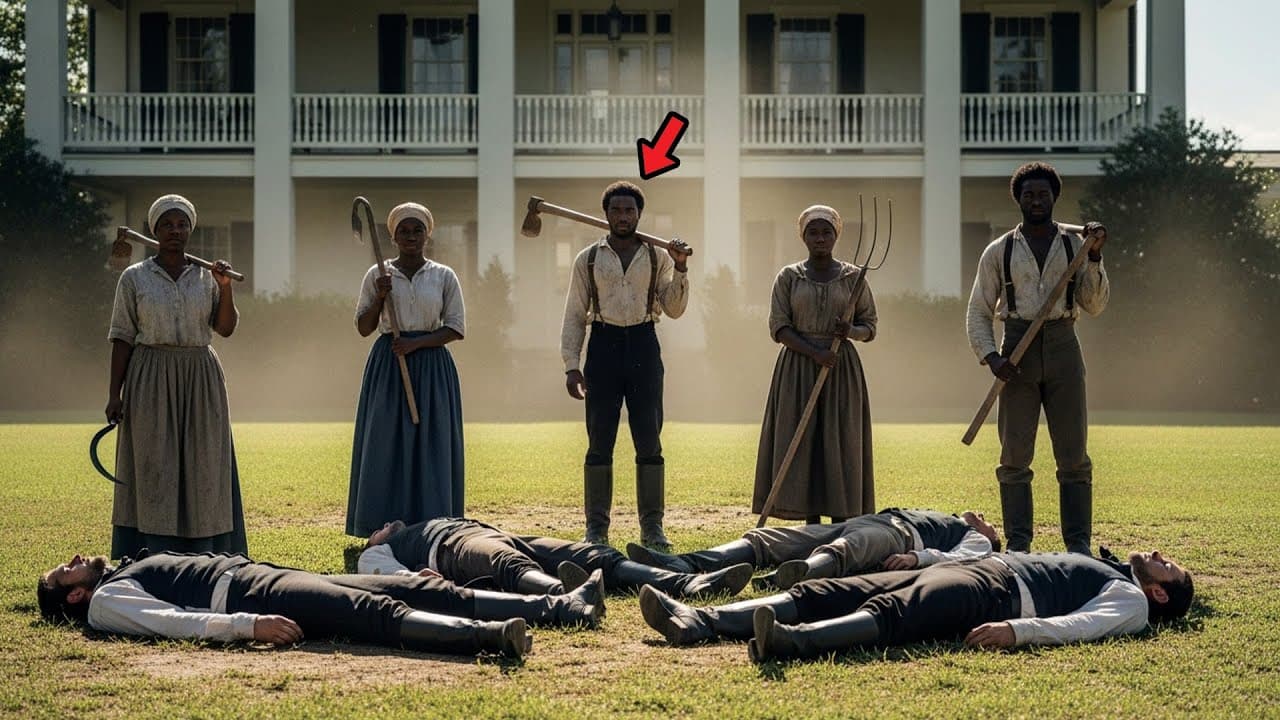
In 1859, five enslaved individuals escaped from the Harrow plantation, turning their fear into a rebellion. They executed their masters, sparking a county-wide hunt. The group questioned whether their actions were for freedom or if freedom emerged from the violence. Their journey led them to a hidden community, Cedar Ridge, where they found true freedom to live and rebuild.
Transcript
how a group of escaped slaves killed every last master who owned them. They say that on one stormy night in 1859, five runaways vanished into the woods. Isaac, Martha, Jonas, Elias, and young Nate. Folks whisper that they weren't just fleeing the Harrow plantation. They were running from a death sentence their masters had already signed for them. B... Read More
Key Insights
- In 1859, five enslaved individuals fled from the Harrow plantation, driven by a death sentence their masters had planned for them.
- The group, led by Isaac, returned to the plantation to kill their masters, challenging the belief that enslaved people wouldn't dare such actions.
- Their rebellion sparked a county-wide hunt, forcing them to question if they killed for freedom or if freedom arose from their actions.
- The group found refuge in Cedar Ridge, a hidden community where they could live without chains or masters.
- Cedar Ridge was built on the principle of no masters, no overseers, and no chains, offering a sanctuary for those fleeing oppression.
- Isaac became a strategist for community defenses, sharing his knowledge to protect Cedar Ridge from external threats.
- Martha discovered joy in teaching children, while Jonas found fulfillment in farming, building a life free from the past's violence.
- Their journey emphasized the difference between surviving and truly living, as they transitioned from escaping oppression to embracing freedom.
Install to Summarize YouTube Videos and Get Transcripts
Explore YouTube Video Summarizer or Get YouTube Transcript Extractor
Questions & Answers
Q: How did the group of escaped slaves kill their masters?
The group, led by Isaac, returned to the Harrow plantation under the cover of a stormy night. They used tools and weapons they had crafted or found to silently infiltrate the homes of their former masters. By sunrise, they had executed all their masters, an act that defied the belief that enslaved people wouldn't dare such actions. This rebellion was both a fight for survival and a statement of defiance.
Q: What motivated the group to return to the plantation?
The group was motivated by a combination of survival and the desire for freedom. They knew they faced being sold or killed, and Isaac proposed a third option: to confront their masters directly. By returning, they aimed to disrupt the system that oppressed them and to take control of their fate, rather than accepting a life of continued enslavement or death.
Q: What was the significance of Cedar Ridge for the group?
Cedar Ridge represented a sanctuary where the group could live free from the oppression and violence they had known. It was a community built on principles of equality, self-determination, and mutual support. For Isaac and his companions, Cedar Ridge offered the opportunity to rebuild their lives, contribute to a community, and experience true freedom without the fear of re-enslavement.
Q: How did the group's actions impact their sense of freedom?
The group's actions, while violent, were a necessary step toward their freedom. By confronting and killing their masters, they broke the immediate chains of enslavement. However, true freedom came with their integration into Cedar Ridge, where they could live without fear of pursuit, contribute meaningfully to a community, and redefine their identities beyond survival.
Q: What role did Isaac play in the group's journey?
Isaac was the leader and strategist of the group. His knowledge of the plantation's operations and his ability to plan and execute their rebellion were crucial to their initial escape. At Cedar Ridge, Isaac continued to play a vital role by applying his skills to community defenses, ensuring the settlement's safety and sustainability against potential threats.
Q: Why did the group question their motives for killing the masters?
The group questioned whether their actions were purely for survival or if they were a means to achieve freedom. This introspection was prompted by the violent nature of their rebellion and the subsequent county-wide hunt that it sparked. They grappled with the moral implications of their actions and whether freedom could truly be attained through violence.
Q: How did the group's journey end at Cedar Ridge?
After escaping the plantation and surviving a pursuit, the group found refuge in Cedar Ridge, a hidden community in the mountains. Here, they were welcomed and given the opportunity to live without the threat of enslavement. Cedar Ridge allowed them to integrate, contribute their skills, and experience a life of autonomy and peace, marking the end of their tumultuous journey.
Q: What challenges did the group face after escaping the plantation?
After escaping, the group faced a county-wide hunt, betrayal from within, and the constant threat of recapture. They had to navigate hostile environments, evade militia patrols, and confront internal conflicts about their actions and motives. Despite these challenges, they persevered and eventually found sanctuary in Cedar Ridge, where they could begin to heal and rebuild their lives.
Summary & Key Takeaways
-
In 1859, five enslaved individuals escaped the Harrow plantation, turning their fear into rebellion by killing their masters. This act sparked a county-wide hunt, leading them to question whether their actions were for freedom or if freedom emerged from their violence. Their journey ended at Cedar Ridge, a hidden community where they found true freedom to live and rebuild.
-
The group, led by Isaac, defied expectations by returning to the plantation to execute their masters, challenging the belief that enslaved people wouldn't dare such actions. This rebellion forced them into hiding and reflection on their motives and the nature of freedom. Ultimately, they found refuge and purpose in Cedar Ridge, a community built on principles of equality and self-determination.
-
Cedar Ridge offered a sanctuary for those fleeing oppression, built on the principles of no masters, no overseers, and no chains. Isaac and his group integrated into this community, contributing their skills and finding new purposes. Their story highlights the transition from mere survival to embracing the freedom to live, work, and thrive without fear.
Read in Other Languages (beta)
Share This Summary 📚
Summarize YouTube Videos and Get Video Transcripts with 1-Click
Try YouTube Summary with ChatGPT & Claude or YouTube Transcript Generator