Inside YC's AI Playbook: How Do You Build an AI-Driven Organization?
TL;DR
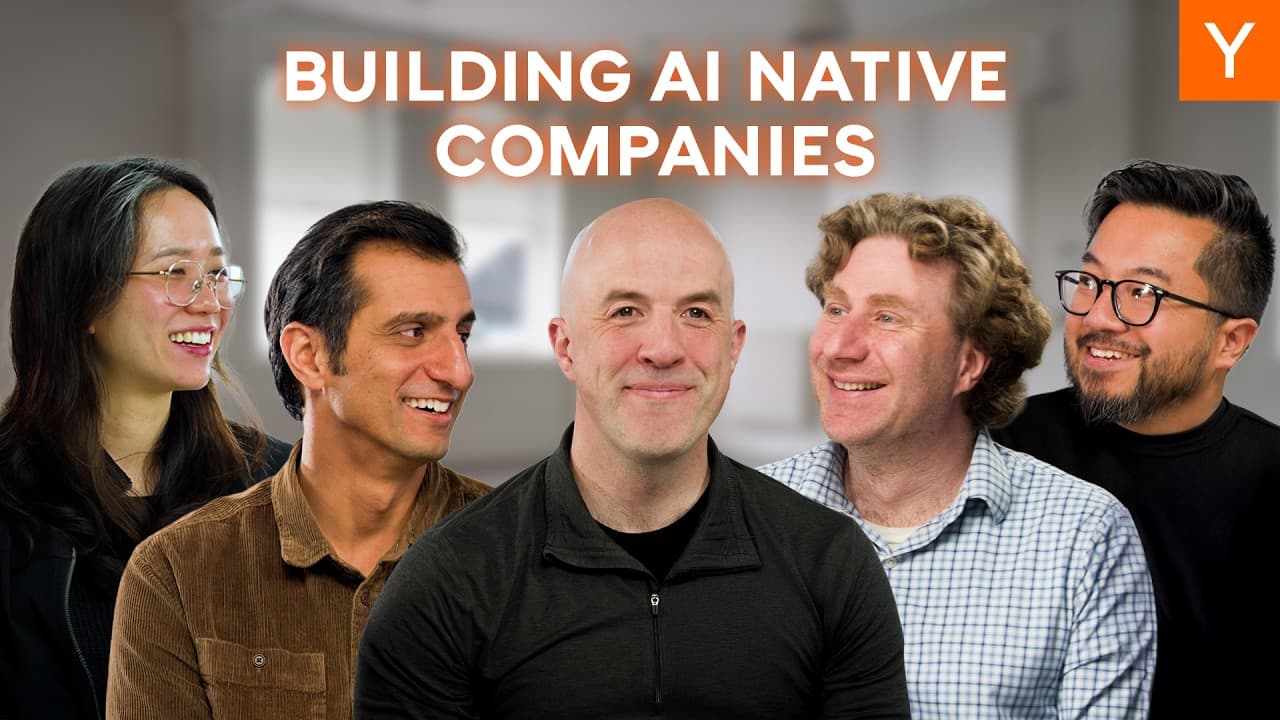
Build an AI-driven organization by making AI a foundational infrastructure layer, recording work artifacts in a shared organizational brain, and giving employees control over tools that encode their workflows. At YC, an internal project that began with a few engineers and the finance team grew into general agent infrastructure used across the organization. Read on to see how shared knowledge, trust, and user empowerment support this transformation.
Transcript
How do you build super intelligence inside a company? >> Part of the key thing is not to just use AI as a copilot. This is the the thing where you use it as the building layer for everything. And you need to start recording all the artifacts. >> It's like a shared organizational brain. It's like the closest thing to us being able to like connect ou... Read More
Key Insights
- AI should be integrated at the foundational level, not just as a supplementary tool.
- A shared organizational brain enhances collaboration and knowledge sharing.
- AI empowers users by shifting control from developers to end-users.
- Transparency and trust are crucial for effective AI deployment in organizations.
- AI can dramatically increase the complexity and scale of questions asked within an organization.
- Building an AI-native organization requires openness and willingness to invest in AI infrastructure.
- AI can eliminate drudgery and enhance individual empowerment.
- Organizations must choose between centralized control and decentralized empowerment with AI.
Install to Summarize YouTube Videos and Get Transcripts
Explore YouTube Video Summarizer or Get YouTube Transcript Extractor
Questions & Answers
Q: How do you build an AI-driven organization?
Use AI as the building layer for the organization rather than merely as a copilot. Record work artifacts in a shared knowledge base, give employees access to AI tools, and create a high-trust environment in which people can use the organization’s collective skills and instincts.
Q: What is YC's internal AI playbook?
YC builds and uses internally many of the same AI tools that it helps its startups develop and adopt. Its approach grew from YC-specific agents into an infrastructure layer that lets engineers, partners, and other teams apply AI across internal workflows.
Q: What is a shared organizational brain?
It is a shared knowledge base created by recording an organization’s work artifacts and making them available through AI. The goal is to help everyone improve by drawing on the collective skills and instincts of the people they work with.
Q: Why shouldn't a company use AI only as a copilot?
The transcript argues that AI becomes more powerful when it serves as the building layer for everything. That foundational approach supports shared knowledge, reusable agent infrastructure, and AI-enabled workflows across the organization.
Q: How did YC begin building its internal AI infrastructure?
Pete Kumman and a few engineers began the project about a year before the discussion, initially working with YC’s finance team. The project later snowballed into a broader infrastructure layer supporting many internal uses of AI.
Q: How did YC apply AI to finance workflows?
YC started with tools for workflows such as booking journal entries and logging priced rounds. The team first used LLMs to write SQL queries, enabling nontechnical finance staff with no engineering background to ask real questions.
Q: How can AI give nontechnical employees control over their workflows?
YC explored agents that let finance staff encode complicated workflows in English prompts rather than Ruby. This removed software engineers from a repeated loop of interpreting finance processes, building purpose-specific software, and handing it back for further revisions.
Q: Why are trust and transparency important in an AI-native organization?
The existing page insights identify openness, transparency, and a high-trust, egalitarian environment as crucial to AI deployment. These conditions support shared knowledge and decentralized employee access to AI tools, allowing people throughout the organization to contribute and use collective insights.
Summary & Key Takeaways
-
Integrating AI as a foundational layer in organizations can transform them into super-intelligent entities. This involves creating a shared knowledge base and empowering employees with AI tools. A high-trust, egalitarian environment is crucial for this transformation.
-
AI integration can dramatically increase the complexity and scale of questions asked, fostering innovation and efficiency. Organizations must choose between centralized control and decentralized empowerment to harness AI's full potential.
-
AI empowers individuals by shifting control from developers to end-users, enhancing productivity and eliminating drudgery. Building an AI-native organization requires openness, transparency, and a willingness to invest in AI infrastructure.
Read in Other Languages (beta)
Share This Summary 📚
Summarize YouTube Videos and Get Video Transcripts with 1-Click
Try YouTube Summary with ChatGPT & Claude or YouTube Transcript Generator
Explore More Summaries from Y Combinator 📚






Summarize YouTube Videos and Get Video Transcripts with 1-Click
Try YouTube Summary with ChatGPT & Claude or YouTube Transcript Generator