How Can Emotional Healing Change Productivity?
TL;DR
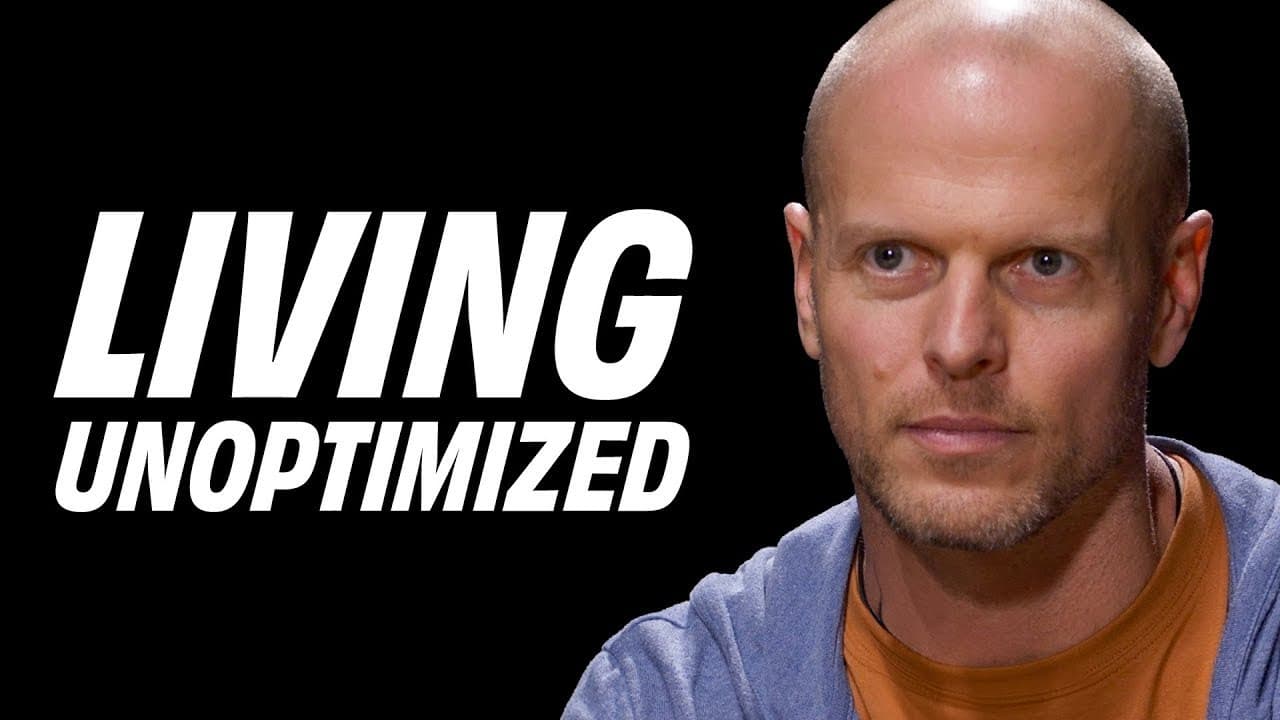
Emotional healing may require addressing the underlying trauma behind many seemingly separate problems, rather than repeatedly managing individual symptoms. Tim Ferriss describes learning to combine analytical thinking with feeling, guided therapy, and greater emotional sensitivity, while recognizing that the productivity tools that helped him succeed also carried personal costs and could not resolve every part of his life.
Transcript
I am now a connoisseur of on optimizing Tim Ferris the king of self-optimization going from thinking to thinking and feeling there are compromises like in terms of productivity it's falling through the floor we're brought to you today by Roca unlock 20 off your order with the code richroll roca.com hear it thank you for doing this I've been looking... Read More
Key Insights
- Tim Ferriss describes major depressive episodes as a recurring feature of his life, with genetic analysis indicating predispositions toward depressive and bipolar disorders. These challenges motivated him to explore different therapeutic modalities, particularly during the fifteen years preceding the conversation.
- The silent meditation retreat became unusually intense because Ferriss combined six days of fasting, six to ten daily hours of meditation, and gradually increased psilocybin doses. He says these factors compounded one another and explicitly advises people not to recreate the experiment.
- Childhood sexual abuse became impossible for Ferriss to compartmentalize during the retreat. Memories replayed during every waking moment, producing fear that he might not function normally afterward and prompting him to seek private guidance from retreat leader and clinical psychologist Jack Kornfield.
- Memory requires careful interpretation because present-day realities and recollections can be partly constructed. Ferriss acknowledges the risks surrounding claims of repressed memory, while saying that corroborating details made the childhood abuse clear enough for him to address directly.
- Many apparently separate problems can be symptoms of one underlying wound. Ferriss realized that the seventeen issues he had tried to rank and solve independently were probably connected to childhood abuse, making symptom-by-symptom problem solving resemble an endless game of whack-a-mole.
- Emotional suppression can make analytical control feel safer than experiencing difficult feelings. Ferriss says he learned to treat emotion as a liability and developed a harsh inner critic that shut down certain responses, leaving important emotional sensitivities unavailable in adult life.
- Analytical thinking remains valuable even when it cannot produce emotional healing. Ferriss credits his established toolkit with helping him write and launch books, build a podcast, and invest, but he also recognizes collateral damage and the tendency to apply analysis indiscriminately.
- Personal growth can involve adding emotional capacities without discarding intellectual strengths. Ferriss compares analytical thinking to a familiar jacket that can be removed, stored, and worn again, allowing him to experiment with other ways of experiencing life while retaining a proven professional toolkit.
Install to Summarize YouTube Videos and Get Transcripts
Explore YouTube Video Summarizer or Get YouTube Transcript Extractor
Questions & Answers
Q: How did Tim Ferriss's meditation retreat affect his mental health?
The retreat brought previously compartmentalized childhood sexual abuse into Ferriss's awareness with overwhelming intensity. He experienced the memories as a continuous loop during every waking moment and feared that he might not be able to function after leaving. A private conversation with retreat leader Jack Kornfield helped him navigate the immediate crisis, after which he paused other priorities and began examining the trauma through multiple therapeutic approaches.
Q: Why does Tim Ferriss warn against copying his retreat experiment?
Ferriss did not simply attend an extended silent meditation retreat. He intensified the experience by fasting for six days before it, meditating for roughly six to ten hours per day, and beginning with microdoses of psilocybin before gradually increasing them. He believes these factors compounded one another and contributed to a full psychological tailspin. He explicitly says that he would not recommend this combination to anyone.
Q: What does moving from thinking to thinking and feeling mean?
Moving from thinking to thinking and feeling means retaining the capacity for careful analysis while restoring emotional experiences that were previously suppressed. Ferriss does not describe analytical thought as inherently harmful. Instead, he sees healing as expanding his available responses, so intellectual problem solving is no longer the only tool applied to trauma, relationships, sadness, happiness, and other parts of life.
Q: How can one underlying trauma create many different problems?
An underlying trauma can produce multiple symptoms that appear unrelated when examined separately. Ferriss says he had divided his difficulties into seventeen problems, ranked them by negative impact, and tried to address them individually. Once he confronted the childhood abuse, he concluded that many of those difficulties were probably connected. Treating only the outward symptoms had therefore resembled whack-a-mole rather than producing a curative result.
Q: Why can analytical thinking become limiting during emotional healing?
Analytical thinking can become limiting when it separates connected symptoms, prioritizes control, and treats emotion as a liability. Ferriss describes being comfortable with spreadsheets, ranking problems, and dividing complex situations into manageable pieces. Those methods supported substantial professional work, but they could not fully address the shared emotional source of his difficulties. Healing required him to experience feelings that analysis and his inner critic had helped suppress.
Q: Did Tim Ferriss reject productivity and self-optimization?
Ferriss does not reject the analytical and productivity-oriented toolkit that helped him write and launch books, build a podcast, and invest. He recognizes that it worked well in many areas while also producing side effects and collateral damage. His goal is to stop treating that toolkit as the answer to every problem, particularly when emotional awareness and trauma-focused work are more relevant than optimization.
Q: How did Tim Ferriss approach memories of childhood abuse?
Ferriss approached the memories cautiously because he believes recollection and present-day reality can be partly constructed, making claims about repressed memory vulnerable to error. In his case, he says there were details he could corroborate, which made the abuse clear to him. He had previously acknowledged it and set it aside, but the retreat made continued compartmentalization impossible and prompted sustained therapeutic investigation.
Q: What role did Jack Kornfield play during the retreat?
Jack Kornfield provided crucial support when Ferriss feared he would be unable to navigate ordinary life after the retreat. Ferriss arranged a private conversation despite the retreat's general silence and described the continuous traumatic memories he was experiencing. Kornfield's experience as a meditation teacher and clinical psychologist gave him an eclectic set of tools. Ferriss says he shudders to think what might have happened without that intervention.
Summary & Key Takeaways
-
Tim Ferriss describes a long history of major depressive episodes and a predisposition toward depressive and bipolar disorders. A particularly intense silent meditation retreat brought childhood sexual abuse memories into constant awareness, forcing him to pause his usual activities and seek help through conversations with experienced practitioners, therapists, and multiple therapeutic approaches.
-
The retreat combined prolonged meditation with six days of fasting and gradually increased psilocybin use. Ferriss says these compounding factors pushed him into a severe tailspin, and he explicitly warns others against repeating the experiment. Guidance from retreat leader and clinical psychologist Jack Kornfield helped him consider how to function afterward.
-
Ferriss reframes his development as moving from thinking alone toward thinking and feeling together. His analytical toolkit remains useful for writing, podcasting, investing, and launching books, but it can treat related symptoms as separate problems. Healing involves restoring emotional sensitivities suppressed during childhood without abandoning the intellectual abilities that supported his career.
Read in Other Languages (beta)
Share This Summary 📚
Summarize YouTube Videos and Get Video Transcripts with 1-Click
Try YouTube Summary with ChatGPT & Claude or YouTube Transcript Generator
Explore More Summaries from Rich Roll 📚

Summarize YouTube Videos and Get Video Transcripts with 1-Click
Try YouTube Summary with ChatGPT & Claude or YouTube Transcript Generator