Can AI Accurately Simulate Human Biology?
TL;DR
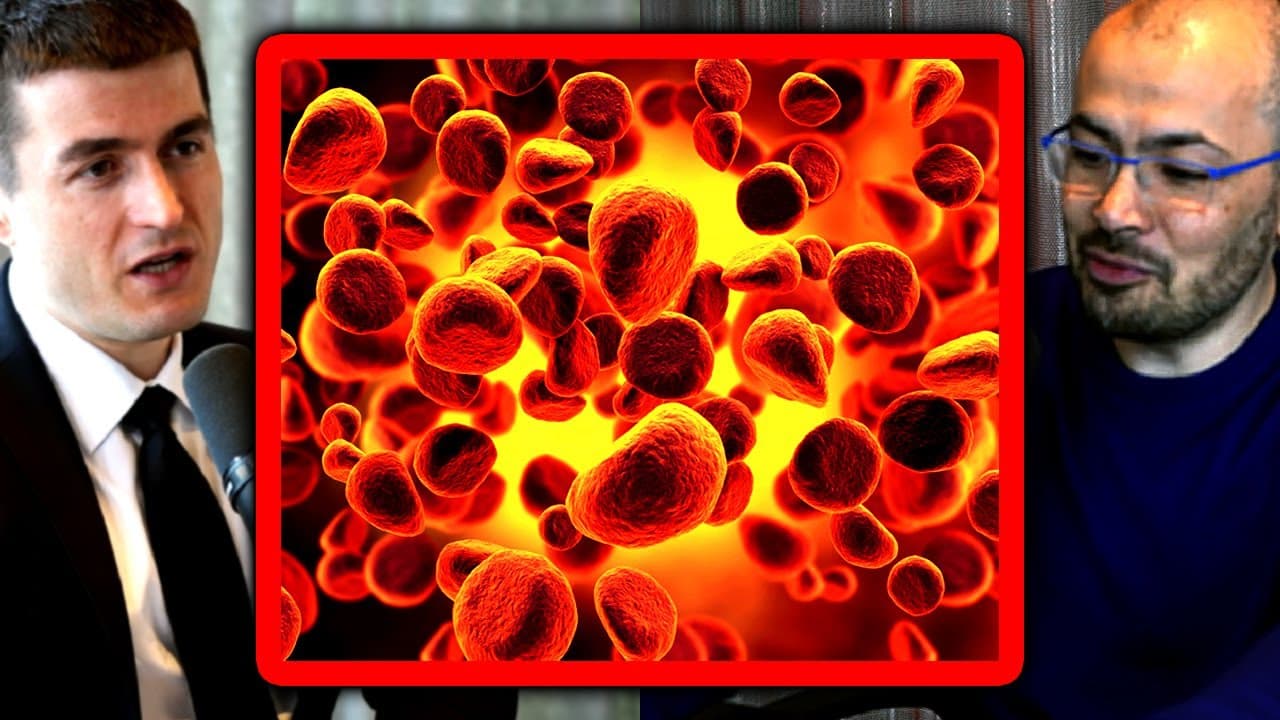
Yes, AI has the potential to simulate complex biological systems, including human biology, revolutionizing our understanding of diseases and drug discovery. While Alpha Fold achieved protein structure prediction, future advancements aim to model protein interactions and create virtual cells, allowing for extensive in silico experimentation to enhance medical research.
Transcript
if we return to the big ambitious dream of alpha fold that may be the early steps on a very long journey in um in biology do you think the same kind of approach can use to predict the structure and function of more complex biological systems so multi-protein interaction and then i mean you can go out from there yeah just simulating bigger and bigge... Read More
Key Insights
- 🌥️ Alpha Fold's success in protein structure prediction is just the beginning of a larger effort to apply AI to biology.
- 🏛️ The ultimate goal is to build virtual cells, enabling extensive experimentation and revolutionizing drug discovery and disease understanding.
- 🏛️ Collaboration between AI and biology experts is crucial in building the necessary computational methods and understanding the complexity of biological systems.
- 🎙️ More videos with Demis Hassabis:
Install to Summarize YouTube Videos and Get Transcripts
Explore YouTube Video Summarizer or Get YouTube Transcript Extractor
Questions & Answers
Q: How does Alpha Fold contribute to our understanding of biology?
Alpha Fold has proven that computational methods, particularly AI, can solve complex biological problems like protein structure prediction. This breakthrough paves the way for further advancements in understanding protein interactions and ligand binding.
Q: What is the long-term vision for AI in biology?
The long-term vision is to simulate more complex biological systems, such as multi-protein interactions and ultimately virtual cells. This would revolutionize biology and disease discovery by allowing for extensive experimentation and prediction of function and evolution.
Q: How could virtual cells benefit drug discovery?
Virtual cells would allow researchers to conduct numerous experiments in silico, significantly speeding up the drug discovery process. By simulating a cell's behavior and testing drug candidates virtually, the time needed to develop a new drug could potentially be reduced by an order of magnitude.
Q: Why is AI considered the perfect tool for understanding biology?
Biology is messy, emergent, dynamic, and complex, making it difficult to describe using traditional mathematical models. AI's ability to learn and simulate complex systems is well-suited for the intricacies of biology, where understanding the basic building blocks and running simulations is key.
Summary & Key Takeaways
-
Alpha Fold has successfully tackled the problem of protein structure prediction, but biology is dynamic and requires further advancements in AI to understand protein-protein interactions, protein-ligand binding, and pathways.
-
The ultimate goal is to create a virtual simulation of a cell, which would greatly accelerate drug discovery and understanding of diseases by allowing for experimentation in silico before validating in the lab.
-
The collaboration between experts in AI and biology, such as Paul Nurse and the Quick Institute, is paving the way for building a strong foundation of knowledge and computational methods to achieve the dream of virtual cells.
Read in Other Languages (beta)
Share This Summary 📚
Summarize YouTube Videos and Get Video Transcripts with 1-Click
Try YouTube Summary with ChatGPT & Claude or YouTube Transcript Generator
Explore More Summaries from Lex Clips 📚



Summarize YouTube Videos and Get Video Transcripts with 1-Click
Try YouTube Summary with ChatGPT & Claude or YouTube Transcript Generator