Why Anti-Business Billionaires Like Steve Jobs, James Dyson, and Yvon Chouinard Refuse to Sell
TL;DR
Anti-business billionaires refuse to sell because they see their companies as lifelong creative missions or family heirlooms, not merely financial assets. James Dyson’s attachment grew from 14 years of vacuum development, 5,127 prototypes, and earlier losses of control over his inventions. Steve Jobs, Yvon Chouinard, and Michael Dell similarly illustrate uncompromising commitment, although such intensity can strain family life. Read on to explore its benefits and costs.
Transcript
They're like, "Would you be interested in selling your company?" The response was, "Fuck you. This is a family heirloom." Okay. So, what we're talking about today is Yeah. basically I don't listen to any business podcast other than Founders. It's the only business podcast I listen to. I listen to Founders and I listen to MMA and true crime. That's ... Read More
Key Insights
- High disagreeableness is a defining trait of the founders discussed because they refuse to accept conventional limits, outside pressure, or mediocre products. Instead of bending to prevailing expectations, they attempt to make the world conform to their standards and remain committed when others recommend quitting.
- James Dyson treats Dyson as a family heirloom rather than an asset for sale. When approached about selling, his reported response rejected the proposal outright, showing that continued ownership, invention, and generational stewardship mattered more to him than receiving another large financial payout.
- Intrinsic motivation is central to anti-business billionaires because additional wealth cannot easily change their behavior. Dyson and Steve Jobs are portrayed as people who kept building because they loved the work, not because they needed more money or were waiting for a sufficiently attractive exit offer.
- Product dissatisfaction can generate long-term invention when a founder refuses to normalize poor performance. Dyson questioned why vacuum cleaners used bags that clogged, then spent 14 years and built 5,127 prototypes before producing a cyclonic vacuum that met his demanding standards.
- Retention of control is a lesson founders may learn through emotional pain. Dyson's earlier inventions were taken from him after he failed to preserve control of the companies involved, so he corrected that vulnerability in his later company by maintaining complete ownership.
- A founder's company can become a lifelong commitment rather than one project among many. Michael Dell reportedly described Dell as his first and last company and said he would care about it after death, illustrating attachment that persists beyond ordinary career or financial calculations.
- Extreme professional intensity can impose serious family costs. Steve Jobs reportedly devoted so much time to Apple that, while dying, he wanted his biography to help his children understand who he was and what mattered to him, revealing the personal consequences of his priorities.
- Disagreeableness and healthy family relationships are not necessarily mutually exclusive. Dyson reportedly remained married to the same wife, maintained strong relationships with his children, and had some children working inside the company, suggesting that demanding professional standards do not automatically require family estrangement.
Install to Summarize YouTube Videos and Get Transcripts
Explore YouTube Video Summarizer or Get YouTube Transcript Extractor
Questions & Answers
Q: Why do anti-business billionaires refuse to sell their companies?
They are portrayed as working for invention, control, identity, and purpose rather than another financial payout. James Dyson reportedly called Dyson a family heirloom and wanted to keep owning it, while Steve Jobs is presented as someone no offer could have persuaded to stop working on Apple.
Q: What is an anti-business billionaire?
An anti-business billionaire is a founder who resists the conventional goal of building a company for an eventual sale. Such founders remain devoted to one enterprise, retain control, demand exceptional product quality, and treat the company as a lifelong responsibility or creative project.
Q: Why does James Dyson consider Dyson a family heirloom?
Dyson wants to continue inventing, retain ownership, and potentially pass the company to the next generation. When investors approached him about selling, his reported response was an emphatic rejection because he viewed the company as a family heirloom.
Q: How did James Dyson’s persistence shape his vacuum business?
Dyson questioned why vacuum cleaners relied on bags that clogged and pursued a cyclonic alternative. He spent 14 years developing it and produced 5,127 prototypes before reaching a design that met his standards.
Q: Why was retaining control important to James Dyson?
Earlier inventions were taken from Dyson after he failed to preserve control of the companies involved. He responded to those painful experiences by maintaining complete ownership of Dyson, allowing him to protect its products, standards, and long-term direction.
Q: What does high disagreeableness mean for founders like Steve Jobs, James Dyson, and Yvon Chouinard?
It means refusing to accept conventional limits, outside pressure, or compromises that weaken the product. Steve Jobs, James Dyson, and Yvon Chouinard are described as founders who tried to make the world conform to their standards rather than bending to prevailing expectations.
Q: How does Michael Dell illustrate lifelong commitment to a company?
Michael Dell reportedly called Dell his first and last company while taking it private despite pressure to give up and start something else. He also said he would care about the company after his death, showing an attachment beyond ordinary financial calculations.
Q: Can uncompromising founders maintain healthy family relationships?
The examples suggest that professional intensity does not inevitably cause family estrangement. Steve Jobs’s devotion to Apple reportedly cost him substantial time with his children, while James Dyson remained married to the same wife and maintained strong relationships with his children, some of whom worked at Dyson.
Summary & Key Takeaways
-
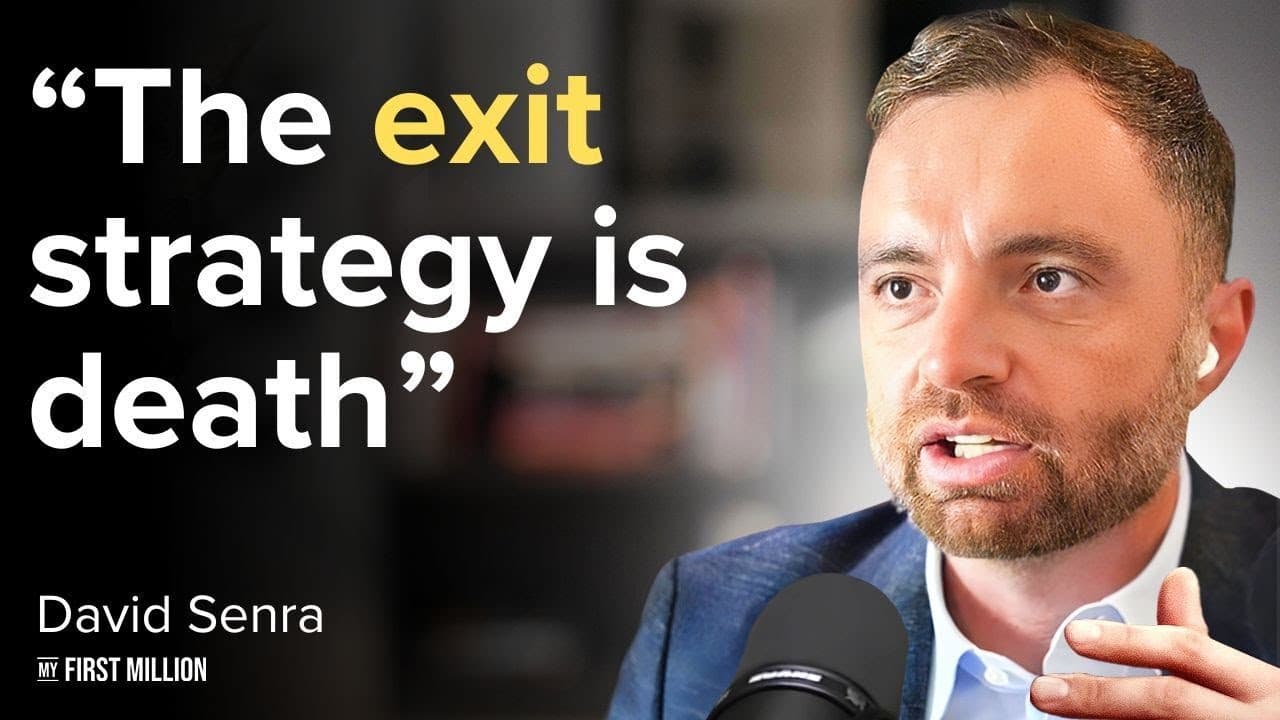
David Senra describes anti-business billionaires as founders who resist conventional financial logic. Rather than optimizing for a sale, they remain devoted to one company, insist on unusually high product standards, retain control, and continue working because the enterprise expresses their identity, values, and preferred way of shaping the world around them.
-
James Dyson exemplifies this pattern through persistence and ownership. He spent 14 years developing a cyclonic vacuum, produced 5,127 prototypes, and refused to accept bag-based designs that clogged. Earlier experiences of losing control over inventions influenced his determination to own his company completely and treat it as a family heirloom.
-
High disagreeableness can sustain ambitious work, but it also carries personal risks. Steve Jobs sacrificed substantial family time to Apple, while Dyson reportedly maintained strong relationships with his wife and children. The discussion therefore distinguishes uncompromising standards from destructive behavior and asks whether founders can remain demanding while treating loved ones well.
Read in Other Languages (beta)
Share This Summary 📚
Summarize YouTube Videos and Get Video Transcripts with 1-Click
Try YouTube Summary with ChatGPT & Claude or YouTube Transcript Generator
Explore More Summaries from My First Million 📚


Summarize YouTube Videos and Get Video Transcripts with 1-Click
Try YouTube Summary with ChatGPT & Claude or YouTube Transcript Generator