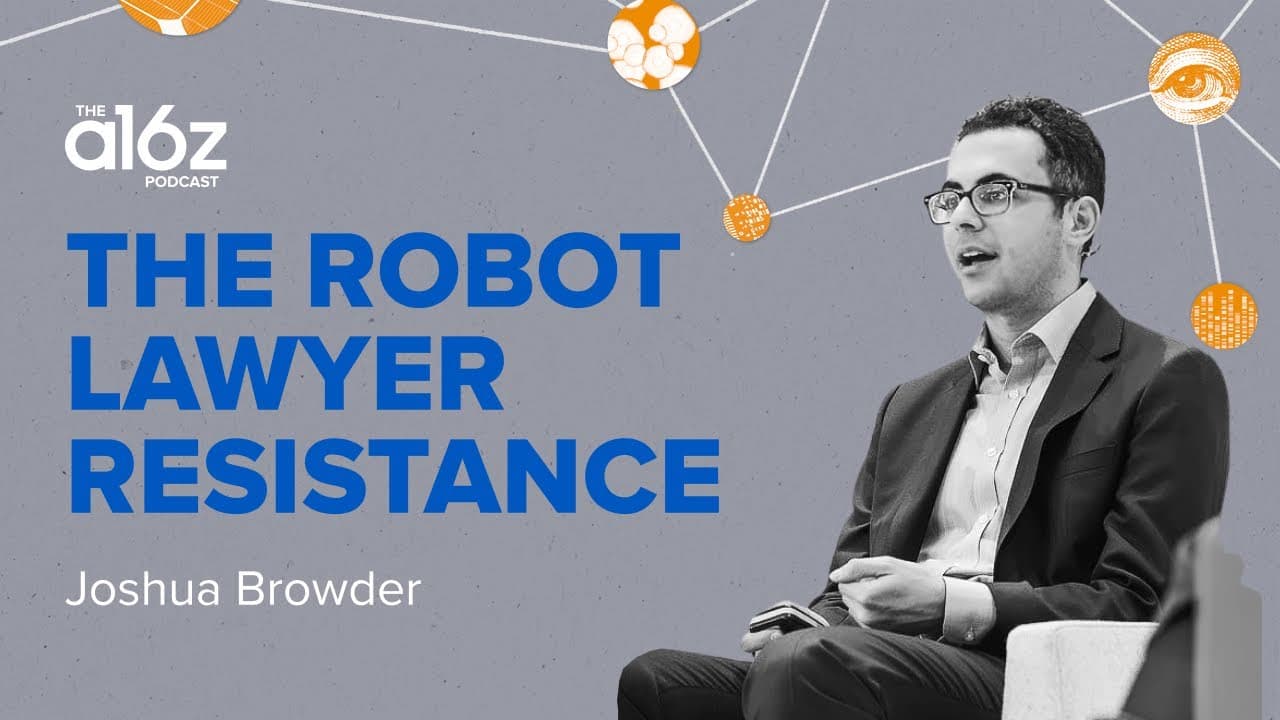
The Robot Lawyer Resistance with Joshua Browder of DoNotPay
TL;DR
Joshua Browder's company DoNotPay uses technology to help consumers fight corporations, beat bureaucracy, and sue at the press of a button.
Transcript
I imagine a world where you didn't even know that something happened robot lawyers were fighting for you in the background and almost immediately they get you the refund or something back today we're talking about the fascinating intersection of Law and Technology so the law is a set of rules that a group of people agree upon to regulate a specific... Read More
Key Insights
- 🗯️ DoNotPay aims to empower consumers by using technology to fight for their rights and provide easy access to legal assistance.
- 😮 The legal industry is traditionally protectionist, but the rise of technology is challenging established practices and processes.
- 👨⚖️ AI has the potential to revolutionize the legal industry by automating repetitive tasks, improving access to justice, and reducing costs for consumers.
- 🗯️ While some legal areas may still require human intervention, technology can greatly assist in consumer rights cases and make the legal process more efficient and accessible.
Install to Summarize YouTube Videos and Get Transcripts
Explore YouTube Video Summarizer or Get YouTube Transcript Extractor
Questions & Answers
Q: How did DoNotPay originate?
Joshua Browder started the company after experiencing numerous parking tickets and realizing the need for an automated solution to contest fines.
Q: What are some examples of the different use cases covered by DoNotPay?
Some examples include fighting parking tickets, canceling subscriptions, disputing credit reports, and negotiating refunds from companies.
Q: What are the potential benefits of using AI in the legal industry?
AI can automate processes, provide instant responses, and help consumers fight for their rights more efficiently. It can also lower costs and provide access to legal assistance for individuals who can't afford traditional legal services.
Q: How has the legal industry responded to DoNotPay?
Some lawyers and bar associations have pushed back against the company, raising concerns about unauthorized practice of law. However, many lawyers are supportive of using technology to help consumers with consumer rights issues.
Summary
In this video, Joshua Browder, the founder of DoNotPay, discusses the intersection of law and technology. DoNotPay is a platform that helps consumers fight corporations, beat bureaucracy, and sue anyone at the press of a button. Browder shares the origin of DoNotPay and how it started with helping people fight parking tickets. He explains the various applications of DoNotPay, including automating free raffle ticket entries, handling egg donor rights, and filling out lost pet forms. Browder also discusses the use of AI in the platform and how it is evolving from template-based solutions to true AI. He highlights the benefits of AI in saving consumers time and obtaining refunds from companies. Browder talks about the pushback DoNotPay has received from the legal industry and the concerns around using AI in the courtroom. He emphasizes the need to empower consumers and make legal services more accessible. Browder also discusses the potential for AI to reshape the legal landscape and even write laws in the future.
Questions & Answers
Q: How did the idea for DoNotPay originate?
The idea for DoNotPay originated from Browder's personal experience with parking tickets. He realized that by knowing the right things to say, he could save a lot of money. He started helping friends and family with their parking tickets by creating automated templates to generate defenses. The idea went viral, and Browder saw the potential to help people with technology and consumer rights in various areas of the law.
Q: What are some examples of the applications of DoNotPay?
DoNotPay offers over 100 different use cases or applications. Some examples include automating free entry into competitions by leveraging an obscure law that allows free entry through a specific process. DoNotPay also helps with egg donor rights, such as signing up for compensation opportunities. Another application is filling out lost pet forms or airport lost property forms to save people time with government services.
Q: How many customers does DoNotPay have and what services are popular?
DoNotPay has submitted over 2 million cases and has hundreds of thousands of active subscribers. The most popular services are obtaining refunds from companies, canceling subscriptions, suing robocallers, and getting discounts. These services address high-ticket items where people don't have the time to wait on hold for hours to resolve issues and get refunds.
Q: How does DoNotPay use technology to facilitate refunds and customer service?
DoNotPay's approach is to generate letters or responses that advocate for the customer's rights. For example, if a customer experiences in-flight Wi-Fi issues, DoNotPay's software generates a letter citing FTC statutes and sends it to the airline. In most cases, the company grants the refund. The technology allows for efficient communication with companies, saving customers time and effort.
Q: How does DoNotPay plan to evolve its services with the use of AI?
DoNotPay is transitioning from template-based solutions to true AI. The goal is to increase the value provided to customers. In the past, the templates were effective, but now they are incorporating more AI technology to communicate in real-time, especially in cases like medical bills. DoNotPay is using AI to automate processes like examining hospital bills, comparing prices, and requesting discounts, which can result in significant savings for customers.
Q: Do lawyers push back against the use of AI in the legal industry?
There is pushback from lawyers who are protective of their profession and view AI as a threat to their work. They believe AI-based technology may replace them and fear the potential loss of jobs. Some lawyers argue against AI's use in certain legal areas that require emotions or human touch. However, Browder believes that AI can be a net positive for fighting back against corporations and helping consumers access their rights more efficiently.
Q: How does DoNotPay address concerns about the quality of legal counsel provided by AI?
Browder acknowledges the concern about the quality of AI-based legal counsel but asserts that humans also make mistakes. He highlights that lawyers themselves make errors, engage in unethical practices, and sometimes have substance abuse issues. AI, while not perfect, is objective and avoids human limitations like being influenced by emotions or making mistakes due to personal factors.
Q: How does DoNotPay think about expanding its services and priorities?
DoNotPay focuses on creating value for people and increasing the average amount of money customers save on a yearly basis. They aim to 10x the value provided by tackling more significant cases, such as medical bill refunds. They evaluate opportunities to use AI in different legal areas to assist consumers, continually testing and improving their products before release.
Q: What challenges has DoNotPay faced in introducing AI into the courtroom?
DoNotPay faced pushback from the legal industry when they attempted to bring AI into the courtroom. Lawyers and bar associations argued that using AI in representing individuals violates rules against unauthorized practice of law. They were threatened with prosecution and received letters from lawyers opposing their initiatives. The legal industry, being protective and resistant to change, sees AI as a threat to the traditional practice of law.
Q: How do you envision AI reshaping the legal landscape in the future?
Browder believes that AI will have a significant impact on the legal industry. He sees AI already being used to write laws, with overworked staffers utilizing AI models to help with law creation. He envisions court systems becoming more automated and consumers having AI general counsels to assist them. AI could help address the issue of overpriced legal services and empower individuals to fight back against corporations more effectively.
Q: How does DoNotPay handle concerns regarding the quality and accuracy of AI systems?
DoNotPay takes responsibility by testing their AI systems thoroughly before releasing them. They involve top lawyers in the development process, like those from Wilson Sensini. They address problems related to honesty and unnecessary responses by building guardrails and training the AI models. They aim to provide reliable and useful AI assistance to consumers, ensuring the accuracy of information and responses.
Takeaways
DoNotPay, founded by Joshua Browder, is a platform that helps consumers fight corporations, beat bureaucracy, and sue anyone at the press of a button through the power of technology. The platform has resolved over 2 million cases successfully and aims to increase the value provided to consumers by incorporating true AI technology. Despite pushback from the legal industry, Browder believes that AI can be a net positive for consumers, providing access to consumer rights and saving them time and money. AI has the potential to reshape the legal landscape, enhance legal services, and make them more affordable and accessible to the average person. Browder envisions a future where AI assists individuals in courtrooms and helps them navigate legal processes. While challenges exist, Browder remains optimistic about the positive impact of AI in the legal industry.
Summary & Key Takeaways
-
Joshua Browder started DoNotPay after receiving numerous parking tickets and realizing that there was a need for an automated solution to help people fight fines and penalties.
-
DoNotPay has expanded to cover over 100 different use cases, ranging from fighting parking tickets to getting refunds from companies.
-
The company has resolved over 2 million cases successfully and is now exploring AI technologies to improve its services, including bringing the robot lawyer into physical courtrooms.
Read in Other Languages (beta)
Share This Summary 📚
Summarize YouTube Videos and Get Video Transcripts with 1-Click
Try YouTube Summary with ChatGPT & Claude or YouTube Transcript Generator
Explore More Summaries from The a16z Podcast 📚



Summarize YouTube Videos and Get Video Transcripts with 1-Click
Try YouTube Summary with ChatGPT & Claude or YouTube Transcript Generator