AI + You: 5 ways to ethically build — and use — AI | Masters of Scale
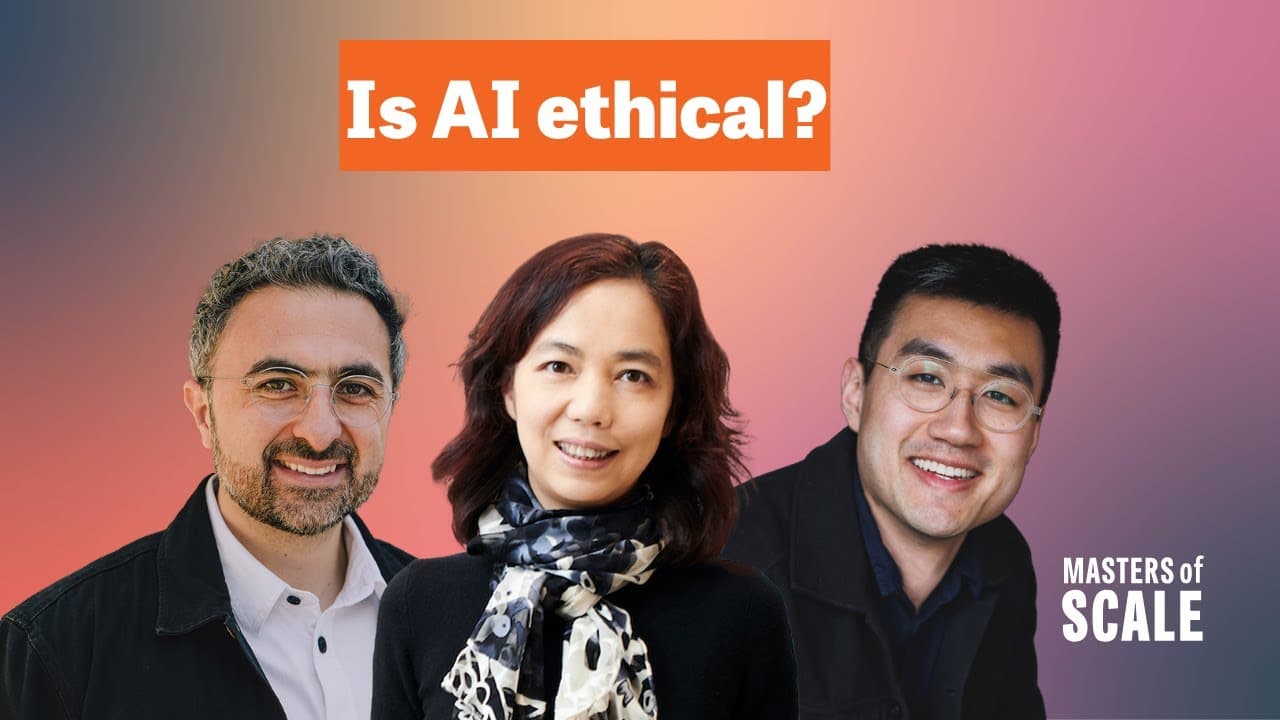
TL;DR
Examines ethical AI use in education, emphasizing human-centered development.
Transcript
chat GPT write me a book report for Harry Potter and the Sorcerer Stone in the style of a seventh grader I totally recommend this book to anyone who loves Adventure magic and stories about friendship it's got everything drama laughs and some really important lessons like love and bravery can conquer the darkest evils this is so weird from book repo... Read More
Key Insights
- AI is increasingly being used by students, but educators like Miss P are concerned it undermines fundamental learning ethics, as students may bypass critical thinking by relying on AI.
- Teachers find AI beneficial for tasks like grading and lesson planning, raising questions about fairness if students are penalized for similar use.
- AI's potential in education is vast, especially for research and filling educational gaps in underserved areas, but must be integrated ethically.
- Reed Hoffman emphasizes that human values must guide AI development, as AI lacks intrinsic ethical standards, and developers must ensure fairness, equality, and responsibility.
- Fei-Fei Li highlights the need for diverse participation in AI development, as a homogenized developer base could lead to biased AI systems.
- User safety is paramount in AI development, with experts like David Luan advocating for intrinsic safety measures rather than external safety teams.
- AI's capabilities are often overestimated, leading to potential misuse, as seen in legal cases where AI-generated false information was trusted without verification.
- The conversation around AI should evolve to focus on near-term impacts like misinformation and cybersecurity, rather than distant, sci-fi inspired fears.
Install to Summarize YouTube Videos and Get Transcripts
Explore YouTube Video Summarizer or Get YouTube Transcript Extractor
Questions & Answers
Q: What are the concerns of educators regarding AI use in schools?
Educators like Miss P are concerned that AI use in schools undermines fundamental learning ethics. They believe that AI can provide answers without fostering the critical thinking skills necessary for students to truly understand and learn material. There is a fear that reliance on AI might deprive students of the ability to test themselves and develop important cognitive skills.
Q: How do teachers view the use of AI in their work?
Teachers find AI beneficial for tasks such as grading and creating lesson plans. This raises questions about fairness, as students are often penalized for using AI in their work. Teachers appreciate AI's ability to handle repetitive tasks, allowing them to focus more on teaching, but this also highlights the need for clear guidelines on AI use in education.
Q: What is the potential of AI in education according to the podcast?
The podcast highlights AI's potential in education for research and addressing educational disparities, especially in underserved areas. AI can act as a personalized teaching aid, helping students synthesize material and complete mindless tasks. However, its integration must be ethical, ensuring it supports rather than replaces critical educational experiences.
Q: What does Reed Hoffman emphasize about AI development?
Reed Hoffman emphasizes that human values must guide AI development, as AI lacks intrinsic ethical standards. Developers must ensure AI systems are built with fairness, equality, honesty, and responsibility in mind. Ethical guardrails are necessary to prevent AI from perpetuating biases and to ensure it positively impacts humanity.
Q: Why is diverse participation important in AI development?
Fei-Fei Li highlights that diverse participation is crucial in AI development to avoid bias. A homogenized developer base could lead to AI systems that do not represent the diversity of humanity. Encouraging participation from varied backgrounds ensures that AI systems are more inclusive and reflective of different perspectives and needs.
Q: What safety measures are recommended for AI development?
Experts like David Luan recommend intrinsic safety measures in AI development, advocating for a culture where user safety is integral to all aspects of the company. This approach avoids treating safety as an afterthought and ensures that ethical considerations are embedded in the development process, minimizing potential negative impacts on users.
Q: What are the risks of overestimating AI's capabilities?
Overestimating AI's capabilities can lead to misuse, as seen in legal cases where AI-generated false information was trusted without verification. This highlights the importance of understanding AI's limitations and ensuring human oversight in its use. Blind trust in AI can result in serious consequences, emphasizing the need for cautious and informed use.
Q: What near-term impacts of AI are discussed in the podcast?
The podcast discusses near-term impacts of AI such as misinformation and cybersecurity threats. It warns that focusing too much on distant, sci-fi inspired fears can neglect these immediate issues. Addressing these near-term challenges is crucial for ensuring AI is used ethically and safely, protecting society from potential harm.
Summary & Key Takeaways
-
The podcast discusses the ethical use of AI in education, highlighting concerns from educators about AI's impact on student learning and critical thinking. Teachers find AI useful for administrative tasks, questioning the fairness of penalizing students for similar uses. The importance of integrating AI ethically in education is emphasized.
-
Reed Hoffman and experts like Fei-Fei Li and Mustafa Suleyman underscore the need for human-centered AI development. They stress that AI lacks inherent ethical values, necessitating human oversight to ensure fairness, equality, and responsibility in AI systems. Diverse participation in AI development is crucial to avoid bias.
-
The podcast warns against overestimating AI's capabilities, citing legal cases of AI-generated misinformation. It advocates for intrinsic safety measures in AI development and calls for a focus on near-term impacts like misinformation and cybersecurity. The discussion encourages evolving the conversation around AI to prioritize ethical use.
Read in Other Languages (beta)
Share This Summary 📚
Summarize YouTube Videos and Get Video Transcripts with 1-Click
Try YouTube Summary with ChatGPT & Claude or YouTube Transcript Generator