Can You Run a Marathon in the World’s Largest Size 40 Shoes?
TL;DR
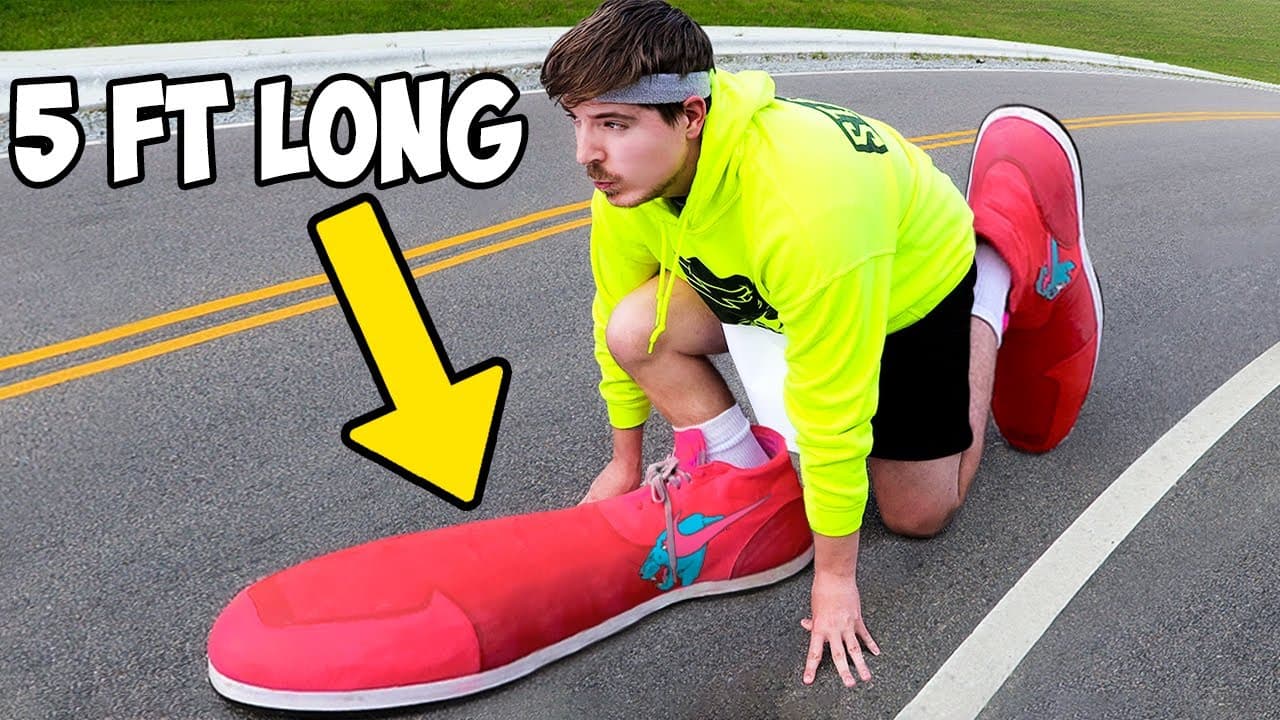
Attempting a marathon in the world’s largest size 40 shoes turned 26 miles into a multiday endurance challenge. Each shoe weighed five pounds, and the untrained group endured ankle, foot, hip, and back pain while taking breaks and repairing the footwear. They completed a half marathon and were approaching mile 17 in the supplied transcript, so read on for the key milestones and setbacks.
Transcript
- [Narrator] If you don't know, a marathon is 26 miles and today with no prior training, we're going to attempt it with the world's largest pair of shoes. Do you wanna compare 'em? - Wow. Look at the difference there. - Your calves are gonna hurt. - Yeah, they already do. - [Announcer] Three, two, one. - So the marathon has started. - I don't like ... Read More
Key Insights
- The marathon attempt covered a planned distance of 26 miles with no prior training. The participants began in custom size 40 shoes, quickly fell behind the official field, and had to move onto the sidewalk when the first section of road was scheduled to reopen.
- Each oversized shoe weighed five pounds, creating 10 pounds of footwear per participant. The added weight and unusual dimensions placed sustained strain on their ankles, feet, hips, backs, toes, and legs as they tried to continue along the marathon route.
- Chandler quit after roughly half a mile because the shoes hurt his ankles and feet. Tyler later replaced him, needed help standing after putting the shoes on, and soon understood why Chandler had stopped because his own ankles were hurting badly.
- A runner wearing regular shoes completed all 26 miles while the oversized-shoe group had reached only 3.3 miles. The official finish line was scheduled to close shortly afterward, so the group acknowledged that reaching it within the remaining time was impossible.
- The challenge became a multiday effort after approximately 15 hours of movement and breaks. At 11:00 PM, the participants reported tight legs, fatigue, and cold, then stopped to sleep before returning to the same location and continuing the following day.
- The custom size 40 shoes cost $12,000 and took months to make. During the attempt, the participants rewrapped their ankles, modified sections that scraped their feet, and used duct tape to repair the footwear before continuing along the route.
- Completing 13 miles proved that the group could cover a half marathon in the oversized shoes. The milestone also meant repeating everything they had already endured, including pain, cramps, slow progress, food stops, repairs, hills, and repeated rest periods.
- Short bursts of jogging did not provide a sustainable solution. Although jogging sometimes helped one participant move ahead and rest while waiting, a sprint near the 13-mile marker covered little distance and left the group's legs hurting more, prompting them to resume walking.
Install to Summarize YouTube Videos and Get Transcripts
Explore YouTube Video Summarizer or Get YouTube Transcript Extractor
Questions & Answers
Q: How heavy were the world’s largest shoes used for the marathon?
Each size 40 shoe weighed five pounds, adding 10 pounds of footwear per participant. The oversized shoes made standing and walking difficult and contributed to pain in their ankles, feet, hips, backs, toes, and legs.
Q: How far was the marathon attempt?
The planned marathon distance was 26 miles. The group attempted it with no prior training while wearing custom size 40 shoes.
Q: Why did Chandler quit the marathon challenge?
Chandler quit after roughly half a mile because the shoes hurt his ankles and feet. He said the size 40 shoes did not fit and that completing 26 miles in them would make him miserable.
Q: How did the oversized shoes affect the group’s pace?
Every official runner passed the group, leaving them in last place and forcing them onto the sidewalk when the first road section was about to reopen. Karl completed all 26 miles in regular shoes while they had reached only 3.3 miles, with the finish line scheduled to close in 15 minutes.
Q: What pain and physical problems did the participants experience?
They reported pain in their ankles, feet, hips, backs, toes, and legs, along with possible blisters, tightness, burning, and cramps. Sprinting near the 13-mile marker made their legs hurt more, so they returned to walking.
Q: How did the group modify and repair the size 40 shoes?
They rewrapped painful ankles and tightened the shoe supports. They also modified a shoe that scraped the side of a participant’s foot and later used duct tape to repair the footwear.
Q: Why did the marathon attempt continue into a second day?
The group was moving too slowly to finish during the official event. After approximately 15 hours of walking and breaks, they stopped at 11:00 PM because they were tired, cold, and experiencing tight legs, then returned to the same location the next day.
Q: How far did the group get in the supplied transcript?
The group completed 13 miles, which they identified as a half marathon, and later reached miles 14 and 16. Near the end of the supplied transcript, they were approaching mile 17; it does not show them completing all 26 miles.
Summary & Key Takeaways
-
The group began a 26-mile marathon with no prior training while wearing custom size 40 shoes. Each shoe weighed five pounds, adding 10 pounds to each participant's feet. Their pace was immediately slow, Chandler quit after roughly half a mile, and the remaining participants soon fell behind every official runner.
-
Pain intensified during the attempt, particularly in the ankles, feet, hips, back, toes, and legs. The team rewrapped ankles, modified scraping shoes, used duct tape for repairs, ate food, and took frequent breaks. After approximately 15 hours, they stopped at 11:00 PM, slept, and resumed the next day.
-
The group eventually passed 10 miles and completed a half marathon in the oversized footwear. Sprinting briefly made their legs hurt more, so they returned to walking. They later reached miles 14 and 16, then continued toward mile 17 while facing hills, cramps, exhaustion, and a strong desire to go home.
Read in Other Languages (beta)
Share This Summary 📚
Summarize YouTube Videos and Get Video Transcripts with 1-Click
Try YouTube Summary with ChatGPT & Claude or YouTube Transcript Generator
Explore More Summaries from MrBeast 📚



Summarize YouTube Videos and Get Video Transcripts with 1-Click
Try YouTube Summary with ChatGPT & Claude or YouTube Transcript Generator