What Are the Key Challenges in Combating COVID-19?
TL;DR
The COVID-19 pandemic presents significant challenges, including high death rates and vaccine hesitancy, which hinder public health efforts. The rapid development of effective mRNA vaccines offers hope, but addressing skepticism and ensuring equitable distribution, especially in vulnerable communities, is critical for ending the pandemic. Collaboration between public health leaders and the public will be essential in promoting vaccination and overcoming these hurdles.
Transcript
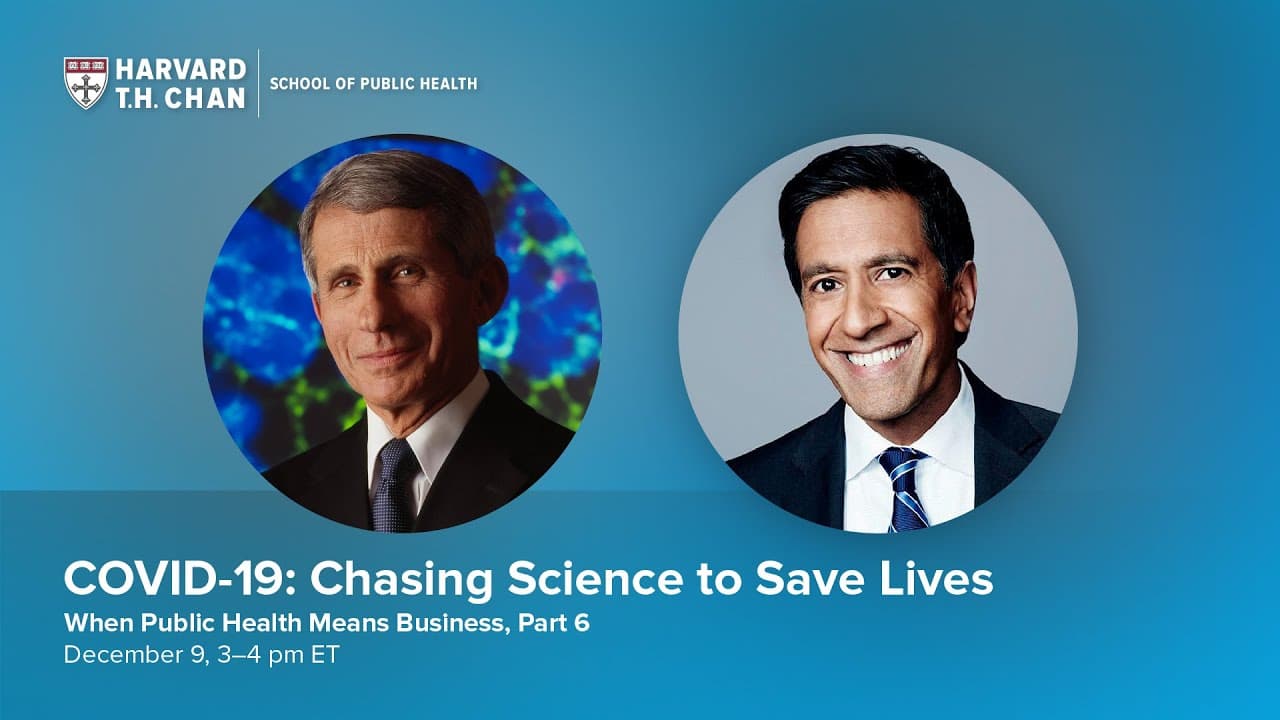
MICHELLE WILLIAMS: Good afternoon. I'm Michelle Williams, Dean of the Faculty here at the Harvard School of Public Health. And it's my great pleasure to welcome you to, When Public Health Means Business, Chasing Science To Save Lives, with, Dr. Anthony Fauci and moderated by Dr. Sanjay Gupta. Our program today is presented in partnership with the N... Read More
Key Insights
- 🇺🇸 The COVID-19 pandemic has resulted in a significant number of deaths and infections in the United States, exceeding other causes of death.
- ✋ Vaccines developed using mRNA technology have shown high efficacy in preventing symptomatic disease, but their ability to prevent infection and transmission is still uncertain.
- 🇨🇫 Vaccine hesitancy remains a challenge, and addressing it requires collaboration between public health officials, scientists, and the public.
- ♿ Prioritizing vaccine distribution for vulnerable populations, such as communities of color and incarcerated individuals, is a necessary step towards achieving equity in vaccine access.
Install to Summarize YouTube Videos and Get Transcripts
Explore YouTube Video Summarizer or Get YouTube Transcript Extractor
Questions & Answers
Q: What are the current statistics on COVID-19 deaths and infection rates in the United States?
As of the recording of this discussion, over 286,000 Americans have died due to COVID-19, and infection rates have been surging, with millions of new cases recorded in recent months.
Q: How effective are the COVID-19 vaccines in preventing symptomatic disease?
The vaccines developed by Pfizer and Moderna have shown to be approximately 95% effective in preventing symptomatic disease, providing hope for controlling the pandemic.
Q: Do the vaccines prevent infection and transmission, or just the symptoms of COVID-19?
While the primary endpoint of the vaccines is preventing symptomatic disease, it is still unknown if they can prevent infection or transmission. Further studies will provide more information.
Q: Are schools safe to remain open during the pandemic?
Data suggests that schools can have low infection rates, even in communities with high transmission. The decision to keep schools open should consider the safety of students and teachers, as well as the overall prevalence of the virus in the community.
Q: How can we address vaccine hesitancy in the United States?
Vaccine hesitancy remains a challenge, with around 20% of Americans expressing certainty that they will not take the COVID-19 vaccine. It is crucial for public health leaders, scientists, and the public to work together to address concerns, provide accurate information, and emphasize the importance of vaccination.
Q: Is there a plan to prioritize vaccine distribution for vulnerable populations, such as communities of color and incarcerated individuals?
Prioritizing vaccine distribution is a complex issue, and decisions have to be made at the state level. However, initiatives like COVAX aim to ensure equitable access to vaccines globally. Employers can also play a role in educating employees about the benefits of vaccination.
Q: How long should public-health measures, such as mask-wearing and physical distancing, continue even after vaccination?
Vaccination does not eliminate the need for public-health measures. It is important to wear masks and practice physical distancing to protect oneself and others, as the duration and durability of vaccine protection are still unknown.
Summary & Key Takeaways
-
The COVID-19 pandemic has resulted in high infection and death rates in the United States, surpassing other causes of death, and has highlighted the need for public health measures.
-
Vaccines have been developed at an unprecedented speed using mRNA technology, but vaccine hesitancy remains a challenge, with some Americans expressing reluctance to receive the vaccine.
-
Public health leadership, in collaboration with scientists and the public, plays a crucial role in promoting vaccination campaigns, addressing vaccine hesitancy, and working towards ending the pandemic.
Read in Other Languages (beta)
Share This Summary 📚
Summarize YouTube Videos and Get Video Transcripts with 1-Click
Try YouTube Summary with ChatGPT & Claude or YouTube Transcript Generator
Explore More Summaries from Harvard University 📚





Summarize YouTube Videos and Get Video Transcripts with 1-Click
Try YouTube Summary with ChatGPT & Claude or YouTube Transcript Generator