How Embedded Systems Expose Physical Security
TL;DR
Embedded devices can turn ordinary software and network flaws into physical consequences because many were designed without meaningful security controls. As cars, medical devices, building systems, and industrial controllers become interconnected, attackers can exploit pre-authentication vulnerabilities, escalate privileges, take over embedded or Windows hosts, and manipulate equipment such as pumps, alarms, doors, and temperature controls.
Transcript
Thanks everyone, and, uh, thank you for coming. I really appreciate your time. We'll hopefully get through this pretty quick and get to some juicy, uh, video demonstration of what we did this morning at the, uh, expert track broader session. So we have been-- I've been writing about Hacking Exposed since nineteen ninety-nine. Um, I'm the founding a... Read More
Key Insights
- Embedded devices are purpose-built computers found in everyday and industrial equipment, including cars, phones, refrigerators, medical devices, programmable logic controllers, and building systems. Their small form does not prevent traditional software and network vulnerabilities from applying to them.
- Interconnection is a major source of embedded-system risk because devices that once operated with limited exposure increasingly connect to broader networks. The transcript describes this change as an expansion of the threat surface for hardware and software that historically did not consider security.
- Physical harm is a defining consequence of insecure embedded technology. The examples include unauthorized insulin delivery, interference with cardiac defibrillators, attacks against industrial controllers, and manipulated tram-switching signals that reportedly derailed four trains and injured twelve people in Poland in 2008.
- Unauthenticated control is a recurring embedded-security weakness because some remote functions accept commands without verifying the operator. Infrared signaling, medical-device controls, and other remote interfaces can therefore become attack paths when authorization and authentication safeguards are absent or bypassed.
- Building-management systems are high-impact targets because they can connect networked software to temperature controls, door-entry systems, alarms, fire suppression, and other physical functions. Compromising one central platform may provide access to additional networks and the field devices operating behind it.
- The Niagara vulnerability is remotely exploitable before authentication, so an attacker does not need valid login credentials. According to the presentation, exploitation enables privilege escalation and can ultimately provide root access on the embedded platform or system-level access on a Win32 host.
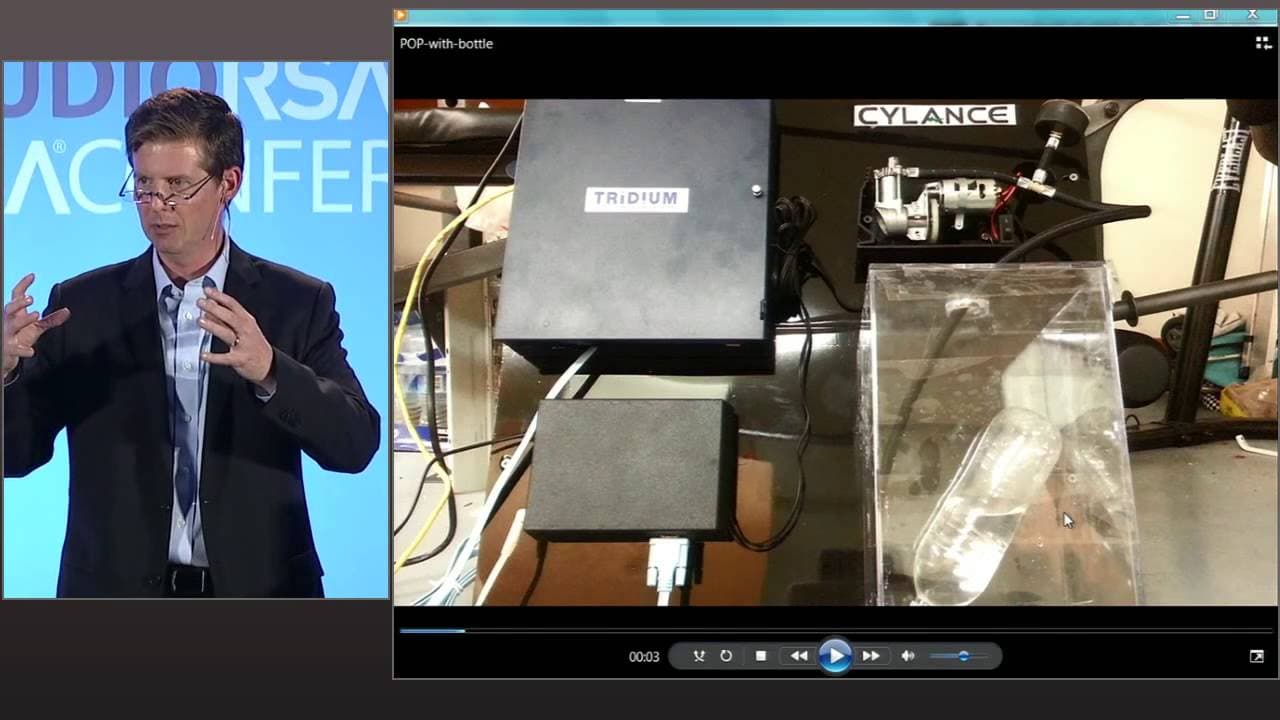
- The demonstration platform works by connecting a Tridium controller to a custom programmable logic controller and an air compressor. Once the management system is taken over, commands can direct the compressor to push air into a physical container, visibly linking cyber compromise to physical action.
- Network exposure is not limited to equipment intentionally treated as public-facing. The transcript cites 21,000 documented systems of this type on the internet through Shodan and describes smart televisions as a possible route from a lobby into an organization's internal network.
Install to Summarize YouTube Videos and Get Transcripts
Explore YouTube Video Summarizer or Get YouTube Transcript Extractor
Questions & Answers
Q: Why are embedded systems vulnerable to cyberattacks?
Embedded systems are vulnerable because their controlling hardware and software often were not designed with security as a central consideration. They are purpose-built and physically smaller than desktops or servers, but traditional software and network flaws still apply. Increasing connections among devices also create a larger threat surface through which attackers can reach equipment that was previously less exposed.
Q: How can an embedded-system hack cause physical harm?
An embedded-system hack can cause physical harm when digital controls operate equipment that affects people or the surrounding environment. The transcript discusses an insulin pump that could dispense all its insulin without authorization, attacks involving cardiac defibrillators and programmable logic controllers, and tram controls whose insecure signaling was reportedly manipulated to derail four trains and injure twelve people.
Q: What can a building-management system control?
A building-management system can coordinate many physical functions from a network-connected platform. The examples in the presentation include temperature, door-entry systems, alarms, and fire-suppression systems. It can also connect to separate networks and field devices behind the main controller. Consequently, taking over the central system may give an attacker influence over multiple parts of a building's physical operation.
Q: What makes the Niagara vulnerability especially dangerous?
The Niagara vulnerability is dangerous because it is remote and pre-authentication, meaning an attacker does not need to log in, possess credentials, or complete ordinary authorization. The attack can then escalate privileges. The presentation states that this process can provide root access on the embedded system and system-level access on Win32, the highest access level described for that Windows environment.
Q: How did the air-compressor hacking demonstration work?
The demonstration connected a Tridium embedded controller to a custom programmable logic controller, which served as the interface to an air compressor. The attacker took over the management system and issued instructions that caused the compressor to push air into a container. The setup demonstrated how unauthorized network access could be translated through industrial controls into a direct physical action.
Q: Do traditional computer vulnerabilities affect embedded devices?
Traditional computer vulnerabilities also affect embedded devices. The presenter states that techniques and flaws associated with software, networks, desktops, and servers remain applicable in the embedded world. The principal differences are that embedded systems are smaller and purpose-built. Their specialized function does not remove familiar weaknesses involving access, authentication, privilege escalation, operating systems, or network connectivity.
Q: Can internally deployed embedded systems still be reached by attackers?
Internally deployed embedded systems can still be exposed through several paths described in the presentation. Some are directly reachable online, with the transcript citing 21,000 documented systems of this nature on the internet through Shodan. An attacker may also compromise another connected device, such as a smart television, and use it to gain access to an organization's internal network.
Q: Why is unauthenticated remote control risky for embedded devices?
Unauthenticated remote control is risky because a device may accept commands without confirming who sent them or whether that person is authorized. The presentation treats infrared remote functionality as one example and connects the same basic weakness to infusion pumps, insulin pumps, and cardiac defibrillators. A convenient control feature can therefore become an attack mechanism with physical consequences.
Summary & Key Takeaways
-
Embedded computing has expanded into cars, phones, refrigerators, medical equipment, industrial controllers, and building-management systems. These purpose-built devices are often nearly invisible to users, yet their growing interconnection increases the available attack surface. Security weaknesses once associated with desktop software and networks also apply directly to these smaller systems.
-
Physical consequences distinguish embedded-system attacks from conventional computer compromises. The talk cites unauthorized control of an insulin pump, attacks involving programmable logic controllers, and a 2008 incident in Poland where a fourteen-year-old reportedly modified remote-control technology, derailed four trams, and injured twelve people by exploiting unauthenticated signaling.
-
The Niagara building-control example illustrates a remote, pre-authentication vulnerability that requires no credentials. Exploitation can support privilege escalation, root access on the embedded device, and system-level access on Win32. Because these platforms may control temperature, doors, alarms, fire suppression, compressors, and other equipment, compromise can affect the physical environment.
-
A demonstration system combines a Tridium embedded controller, a custom programmable logic controller, and an air compressor. The controller exposes network, serial, and industrial interfaces, although the demonstrated attack uses its network connection. The setup shows how unauthorized digital commands can operate field equipment and generate direct physical effects.
Read in Other Languages (beta)
Share This Summary 📚
Summarize YouTube Videos and Get Video Transcripts with 1-Click
Try YouTube Summary with ChatGPT & Claude or YouTube Transcript Generator
Explore More Summaries from RSAC Cybersecurity 📚



Summarize YouTube Videos and Get Video Transcripts with 1-Click
Try YouTube Summary with ChatGPT & Claude or YouTube Transcript Generator