How to Build a Simple Productivity System
TL;DR
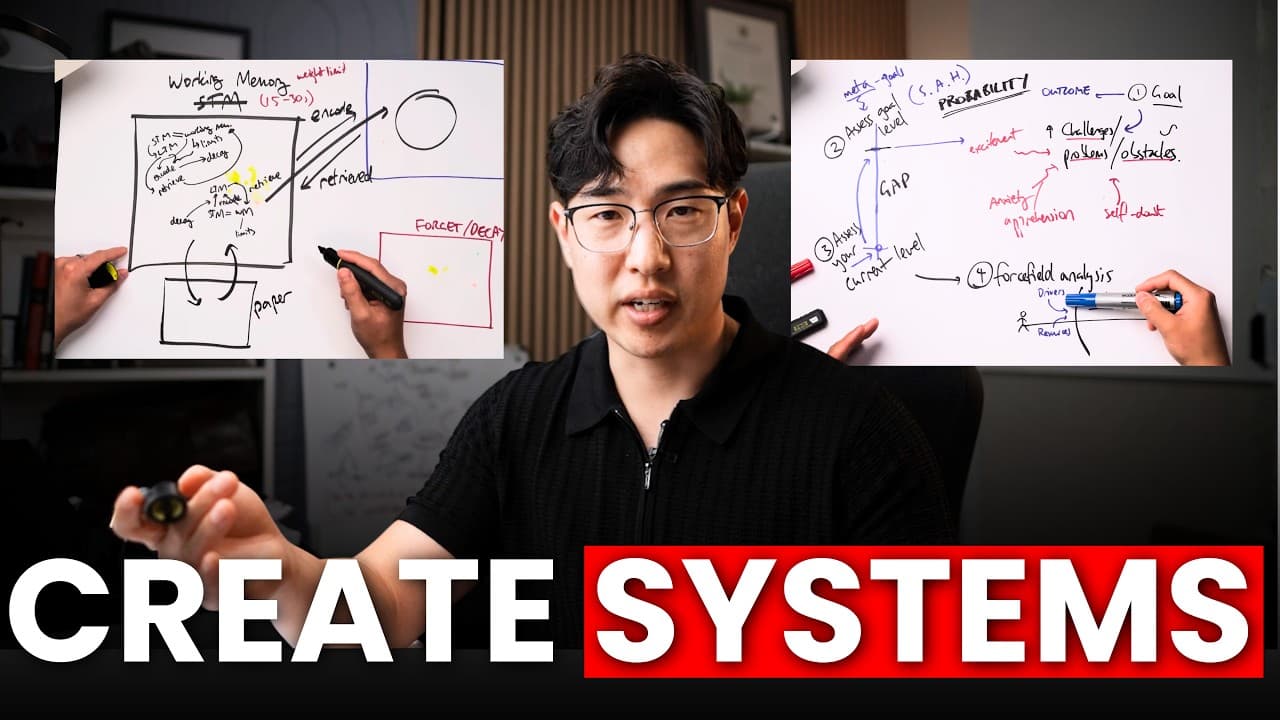
Define productivity according to two or three outcomes that genuinely matter to you, then plan work around your changing cognitive energy. Match demanding tasks to peak periods, use lower-energy periods for simpler work, and create predetermined if-then responses for predictable obstacles. This system improves consistency by reducing wasted effort and narrowing the gap between intentions and actions.
Transcript
I think it can be really difficult to stay consistently productive every single day. And if you're struggling with it, there is nothing wrong with you. It is actually a little unnatural for a human to be so productive all the time. But the good news is that there are systems of productivity that you can build that make being productive much easier.... Read More
Key Insights
- Productivity is any activity that moves you toward goals you personally consider meaningful. It is not equivalent to being busy, completing more tasks, managing every minute, or following someone else’s definition of achievement.
- A useful productivity definition focuses on two or three meaningful outcomes rather than a list of 10 or 15 competing goals. This smaller set provides a clear basis for deciding which work, recovery, relationships, and personal activities are genuinely productive.
- Rest and recreation can be productive when they support the life someone wants to build. Sleep, exercise, hobbies, and time with friends may directly contribute to sustained performance, fulfillment, and avoiding burnout rather than representing distractions from meaningful work.
- Flow matching is the practice of aligning each task’s cognitive demands with the times when the brain is best equipped to handle them. Difficult work belongs near cognitive peaks, while routine administrative work fits periods of lower energy and concentration.
- Cognitive energy usually declines as demanding work continues, although recovery can temporarily improve it. Attempting complex tasks during a trough can require more time, consume more energy, lower the quality of the result, and sometimes prevent the required outcome entirely.
- Longer working hours can produce diminishing returns rather than proportionally greater output. The transcript places the onset near 50 weekly hours and states that 70 hours of work can produce about as much output as 55 hours because productivity falls sharply.
- A weekly planning ritual can combine task collection with flow matching. During a Saturday or Sunday planning session, list required tasks, assess their cognitive complexity, and place them into the schedule according to expected energy levels and the constraints you can control.
- Scripted actions are predetermined if-then responses to obstacles that might prevent an intended behavior. The transcript states that making these decisions in advance reduces the intention-behavior gap by half, meaning a person becomes twice as likely to complete the planned action.
Install to Summarize YouTube Videos and Get Transcripts
Explore YouTube Video Summarizer or Get YouTube Transcript Extractor
Questions & Answers
Q: How do you define productivity around personal goals?
Productivity should be defined as doing things that move you toward outcomes you personally value. It does not automatically mean being busy, completing more tasks, optimizing every second, or displaying exceptional discipline. Begin by narrowing a larger list of goals to two or three meaningful outcomes, then judge activities by whether they support those outcomes and the life you want.
Q: How many goals should a productivity system prioritize?
The system recommends refining a typical list of 10 or 15 desired outcomes into just two or three that feel most meaningful. These priorities become the standard for deciding what counts as productive. A smaller set also makes it easier to recognize that recovery, relationships, hobbies, sleep, or exercise may support the chosen outcomes instead of competing with them.
Q: What is flow matching in productivity planning?
Flow matching means scheduling tasks according to both their cognitive demands and your expected mental energy. Work requiring deep thought and concentration should be placed near your cognitive peak. Simpler administrative activities should be reserved for times when you are more tired. The goal is to increase the quality and return produced by each hour of work.
Q: How do you schedule tasks around cognitive energy?
First, write down all tasks that need to be completed during the week. Next, estimate how complex and cognitively demanding each task will be. Place the hardest tasks in periods when your focus is typically strongest, and assign less demanding work to lower-energy periods. Apply this principle wherever your schedule gives you meaningful control over task order.
Q: Why can working longer reduce productivity?
Additional work hours eventually produce diminishing returns because cognitive capacity declines with continued effort. The transcript says returns begin diminishing at about 50 hours per week and that someone working 70 hours may produce only about as much output as someone working 55 hours. Beyond that point, extra time can contribute little while the quality and efficiency of work fall.
Q: How can a weekly productivity planning ritual work?
Choose a regular planning period, such as Saturday or Sunday evening, and begin by listing the tasks required for the coming week. Evaluate each task’s likely cognitive demands, then use flow matching to decide when it belongs in the schedule. Finally, identify scheduled tasks that historically have a high risk of being missed and prepare scripted responses for them.
Q: What are scripted actions and how do they help?
Scripted actions are decisions made in advance using an if-then structure. You identify a predictable condition that could interfere with a planned task, then specify what you will do if it occurs. This removes some decision-making from the pressured moment. According to the transcript, scripted actions reduce the gap between intention and behavior by half and double the likelihood of follow-through.
Q: How do you create an if-then plan for exercise?
Start by scheduling the exercise session, then list predictable events that could prevent it. For example, if finishing work late would stop you from buying groceries, preparing dinner, and reaching the gym, decide beforehand to get takeout that evening. This response protects the activity judged more important for that day and avoids making the decision after the obstacle appears.
Summary & Key Takeaways
-
Productivity means completing actions that move you toward personally meaningful goals, not staying constantly busy or optimizing every second. Reducing a long list of ambitions to two or three central outcomes provides a practical standard for deciding what deserves time, including sleep, exercise, hobbies, relationships, and fulfilling work.
-
Flow matching begins by listing the week’s tasks and estimating how much concentration each one requires. Complex work should be scheduled during personal cognitive peaks, while administrative or less demanding activities belong in lower-energy periods. Matching tasks to mental capacity can improve output quality and reduce wasted time and effort.
-
Scripted actions are predetermined if-then decisions for tasks that predictable obstacles might disrupt. After scheduling an important but vulnerable activity, identify likely barriers and choose responses in advance. The transcript says this approach reduces the gap between intention and behavior by half, making follow-through twice as likely without removing existing responsibilities.
Read in Other Languages (beta)
Share This Summary 📚
Summarize YouTube Videos and Get Video Transcripts with 1-Click
Try YouTube Summary with ChatGPT & Claude or YouTube Transcript Generator
Explore More Summaries from Justin Sung 📚
Summarize YouTube Videos and Get Video Transcripts with 1-Click
Try YouTube Summary with ChatGPT & Claude or YouTube Transcript Generator