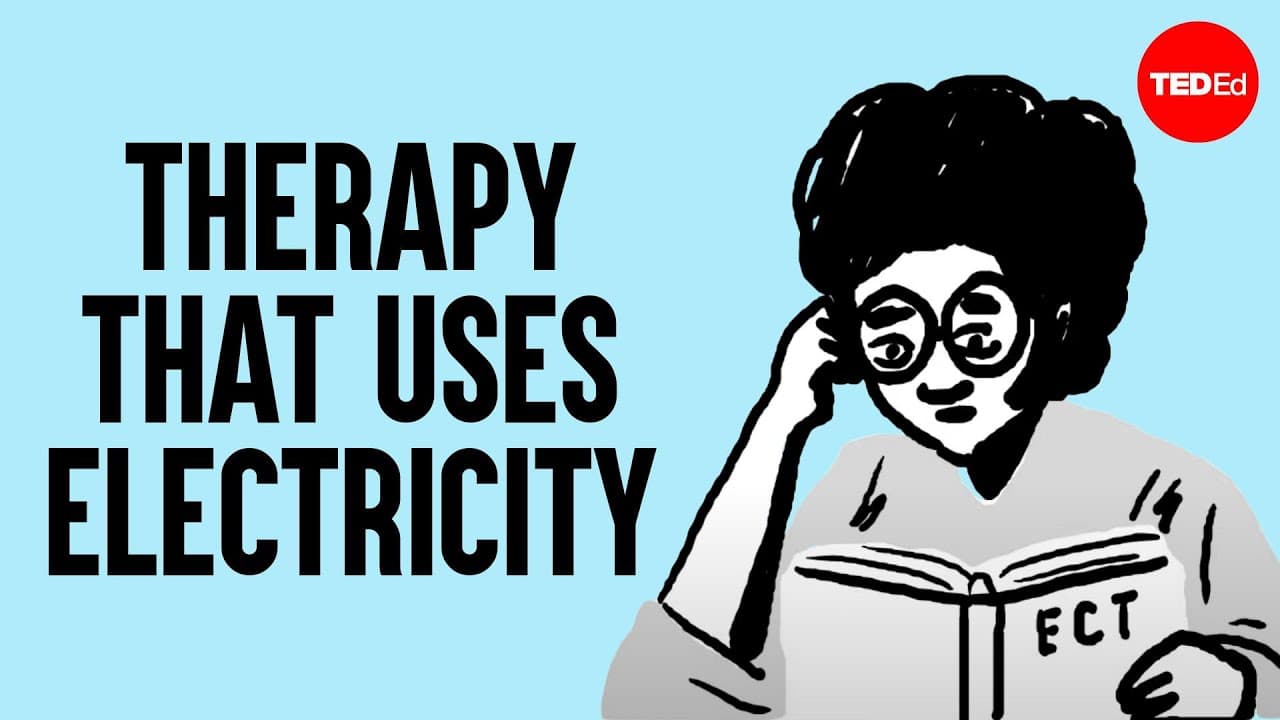
What Is Electroconvulsive Therapy (ECT) and How Does It Work?
TL;DR
Electroconvulsive therapy (ECT) treats severe depression and bipolar disorder by delivering controlled electrical pulses to the brain, resulting in a brief seizure that alters brain chemistry. While modern ECT is much safer than its historical counterpart, side effects like temporary memory loss can occur. Approximately half of patients experience symptom improvement, especially when ECT is combined with medication.
Transcript
In 1982, a young nurse was suffering from severe, unrelenting depression. She couldn’t work, socialize, or even concentrate well enough to read the newspaper. One treatment changed everything. After two courses of electroconvulsive therapy, or ECT, her symptoms lifted. She went back to work, then on to graduate school, where she earned high grades.... Read More
Key Insights
- 🦺 ECT has a deep stigma due to historical practices, but modern ECT is much safer and more effective.
- 🫡 The exact mechanisms behind why ECT works are still unknown, but it is believed to alter brain chemistry by triggering the release of neurotransmitters and stimulating the flow of hormones.
- 🫡 ECT is often paired with medication for better results, even in patients resistant to medication alone.
Install to Summarize YouTube Videos and Get Transcripts
Explore YouTube Video Summarizer or Get YouTube Transcript Extractor
Questions & Answers
Q: How has ECT evolved over the years?
ECT has evolved from administering a strong electrical current to the brain causing whole-body seizures to a modern procedure where mild electrical pulses are delivered, resulting in controlled seizures.
Q: Is ECT safe for patients?
Modern ECT is much safer than its early years, but patients may experience side effects such as achiness, fatigue, nausea, and memory loss. However, these side effects tend to improve over time.
Q: Who is a candidate for ECT?
ECT is commonly used for patients with severe cases of major depression or bipolar disorder who haven't responded to other therapies or have had adverse reactions to medication.
Q: How long does ECT treatment last?
Most patients have two or three sessions per week for several weeks, with some experiencing symptom improvement after just one session. Treatment may continue less frequently for several months to a year, and occasionally, maintenance sessions are required.
Summary & Key Takeaways
-
ECT, a treatment for severe depression, has evolved from a historical approach involving strong electrical currents to a modern procedure with mild electrical pulses.
-
The treatment involves delivering controlled seizures, under general anesthesia, for about a minute, with patients resuming normal activities shortly after each session.
-
Patients may experience side effects such as memory loss, but ECT has been proven effective, although the exact mechanisms behind its effectiveness are still not fully understood.
Read in Other Languages (beta)
Share This Summary 📚
Summarize YouTube Videos and Get Video Transcripts with 1-Click
Try YouTube Summary with ChatGPT & Claude or YouTube Transcript Generator
Explore More Summaries from TED-Ed 📚




Summarize YouTube Videos and Get Video Transcripts with 1-Click
Try YouTube Summary with ChatGPT & Claude or YouTube Transcript Generator