How to Pre-Sell Your Software Product Effectively
TL;DR
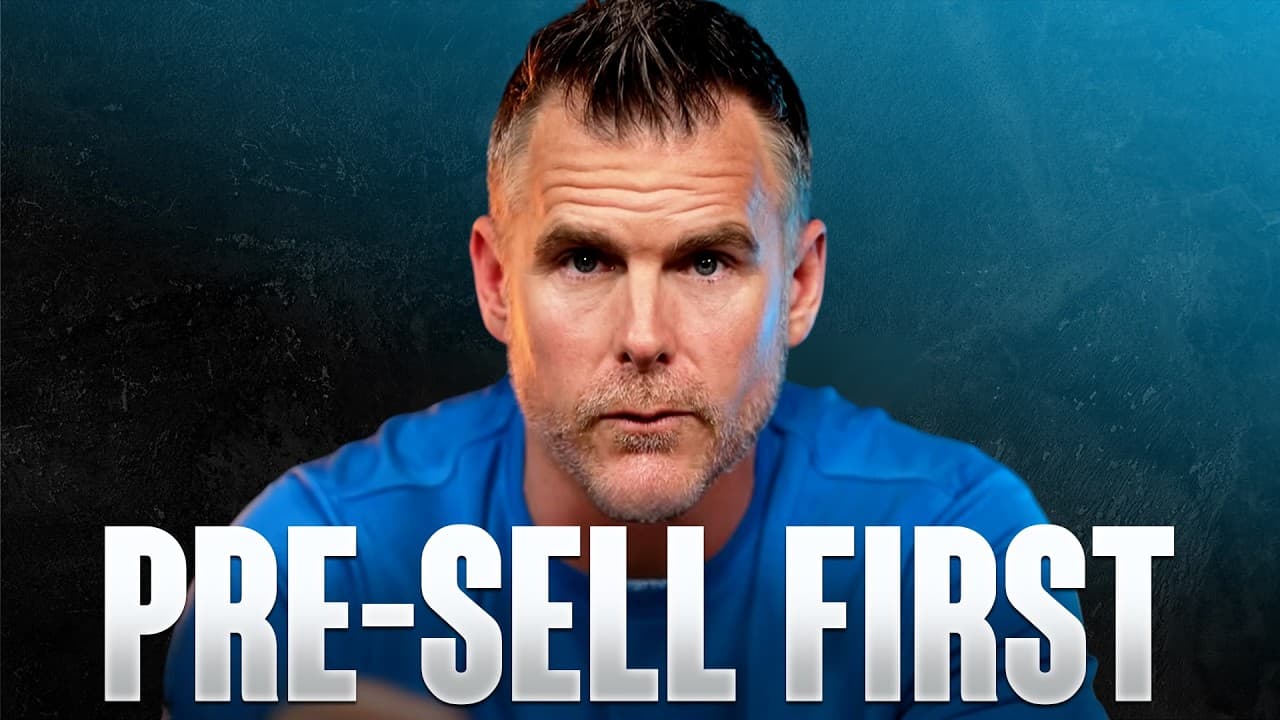
To effectively pre-sell your software product, identify early adopters and ask for their feedback to validate your idea. Use the MEVO (Minimum Economical Viable Offer) approach to create an attractive offer that encourages pre-sales, ensuring your product aligns with market needs before you invest in development.
Transcript
- Hi there, Dan Martell here. Serial entrepreneur, investor and creator of SaaS Academy. In this video I'm gonna share with you how to pre-sell your product before you even build it so that you don't have to waste a bunch of time, energy and money to find out that nobody wants to buy what you create and be sure to stay to the end where I share with... Read More
Key Insights
- Pre-selling software involves validating an idea by securing early adopters before building the product, reducing wasted resources.
- Identifying early adopters is crucial, as they are more likely to engage with new technologies and provide valuable feedback.
- Asking for advice rather than selling directly helps in gaining insights and building relationships with potential customers.
- Validating pain points and solutions ensures the product addresses real customer needs without unnecessary modifications.
- The MEVO approach emphasizes creating a minimum economical viable offer to test the market's willingness to pay.
- Building a product based on pre-sales provides financial resources and validation, ensuring a stronger market fit.
- Avoiding the pitfalls of MVP, MEVO focuses on market validation without extensive initial development.
- Dan Martell shares a mini-course offering detailed guidance on building, marketing, and scaling software businesses.
Install to Summarize YouTube Videos and Get Transcripts
Explore YouTube Video Summarizer or Get YouTube Transcript Extractor
Questions & Answers
Q: What is the main benefit of pre-selling a software product?
Pre-selling a software product allows entrepreneurs to validate their ideas and secure financial resources before investing in development. This reduces the risk of creating a product that lacks market demand and ensures that the final product addresses real customer needs, ultimately saving time and money.
Q: How can entrepreneurs identify early adopters for their products?
Entrepreneurs can identify early adopters by looking for individuals or businesses that actively engage with new technologies and trends. For example, in the restaurant industry, early adopters might be those with a Snapchat account on their marketing website. These individuals are more likely to provide valuable feedback and engage with new solutions.
Q: Why is it important to ask for advice instead of trying to sell directly?
Asking for advice rather than selling directly helps build relationships and gain insights into potential customers' needs and pain points. It creates an open dialogue where entrepreneurs can better understand the market and refine their product ideas based on genuine feedback, increasing the likelihood of success.
Q: What is the MEVO strategy and how does it differ from MVP?
The MEVO (Minimum Economical Viable Offer) strategy focuses on creating an attractive offer to test market demand without extensive development. Unlike MVP (Minimum Viable Product), which often involves building a prototype, MEVO emphasizes market validation through simpler means like sales pages or mock-ups, reducing initial costs and risks.
Q: How does validating pain and solutions help in product development?
Validating pain and solutions ensures that the product addresses real customer needs, avoiding unnecessary modifications. By focusing on a specific set of solutions, entrepreneurs can create a product that genuinely solves customer problems, leading to higher satisfaction and better market fit.
Q: What role does early adopter feedback play in pre-selling software?
Early adopter feedback is crucial in refining product ideas and ensuring they meet market needs. These individuals provide insights into potential improvements and validate the product's value proposition, helping entrepreneurs make informed decisions and avoid developing features that lack demand.
Q: What are the potential risks of not pre-selling a software product?
Not pre-selling a software product can lead to significant resource wastage if the product lacks market demand. Entrepreneurs risk investing time, money, and effort into developing features that customers do not need or want, potentially resulting in financial losses and reduced morale.
Q: How can Dan Martell's mini-course benefit aspiring entrepreneurs?
Dan Martell's mini-course offers comprehensive guidance on building, marketing, and scaling software businesses. It covers essential topics such as customer validation and product development, providing entrepreneurs with actionable insights and strategies to successfully launch and grow their software ventures.
Summary & Key Takeaways
-
Dan Martell, a seasoned entrepreneur, shares strategies on pre-selling software products to validate demand before development. He emphasizes the importance of identifying early adopters and gathering their feedback to refine product ideas. By using the MEVO approach, entrepreneurs can secure pre-sales, ensuring their products meet market needs.
-
Martell recounts his experience with Flowtown, where he used pre-selling techniques to validate his software idea. He highlights the need to focus on early adopters and gather advice to understand customer pain points. The MEVO strategy helps test the market's willingness to pay, reducing the risk of building unwanted products.
-
The video outlines four steps for pre-selling software: defining early adopters, asking for advice, validating pain and solution, and employing the MEVO strategy. Martell offers a mini-course for further learning, emphasizing the importance of market validation and customer engagement in successful software development.
Read in Other Languages (beta)
Share This Summary 📚
Summarize YouTube Videos and Get Video Transcripts with 1-Click
Try YouTube Summary with ChatGPT & Claude or YouTube Transcript Generator
Explore More Summaries from Dan Martell 📚
Summarize YouTube Videos and Get Video Transcripts with 1-Click
Try YouTube Summary with ChatGPT & Claude or YouTube Transcript Generator