How to Set Boundaries With an Exploitative Family
TL;DR
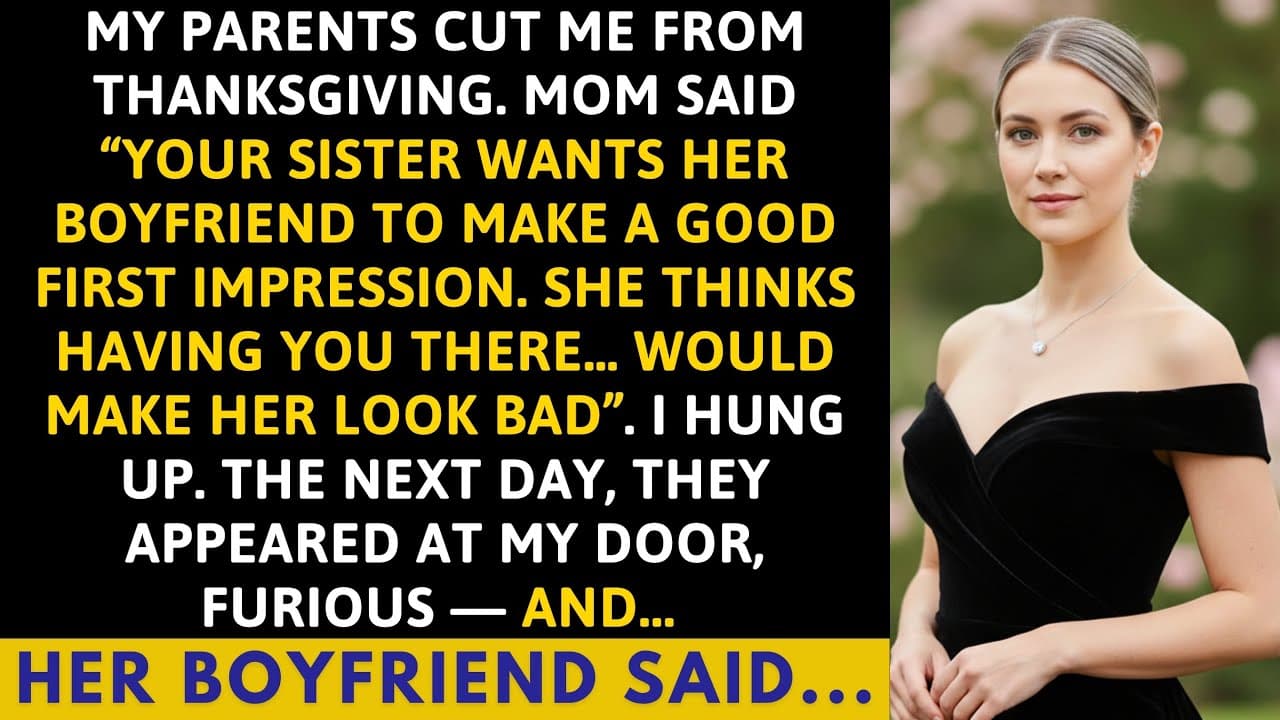
Willow stops providing money, repairs, and practical help after her family excludes her from Thanksgiving to protect her sister’s image. Recognition of Willow’s restoration work exposes how thoroughly her talent has been dismissed, while her refusal to keep serving people who demean her marks the beginning of firm boundaries and a more genuine chosen family.
Transcript
My parents cut me from Thanksgiving. No warning, no hesitation, just my mom's voice saying, "Your sister wants her boyfriend to make a good first impression. And having you there would make her look bad." I was standing in my garage grease on my hands, cold air biting my neck when the line went silent. I didn't argue. I didn't beg. I just hung up a... Read More
Key Insights
- Willow is valued by her family primarily for what she provides, including repairs, emergency assistance, and financial support. Their treatment separates usefulness from belonging, allowing them to depend on her labor while still portraying her profession, clothing, and presence as threats to Ava’s carefully managed image.
- The Thanksgiving exclusion is presented as a consequence of the family’s obsession with appearances. Willow’s mother says Ava wants her boyfriend to receive a perfect impression, while Willow’s work boots and engine-oil smell are treated as embarrassing despite the family’s regular reliance on her mechanical and practical abilities.
- Logan’s recognition of Willow’s restoration work reveals that her accomplishments have significance beyond the family’s dismissive narrative. He knows her as the craftsperson who restored a Charger discussed on automotive forums, while Ava reduces her work to merely fixing cars and her parents appear unaware of her proudest achievement.
- The family’s confrontation is motivated by humiliation and need rather than concern for Willow. They accuse her of making them look bad, then request roof repairs, money for Ava’s decorations, and help with bills without offering a meaningful apology for excluding and insulting her.
- Willow’s refusal is a boundary against transactional family expectations. She distinguishes ordinary parental responsibilities from a permanent debt, rejecting the argument that being raised obligates her to provide unlimited labor, money, and emotional compliance throughout adulthood.
- Logan’s support disrupts the established family hierarchy because he evaluates Willow through her craftsmanship and conduct rather than Ava’s preferred image. His statement that Willow is not wrong forces the family to face an outside perspective that does not automatically validate their favoritism or entitlement.
- The garage becomes a symbol of competence, independence, and chosen belonging. It is initially the place where machines provide more predictability than Willow’s relatives, then becomes a warm Christmas Eve gathering filled with friends, shelter teens, laughter, food, and affection that her childhood home never offered.
- Chosen family is portrayed as an alternative to relationships built on obligation and appearances. Willow finds genuine warmth among people who appreciate her presence, while her relatives continue reacting to lost control and public embarrassment, reinforcing why emotional safety may require distance and firm limits.
Install to Summarize YouTube Videos and Get Transcripts
Explore YouTube Video Summarizer or Get YouTube Transcript Extractor
Questions & Answers
Q: Why did Willow’s parents exclude her from Thanksgiving?
Willow’s parents excluded her because Ava wanted her boyfriend to receive what the family considered a perfect first impression. They believed Willow’s blue-collar work, work boots, and possible smell of engine oil would complicate Ava’s carefully managed image. The decision reflects their longstanding preference for appearances and Ava’s public-relations career over respect for Willow’s identity and accomplishments.
Q: How did Willow’s family treat her before the Thanksgiving conflict?
Willow’s family treated her as a dependable source of labor, money, and emergency help rather than as an equally valued relative. She fixed household problems, responded when Ava damaged her car, and stepped in when her parents failed to pay bills. At the same time, they minimized her mechanical talent, compared her unfavorably with Ava, and expected her to remain quiet.
Q: Why did Logan recognize Willow when he met her?
Logan recognized Willow because he had followed her automotive restoration work and knew her as the person who restored a Charger that attracted attention on car forums. His reaction showed that her craftsmanship had earned genuine respect outside her household. The recognition also exposed how little her parents and sister understood about the work Willow considered her proudest accomplishment.
Q: What did Willow’s family request after excluding her?
After excluding and criticizing Willow, her family asked her to inspect a leaking roof, provide money for Ava’s holiday-event decorations, and continue handling bills and other responsibilities. They framed these demands as normal family assistance and treated the Thanksgiving exclusion as unrelated. Their requests revealed that they still expected access to Willow’s resources even while denying her respect and inclusion.
Q: How did Willow respond to her family’s demands?
Willow calmly refused to repair the roof, pay for Ava’s decorations, cover bills, or continue serving as the family’s automatic problem solver. She did not argue at length or seek their approval. Instead, she repeated that she would no longer help under those conditions, rejected their claim of permanent entitlement, and instructed them to leave her home.
Q: Why did Willow reject the claim that she owed her parents?
Willow rejected the idea that receiving food and care during childhood created a lifetime contract for unpaid labor, financial rescue, and obedience. She identified those actions as basic parenting rather than favors that could be collected indefinitely. Her response reframed gratitude as compatible with boundaries, meaning she could appreciate being raised without accepting exploitation or disrespect as an adult.
Q: What role does Logan play in Willow’s family conflict?
Logan acts as an outside observer who sees both Willow’s professional worth and the family’s unfair expectations. He recognizes her craftsmanship, questions whether their behavior is normal, and challenges them after they demand help without apologizing. By agreeing that Willow is not wrong, he undermines the family hierarchy and refuses to support Ava merely because he is her boyfriend.
Q: How does Willow create a sense of belonging after setting boundaries?
Willow creates belonging by opening her garage to people who offer warmth, affection, and genuine companionship. On Christmas Eve, the space holds friends, shelter teens, shared food, stories, laughter, and children moving between the tables. The gathering is neither polished nor curated, but it gives Willow the acceptance missing from her childhood home and demonstrates the value of chosen family.
Summary & Key Takeaways
-
Willow Carter, a mechanic and skilled car restorer, has long been treated as useful but inferior to her favored sister, Ava. She routinely repairs family problems, covers expenses, and helps during emergencies, yet her parents dismiss her abilities and exclude her from Thanksgiving because they believe her work and appearance could embarrass Ava.
-
The family confronts Willow after their exclusion becomes known, but Ava’s boyfriend, Logan, recognizes Willow as the craftsperson behind a widely discussed Charger restoration. His admiration exposes the family’s ignorance of her accomplishments. Instead of apologizing, they immediately demand roof repairs, decoration money, and continued obedience under the banner of family responsibility.
-
Willow refuses to fix the roof, fund Ava’s event, or keep covering family bills. She rejects the claim that being raised created a lifetime obligation and orders them to leave. By Christmas Eve, her garage is filled with supportive people, laughter, and genuine warmth, showing that belonging can be built outside a harmful family system.
Read in Other Languages (beta)
Share This Summary 📚
Summarize YouTube Videos and Get Video Transcripts with 1-Click
Try YouTube Summary with ChatGPT & Claude or YouTube Transcript Generator
Explore More Summaries from Payback Ties 📚

Summarize YouTube Videos and Get Video Transcripts with 1-Click
Try YouTube Summary with ChatGPT & Claude or YouTube Transcript Generator