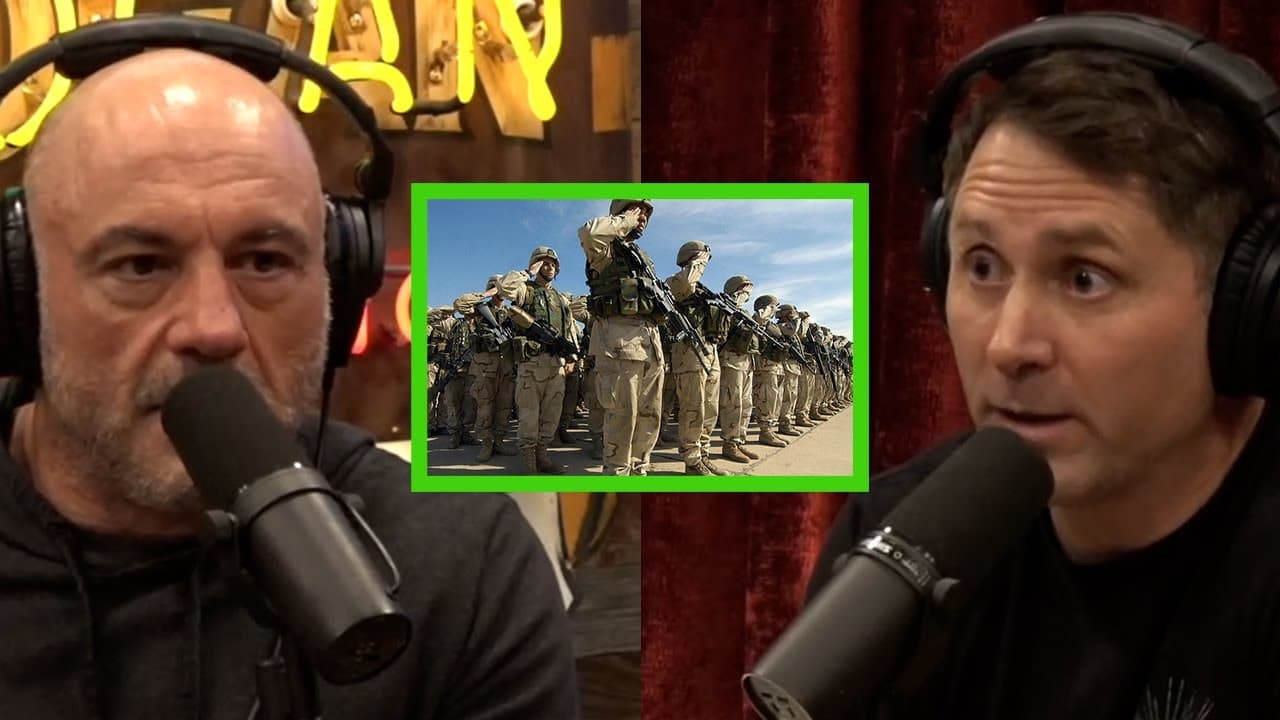
Former Green Beret Evan Hafer on Freedom of Speech and the Consequences of Occupational Wars
TL;DR
Freedom of speech matters because open discussion can challenge propaganda, scrutinize information the state treats as threatening, and expose compromised leaders. Former Green Beret Evan Hafer contrasts necessary military defense with long wars of occupation, drawing on four and a half years in Iraq and another three years in Afghanistan. Read on for his firsthand argument about accountability, human costs, military power, and taxpayer wealth.
Transcript
the jogan experience we are as a culture being manipulated we're being manipulated and it's moving us further and further away from just sanity just pure sanity it's the foundations of of Western logic right it's it's they're they're trying to poison the the roots of Western logic by completely rewriting what what we would call the history of the w... Read More
Key Insights
- 🥺 Our culture is being manipulated, leading us further away from sanity.
- 😯 Freedom of speech is crucial in countering propaganda and protecting against information deemed threatening by the state.
- 🤨 False information regarding the Iraq War raises questions about accountability and the prioritization of military spending over addressing consequences.
- 🫱 Long-term wars of occupation benefit the military-industrial complex, transferring wealth from taxpayers and causing immense human suffering.
- 🫱 Military power is necessary for national security, but distinguishing between necessary defense and unjustified wars of occupation is crucial.
- 🥹 The world outside our protected bubble is a messy and dangerous place, highlighting the importance of gratitude for our freedoms and our country.
- 🫱 War exposes the fragility of life and the brutality of humanity, emphasizing the need to cherish and make the most of our limited time.
Install to Summarize YouTube Videos and Get Transcripts
Explore YouTube Video Summarizer or Get YouTube Transcript Extractor
Questions & Answers
Q: Why does former Green Beret Evan Hafer believe freedom of speech is important?
Hafer argues that open discussion allows people to pressure-test information, especially when the state considers that information threatening. He describes freedom of speech as a defining beauty of America and a way to resist manipulation and propaganda.
Q: How does the internet help fight propaganda?
The internet can distribute propaganda, but it can also expose and challenge it. Hafer says it helps people recognize when supposed leaders are compromised and question what those leaders are doing.
Q: What accountability concerns does the discussion raise about the Iraq War?
The speakers say Iraq was invaded over weapons of mass destruction that did not exist. They argue that no one went to jail or faced congressional depositions over those claims, despite the money spent and the deaths that followed.
Q: What human consequences of the Iraq War does Evan Hafer describe?
Hafer says hundreds of thousands of innocent Iraqis died and that thousands among his peer group were physically or mentally altered forever. He adds that many spent the best years of their lives fighting under false pretenses and continue to experience long-term effects.
Q: How does Hafer distinguish a necessary war from a war of occupation?
He distinguishes a war of necessity that maintains national sovereignty from a long-term war of choice centered on occupation. He also separates precision tracking and killing of terrorists, or actions needed to stabilize a region, from massive and prolonged occupation.
Q: Why does Hafer call wars of occupation a transfer of wealth?
Hafer describes a war of choice and occupation as transferring wealth from taxpayers into the military-industrial complex. He argues that the government readily pays when spending directly benefits that complex but resists paying for veterans’ long-term health consequences.
Q: What firsthand military experience informs Hafer’s position?
Hafer says he spent four and a half years on the ground in Iraq and another three years in Afghanistan. Across 10 years of deployments, he witnessed the costs in blood and treasure and developed his distinction between targeted operations and long-term occupation.
Q: Does the discussion reject military power entirely?
No. The speakers argue that military power remains necessary because other countries possess it and would not simply disarm if America did. Their position distinguishes supporting national defense from supporting unjustified, long-term wars of occupation.
Summary & Key Takeaways
-
Our culture is being manipulated, moving further away from sanity, as the foundations of Western logic are under assault.
-
The state deems information as a threat, and it is crucial to have open discussions about it to protect freedom of speech.
-
The consequences of false information, such as the Iraq War, demonstrate the need for accountability and the avoidance of long-term wars of occupation.
Read in Other Languages (beta)
Share This Summary 📚
Summarize YouTube Videos and Get Video Transcripts with 1-Click
Try YouTube Summary with ChatGPT & Claude or YouTube Transcript Generator
Explore More Summaries from PowerfulJRE 📚




Summarize YouTube Videos and Get Video Transcripts with 1-Click
Try YouTube Summary with ChatGPT & Claude or YouTube Transcript Generator