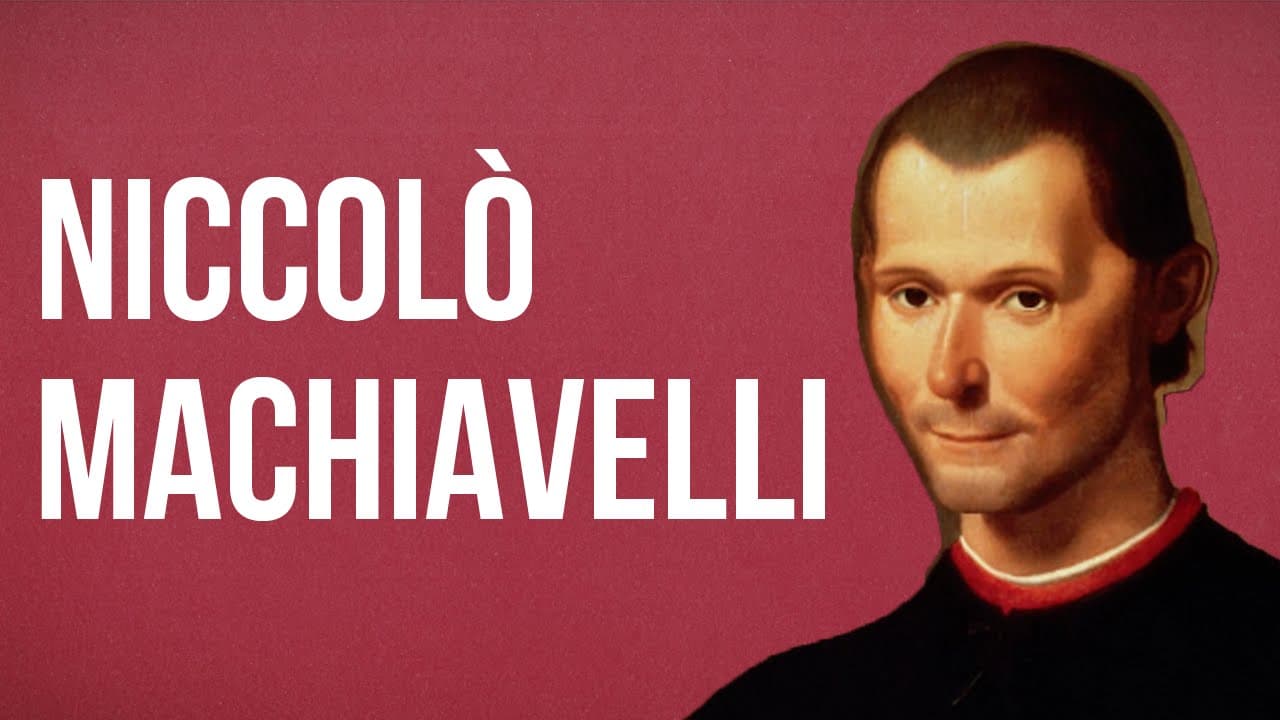
POLITICAL THEORY - Niccolò Machiavelli
TL;DR
Machiavelli argues that effective politicians prioritize defending and enriching the state over traditional notions of morality, challenging the idea that a good leader must also be a good person.
Transcript
We're often appalled by how sly and dishonest many politicians are, but we shouldn't be. In moods like this we need to remember and read the works of Niccolo Machiavelli. A late 15th century political advisor and political theorist who argued that we shouldn't think that politicians are imoral and simply bad for lying and dissembling and maneuverin... Read More
Key Insights
- 👑 Machiavelli argues that effective politicians prioritize defending, enriching, and bringing honor to the state over being friendly and kind.
- 🏛️ Machiavelli's career underwent dramatic reversals due to political instability in Florence, going from diplomat to general to enemy of the state.
- 📚 Machiavelli's works, "The Prince" and "The Discourses," address the challenge of reconciling Christian ethics with good governance.
- 🤔 Machiavelli believes that a Prince should inspire terror to maintain control, as being loved and obeyed is theoretically wonderful but not always achievable.
- ⛪ Machiavelli critiques the incompatibility between Christian ethics and effective leadership, using the example of Girolamo Savonarola's downfall in Florence.
- 💪 Machiavelli's concept of virtu for politicians includes wisdom, strategy, strength, bravery, and when necessary, ruthlessness.
- ⚖️ Machiavelli provides criteria for the judicious use of "criminal virtue" by leaders, such as strict necessity and avoiding excessive brutality.
- 🌍 Machiavelli's insights apply beyond politics, highlighting the need for ethical trade-offs and effectiveness in various aspects of life, such as business or family.
Install to Summarize YouTube Videos and Get Transcripts
Explore YouTube Video Summarizer or Get YouTube Transcript Extractor
Questions & Answers
Q: What was Machiavelli's view on the compatibility of being a good politician and a good person?
Machiavelli believed that it is almost impossible to be both a good politician and a good person in a traditional Christian sense, as the overwhelming responsibility of a good leader is to defend the state from threats, which may require darker arts and ethical trade-offs.
Q: How did Machiavelli view the role of fear in politics?
Machiavelli believed that a prince should err on the side of inspiring terror, as it is ultimately what keeps people in check and maintains stable governance.
Q: Why did Machiavelli criticize the Christian example of Girolamo Savonarola?
Machiavelli criticized Savonarola because his idealistic and kind approach to ruling Florence ultimately led to his downfall at the hands of a vengeful citizenry and a corrupt Pope, demonstrating the weakness of being good in a traditional Christian sense in politics.
Q: What did Machiavelli mean by "criminal virtue"?
Machiavelli used the term "criminal virtue" to describe the necessary ability of leaders to be cruel in the name of the state, while still being effective and good leaders, as long as violence is strictly necessary, done swiftly, and not repeated too often.
Q: How did Machiavelli suggest balancing effectiveness and kindness in decision making?
Machiavelli acknowledged the ethical trade-offs that may need to be made in different fields, such as sacrificing kindness for practical effectiveness in business or family life, emphasizing the price of dealing with the world as it is rather than as we want it to be.
Summary & Key Takeaways
-
Niccolo Machiavelli was a political advisor and theorist who believed that politicians should prioritize defending and enriching the state rather than being kind and honest.
-
Machiavelli argued that a good politician must be effective in managing reputation, be unapproachably strict yet reasonable, and inspire terror to maintain control.
-
The tension between traditional Christian ethics and good governance is highlighted through the example of Girolamo Savonarola and Machiavelli's concept of virtu, which involves wisdom, strength, bravery, and occasionally ruthlessness.
Read in Other Languages (beta)
Share This Summary 📚
Summarize YouTube Videos and Get Video Transcripts with 1-Click
Try YouTube Summary with ChatGPT & Claude or YouTube Transcript Generator