Why Did the Republic of Venice Fall in 1797?
TL;DR
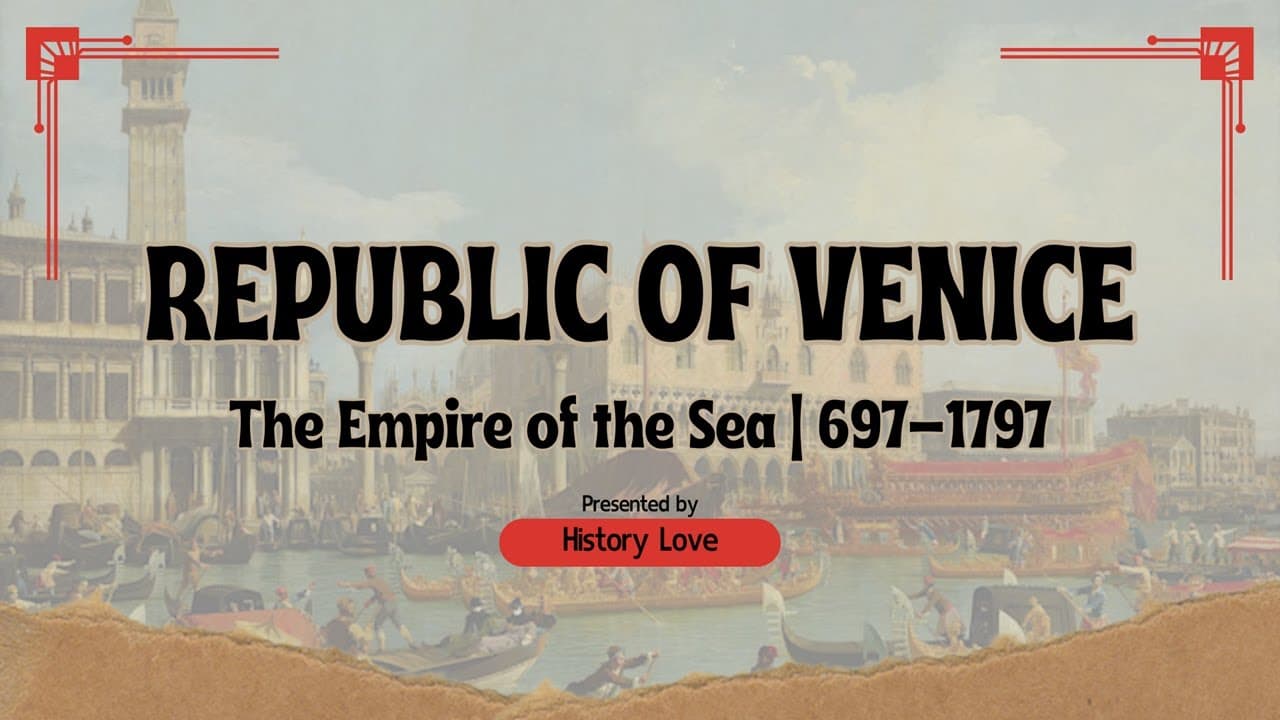
Venice fell in 1797 after centuries of changing trade conditions, Ottoman pressure, repeated wars, political inertia, and shifting alliances weakened its maritime power. Once a commercial bridge between East and West, the republic gradually became splendid but strategically hollow, finally surrendering amid the forces of Napoleon and Austria after secret diplomatic deals helped seal its fate.
Transcript
Imagine a city born from the mist of a lagoon, rising to command the seas and shape the course of history. For over a thousand years, the Republic of Venice wasn't just a city. It was an empire. Merchant princes, naval titans, and master diplomats forged a realm that stretched from the Adriatic to the Silk Road. How did a cluster of marshy islands ... Read More
Key Insights
- Venice emerged from lagoon settlements founded by refugees who fled mainland upheaval after Rome's collapse. Its early inhabitants survived by constructing embankments, salt works, churches, and councils on unstable islands, gradually creating a political community that was neither fully Roman nor Lombard.
- Venetian independence developed through strategic maneuvering between Byzantium, the Franks, the Lombards, and the papacy. The six-month Carolingian siege failed amid plague-ridden marshes and local resistance, reinforcing the lagoon community's ability to protect itself and chart a more independent political course.
- Rivo Alto became Venice's defensible political center when Doge Agnello Participasio moved authority away from vulnerable Malamocco. The acquisition of St. Mark's relics from Alexandria then gave the developing city a patron saint, spiritual prestige, and a powerful civic foundation story.
- Venetian prosperity included morally brutal commerce as well as celebrated trade. The transcript describes enslaved people moving through its markets and even castration becoming a commercial practice, showing that the republic's wealth rested partly on exploitation alongside salt, shipbuilding, luxury goods, and financial services.
- Adriatic dominance was established through organized naval force under Pietro II Orseolo around the year 1000. Venetian fleets defeated the Narentine corsairs, compelled coastal cities to submit, and supported a political identity symbolized by the doge's ceremonial marriage to the sea.
- Byzantine trade privileges accelerated Venice's rise as a commercial intermediary between East and West. A golden imperial bull granted merchants free trade across Byzantine domains, allowing spices, silks, gems, and other eastern luxuries to flow through Venetian networks toward European markets.
- The Venetian Arsenal was a state-run shipyard that supported a permanent and powerful navy. At its described peak, the industrial complex could build one ship per day, giving the republic the maritime capacity to secure commerce, confront rivals, and maintain distant possessions.
- Venice's decline followed changing strategic conditions rather than one isolated defeat. Ottoman expansion after Constantinople fell in 1453, territorial losses such as Negroponte in 1470, repeated wars, piracy, unstable alliances, political inertia, and secret diplomatic arrangements eroded the republic before its 1797 surrender.
Install to Summarize YouTube Videos and Get Transcripts
Explore YouTube Video Summarizer or Get YouTube Transcript Extractor
Questions & Answers
Q: How did Venice become a powerful maritime republic?
Venice grew from scattered lagoon settlements into a maritime republic by combining defensive geography, shipbuilding, trade, and flexible diplomacy. Its leaders maneuvered between Byzantium, the Franks, the Lombards, and the papacy while strengthening centralized rule under the doge. Naval victories secured the Adriatic, and commercial privileges opened Byzantine and Levantine markets to Venetian merchants.
Q: Why was the Venetian lagoon important to the republic's survival?
The lagoon provided a difficult environment for both settlers and invaders. Refugees built communities on shifting sands and tidal islands, creating embankments, salt works, churches, and councils. During the six-month Carolingian siege, the plague-ridden marshes and Venetian resistance frustrated the invaders. This defensible setting helped Venice survive external pressure and develop political independence.
Q: How did Venice gain control of the Adriatic Sea?
Venice secured the Adriatic through sustained naval operations and political pressure on coastal communities. Around the year 1000, Doge Pietro II Orseolo launched a fleet against the Narentine corsairs and intervened along the Dalmatian coast. Resistance was answered with destruction, while submitted cities entered Venice's sphere, turning maritime security into territorial and commercial dominance.
Q: What role did Byzantine trade privileges play in Venice's rise?
Byzantine privileges gave Venetian merchants unusually favorable access to markets across the empire. A golden imperial bull granted free trade from Durazzo to Constantinople after Venice supported Emperor Alexios against his enemies. These arrangements made Venetians privileged brokers who carried spices, silks, gems, and other eastern luxuries through Mediterranean networks and into European commerce.
Q: Why was the Venetian Arsenal important?
The Venetian Arsenal gave the republic a state-run center for producing and maintaining ships. The transcript describes it as the world's first large-scale industrial complex and says it could build one ship per day at its height. Its output supported a permanent navy that protected trade, projected power, and helped Venice outpace maritime competitors.
Q: How did the Crusades expand Venetian influence?
Venice used crusading expeditions to gain ports, privileges, and commercial autonomy in the eastern Mediterranean. After the First Crusade, a fleet of 200 ships supported attacks on Syrian ports, and Doge Ordelafo later led 100 ships against Sidon in 1110. The Pactum Warmundi of 1123 granted a Venetian quarter, courts, and tax exemptions in Jerusalem.
Q: What events signaled the decline of Venetian power?
Constantinople's fall in 1453 marked a major strategic change because Ottoman power threatened Venetian trading rights and coastal possessions. Venice continued defending its network, but wars increasingly produced stalemates and retreats. The fall of Negroponte in 1470 became another clear warning that the republic's eastern position and former Mediterranean dominance were weakening.
Q: Why did the Republic of Venice fall in 1797?
The republic fell after a prolonged loss of strategic and political strength. Ottoman pressure, wars, piracy, shifting alliances, and changing conditions reduced the power created by its naval and commercial networks. By the 18th century, Venice retained its splendor but had become hollowed by lost influence. Political inertia and secret diplomatic deals preceded surrender amid the forces of Napoleon and Austria in 1797.
Summary & Key Takeaways
-
Venice developed gradually after refugees from Padua, Aquala, and other mainland communities settled the Adriatic lagoon following Rome's collapse. Facing Lombard pressure and weakening Byzantine authority, the island settlements built embankments, salt works, churches, councils, and trading networks before uniting under increasingly centralized leadership represented by the doge.
-
Strategic geography, naval strength, commercial privileges, and flexible diplomacy transformed Venice into a maritime empire. Its rulers secured the Adriatic, obtained favorable Byzantine trading rights, supported crusading campaigns, built the state-run Arsenal, and established privileged commercial quarters where merchants financed, insured, exchanged, and taxed goods moving between East and West.
-
Venice reached another high point during the 15th century, expanding across northern Italy and the Dalmatian coast under Doge Francesco Foscari. Constantinople's fall in 1453 and the loss of Negroponte in 1470 signaled growing Ottoman pressure. Wars, piracy, shifting alliances, political inertia, and diplomatic deals eventually preceded surrender in 1797.
-
Key Insights
Read in Other Languages (beta)
Share This Summary 📚
Summarize YouTube Videos and Get Video Transcripts with 1-Click
Try YouTube Summary with ChatGPT & Claude or YouTube Transcript Generator