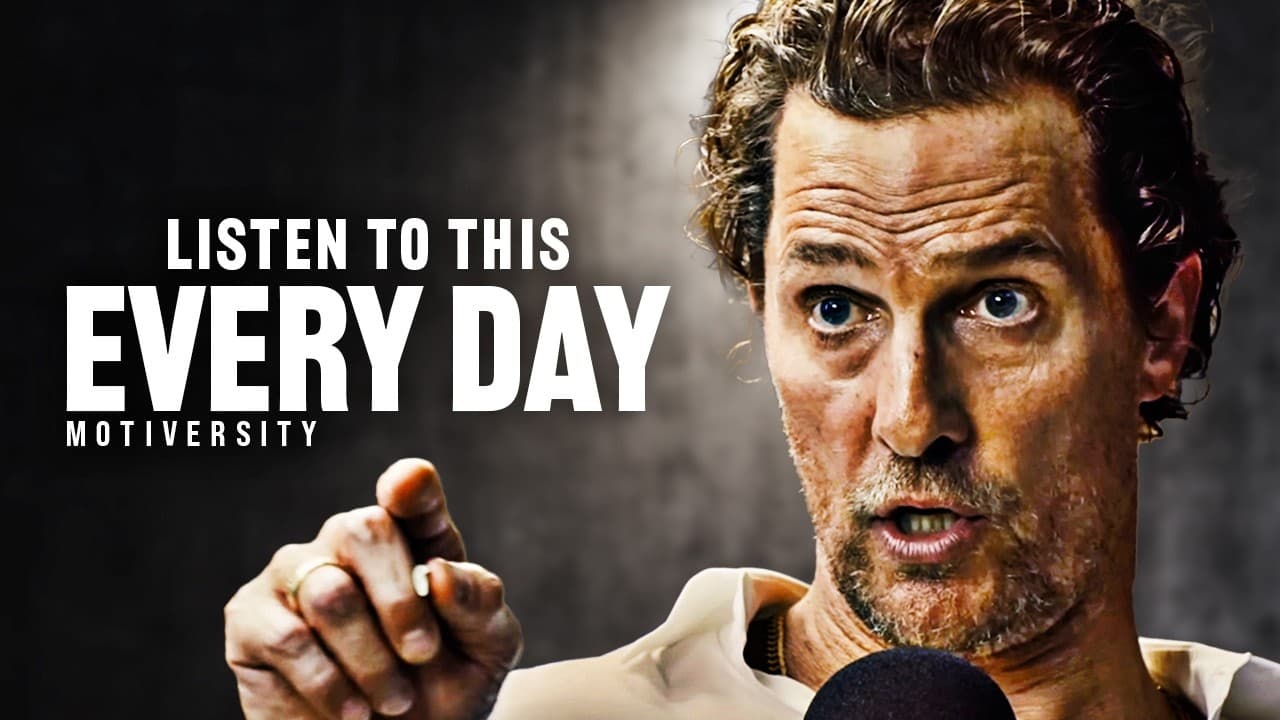
What Does Matthew McConaughey’s Best Motivational Speech, You Owe It to You in 2026, Say About Full Commitment?
TL;DR
Matthew McConaughey’s message is to choose commitments carefully, then prepare, act fully, and finish so you can honestly judge whether a path fits you. He connects self-respect with keeping your word, recognizing your successes, owning mistakes, making amends, and studying habits that create less pain. Read on for practical guidance on commitment, accountability, satisfaction, and self-discovery.
Transcript
if you're going to do it do it say what you can do do what you say if you can't do it don't say you can do it don't over leverage yourself don't over leverage the decision and then jump in and kind of dip a toe I think I'll try it out no think if you're going to try it out beforehand but when it's time to go dive finish it find out come out the oth... Read More
Key Insights
- Full commitment is a way to gain clarity. Deciding carefully before beginning, then completing the effort, lets you determine whether a path is right for you. Partial effort leaves uncertainty because it never proves whether the outcome reflects the opportunity or your limited investment.
- Personal accountability is balanced when success and failure receive honest attention. People should recognize themselves for achieving what they intended, correct themselves when they knowingly fall short, and avoid treating either praise or criticism as something that can come only from others.
- Satisfaction is influenced by repeatable habits. Happiness cannot be guaranteed, but consistent care for health, faith, fatherhood, and marriage can reduce pain and disorder. Observing which behaviors accompany better periods makes those positive conditions easier to understand and intentionally revisit.
- Mistakes require ownership, amends, and forward movement. Taking responsibility preserves agency because the same person who contributed to a problem can choose a better response. Remaining consumed by guilt and regret prevents the next constructive action and keeps the past in control.
- Self-discovery is often easier through elimination. Instead of demanding an immediate answer to who you truly are, identify what you are not and remove what does not feed you. Each exclusion narrows the possibilities and moves you toward a more fitting life.
- Hard work is not the answer to every obstacle. Some situations require greater endurance and effort, while others improve when you release the brake, step back, laugh, or move more lightly. Discernment means selecting the response that the actual problem requires.
- Earned experience creates resilient optimism. Mental or physical effort makes achievement more memorable because you understand how the result was built. That history becomes evidence that difficult goals can be reached again, strengthening confidence without depending on empty reassurance.
- Delayed gratification connects present choices with later benefits. Accepting a less prestigious or lower-paying opportunity can still keep life moving, build useful experience, and open an unforeseen path. Waiting indefinitely for a perfect replacement can instead produce years without meaningful progress.
Install to Summarize YouTube Videos and Get Transcripts
Explore YouTube Video Summarizer or Get YouTube Transcript Extractor
Questions & Answers
Q: How does Matthew McConaughey say you should approach a commitment?
First decide whether you can and should do it, without overpromising or casually dipping a toe in. Once you commit, dive in, finish, and examine the outcome honestly.
Q: Why is full commitment better than half-hearted effort?
Full commitment lets you determine whether a path truly suits you because you know you went all the way. Half-hearted effort leaves you unsure whether you failed, succeeded, or ever gave yourself a fair chance.
Q: How can you build self-respect through accountability?
Say what you can do and do what you say. Give yourself credit when you achieve what you intended, and correct yourself honestly when you fall short despite knowing better.
Q: What should you do after making a mistake?
Own the mistake, make amends, and then move forward. McConaughey warns that remaining trapped in guilt and regret prevents you from turning the page and continuing your life.
Q: How can you identify habits that improve your life?
Study periods when life contains less pain and notice which responsibilities you consistently maintain. McConaughey specifically mentions health, faith, fatherhood, and being a husband as areas he watches.
Q: How can you discover who you are?
Start by identifying who you are not and removing what does not feed you. Eliminating unsuitable directions gradually moves you toward what fits and what you create yourself to be.
Q: When is working harder the wrong response?
More hustle is not useful when the real need is to take your foot off the brake. Some situations call for stepping back, laughing, or moving more lightly instead of adding endurance and effort.
Q: How can difficult experiences support optimism?
Looking backward can reveal how an apparent ending became the beginning of something else. McConaughey also relies on optimism and faith that the present hardship is not all there is, while avoiding unnecessary drama.
Summary & Key Takeaways
-
Definition: Full commitment means deciding before acting, then diving in, finishing, and honestly evaluating the result.
-
Compare: Going all the way creates clarity, while half-hearted effort leaves uncertainty about whether you succeeded or failed.
-
Definition: Personal accountability includes keeping your word, recognizing achievements, and correcting yourself when you knowingly fall short.
-
Definition: Self-respect grows when you can look in the mirror and honestly acknowledge both success and failure.
-
Definition: Satisfaction can be studied through habits associated with less pain, even though happiness cannot be guaranteed.
-
Who: McConaughey watches how consistently he cares for his health, faith, fatherhood, and responsibilities as a husband.
-
Definition: Responding to mistakes requires ownership, amends, and forward movement instead of prolonged guilt and regret.
-
Compare: Identifying who you are not can be easier than immediately defining your true self.
-
Tool: Elimination removes what does not feed you and moves you toward a more fitting life.
-
Compare: Some problems require hard work and endurance, while others require easing off, stepping back, laughing, or moving lightly.
-
Definition: Looking backward connects past events and can reveal that an apparent ending also began something else.
-
Tool: Optimism and faith can keep a hard moment in perspective without creating additional drama.
Read in Other Languages (beta)
Share This Summary 📚
Summarize YouTube Videos and Get Video Transcripts with 1-Click
Try YouTube Summary with ChatGPT & Claude or YouTube Transcript Generator
Explore More Summaries from Motiversity 📚

Summarize YouTube Videos and Get Video Transcripts with 1-Click
Try YouTube Summary with ChatGPT & Claude or YouTube Transcript Generator