What's Next for the Internet?
TL;DR
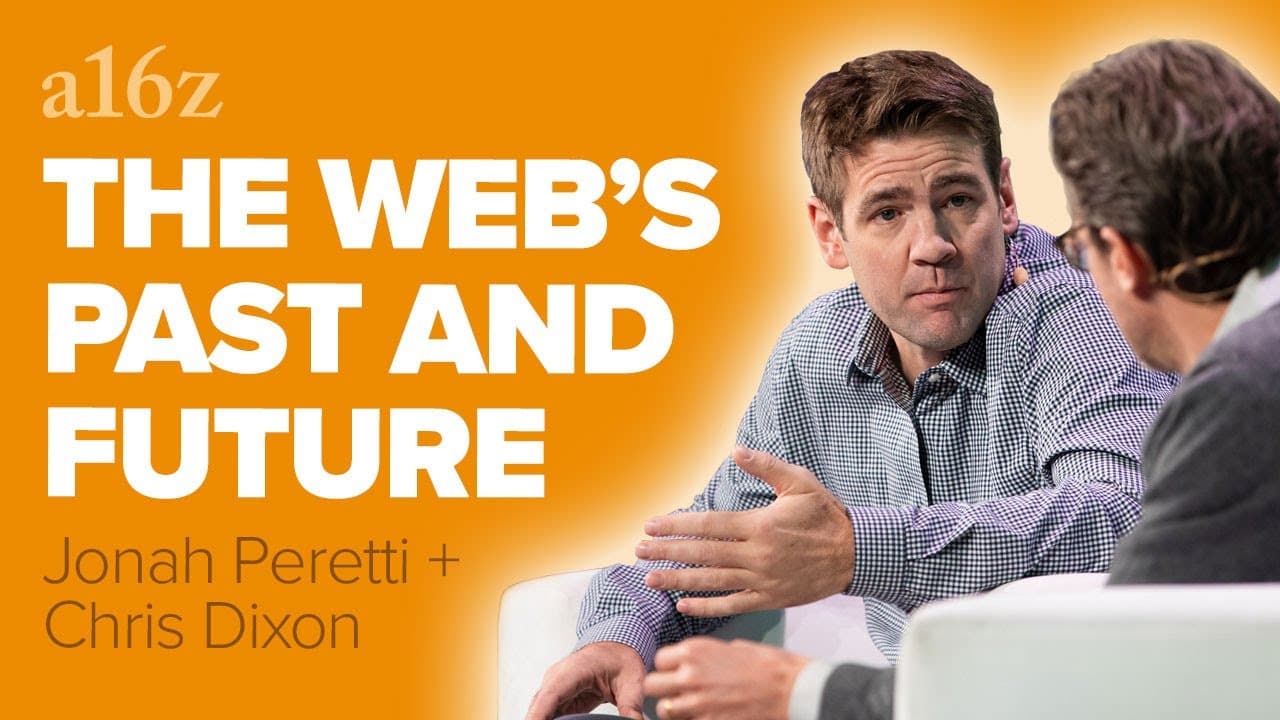
The internet’s next era may combine community governance with the powerful web services that became available to billions of people. Earlier shifts turned brochure-like websites into participatory platforms, while projects such as Wikipedia showed how users can collectively create, attack, and repair online information. Read on to see how experimentation, smartphones, social networks, and community control shaped this vision.
Transcript
I I think that one of the great things about the internet in the first era was the fact that it was sort of community governed and controlled and and the second era what was great is that we got amazing web services that were free for billions of people and I what my hope is in the 30 era we could find kind of a happy medium where we would recaptur... Read More
Key Insights
- 🤪 The internet has gone through different stages of evolution, each bringing new possibilities and challenges.
- 🎮 User-generated content and community control have played crucial roles in shaping the web.
- 😌 The future of the internet lies in finding a balance between community control and technological advancements.
- 😮 The rise of cryptocurrencies and blockchain technology offers opportunities for more inclusive and decentralized internet models.
- 🔉 Social media platforms and online marketplaces are transforming traditional industries and driving transactional media.
- 📈 Evolving technology trends like AI and VR will further impact the internet landscape.
- 👤 Privacy concerns and the need for user empowerment are central to shaping the future of the internet.
Install to Summarize YouTube Videos and Get Transcripts
Explore YouTube Video Summarizer or Get YouTube Transcript Extractor
Questions & Answers
Q: What's next for the internet?
The hoped-for next era is a happy medium between community control and advanced web services. It would recapture the community-governed qualities of the early internet while preserving services that became freely available to billions of people.
Q: What was the internet like in its first era?
Much of the early web resembled magazines or brochures placed online, although services such as eBay were exceptions. Like early films that initially copied plays, websites had not yet developed their own full design grammar.
Q: How did the web become a participatory medium?
Entrepreneurs began recognizing that the web was fundamentally a two-way or multi-way communication device. That realization opened possibilities for collaborative writing, tagging, user-generated content, and new kinds of online interaction.
Q: Why was the early web a major period of experimentation?
New concepts and services appeared rapidly as people explored what online participation could enable. Twitter, Facebook, Delicious, and Flickr are named as examples of the ideas and products emerging from that experimentation.
Q: What does Wikipedia demonstrate about community-controlled platforms?
Wikipedia shows how users can collectively maintain a large information resource even while others introduce spam, errors, or damaging changes. The content may become wrong temporarily, but another community force works to fix it.
Q: How did attitudes toward Wikipedia change?
Wikipedia was criticized for years as inaccurate and was even banned in schools. It later became a dominant information source while competing reference businesses declined.
Q: How did smartphones and social networks change internet use?
The next major wave involved people reading news on smartphones through social networks. The iPhone was initially viewed as a high-end smartphone, but the discussion argues that its greater impact came from functioning as a portable computer that challenged the PC.
Q: What balance should the internet's next era pursue?
It should preserve the strong services developed during the internet’s later era while restoring more community governance and control. The goal is not simply to return to the early web, but to combine the best qualities of both periods.
Summary
In this video, the speaker discusses the past and future of the internet, exploring the evolution of the web and the potential for new technologies such as blockchain and AI. They highlight the importance of community governance and the need for a balance between centralized and decentralized systems. They also address concerns about decentralized networks and the role of the press in understanding and communicating the value of these systems.
Questions & Answers
Q: What was the internet like in the early days and how did it evolve?
The early days of the internet, often referred to as the web one era, were characterized by basic websites and limited design possibilities. However, there was excitement among entrepreneurs as they realized the potential for a two-way communication device. Social media platforms, tagging, and other new concepts emerged during this period.
Q: How did Wikipedia's success challenge conventional wisdom and traditional media?
In its early years, Wikipedia faced criticism and skepticism, with many doubting its accuracy and value. However, over time, it proved to be a reliable source of information, with studies even showing its accuracy as comparable to established encyclopedias. This demonstrated the power of user collaboration and the ability to collectively fix and improve content.
Q: What were the major advancements in the internet during the second era?
The second era of the internet saw the rise of web services that were free for billions of people, such as social media platforms like Twitter and Facebook. Design possibilities expanded, and new concepts like tagging and sharing emerged regularly. It was a period of experimentation and innovation.
Q: What potential surprises or new discoveries may the internet hold in the coming years?
The speaker believes that we are on the cusp of multiple major technological breakthroughs, including in areas such as AI, reality technologies, and blockchain. As these trends converge, they anticipate a period of experimentation and exploration to uncover new possibilities and applications for these technologies.
Q: Is the internet following the same pattern as previous media, where a few incumbents emerge as gatekeepers?
While some might expect the internet to follow the pattern of previous media, with a few dominant players emerging as gatekeepers, the speaker argues that the internet is different due to its software-based nature and community-controlled design. They believe that the concept of community-owned and operated web services, such as blockchain, can provide a balance and allow for both centralization and decentralization.
Q: How can the fear of decentralized networks and their effects be addressed?
The fear surrounding decentralized networks, like social media platforms, often stems from concerns about the lack of gatekeepers and potential for misinformation and manipulation. However, the speaker believes that finding a "happy medium" between community control and governance can help address these fears. They advocate for establishing community processes and standards, similar to how decisions around the internet's naming service or DNS are made by a non-profit, community-driven organization.
Q: How can we create a more community-controlled internet, like parks or cities, rather than guard-controlled platforms?
The speaker suggests that blockchain technology provides the opportunity to create community-controlled public spaces on the internet. They highlight the value of community ownership and governance, allowing users to have a say in the rules and decisions of these platforms. This approach can create a more vibrant and inclusive internet, similar to a city, rather than a controlled platform like Disneyland.
Q: How do converging trends sometimes create conflicts and challenges for technology platforms?
The convergence of trends, such as the future of media and the need for personal connections, can create conflicts for technology platforms like Facebook. Balancing the goals of recommending content and creating private spaces for personal connections can be challenging, and platforms may need to navigate trade-offs and societal etiquette.
Q: How can we help society understand the benefits of technology and navigate the challenges it presents?
The speaker suggests that a clearer understanding of the benefits of technology and how it contributes to progress can help society navigate its challenges. They believe that new architectural designs, such as blockchain, that provide inclusive governance and incentives can help democratize the benefits of technology and address concerns about centralization and control.
Q: What potential breakthroughs and advancements can we expect in the near future?
The speaker anticipates major breakthroughs in the convergence of technologies such as AI, new devices, and blockchain. They highlight the increasing number of smartphone users, the significant time spent on these devices, and the potential for technology to disrupt industries like finance, education, and healthcare. They believe we are on the verge of a golden period of exploration and experimentation.
Takeaways
The internet has evolved from a basic web of static pages to a dynamic and interconnected network. The emergence of web services has provided free access to billions of people, but concerns about centralized control and the need for community governance have arisen. As new technologies like blockchain and AI advance, they will converge with existing trends to drive further progress and transformation. It is crucial to strike a balance between centralized and decentralized systems to ensure that the benefits of technology are accessible to all while addressing societal concerns and challenges.
Summary & Key Takeaways
-
The early internet era (Web 1.0) was characterized by static websites and limited communication capabilities. It was a period of experimentation and the emergence of concepts like tagging and user-generated content.
-
The second era (Web 2.0) saw the rise of social media, personalized web services, and free platforms for billions of people. It was a time of rapid innovation and the creation of new possibilities.
-
The future of the internet (Web 3.0) will likely combine the best aspects of community control and technological advancements. It aims to create a happy medium that allows users to actively participate in shaping the web's evolution.
Read in Other Languages (beta)
Share This Summary 📚
Summarize YouTube Videos and Get Video Transcripts with 1-Click
Try YouTube Summary with ChatGPT & Claude or YouTube Transcript Generator
Explore More Summaries from a16z 📚




Summarize YouTube Videos and Get Video Transcripts with 1-Click
Try YouTube Summary with ChatGPT & Claude or YouTube Transcript Generator