How Does Television Shape Characters Like Archer?
TL;DR
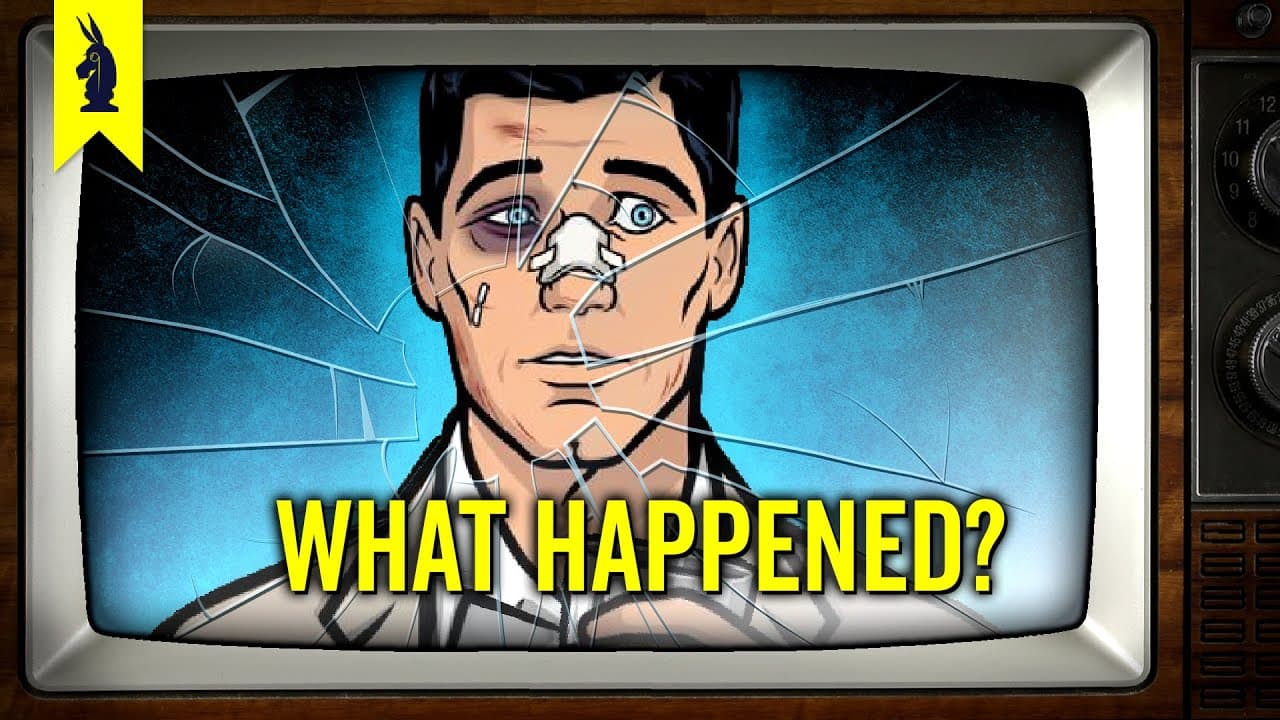
Television significantly shapes Archer's character by filling the emotional void left by absent parental figures, leaving him reliant on unrealistic portrayals of masculinity and social interaction. His inability to form real connections stems from being raised on screen rather than through genuine relationships, leading to a distorted understanding of human behavior and emotional responses.
Transcript
what's up guys jared here the name sterling archer brings to mind a few glorious if disturbing images whizzing bullets that rarely hit anything bloody mary's for breakfast and an adult secret agent with a category 4 edible complex my head hurts and i have no father but what if paying attention to who raised archer could give us greater insights int... Read More
Key Insights
- 👪 Sterling Archer's character reveals the psychological effects of a childhood filled with television as a surrogate parent.
- 🥺 The lack of real-world emotional guidance leads Archer to model his interactions on television rather than genuine experiences.
- 💅 Archer's hyper-masculine behavior parallels societal expectations as shaped by media portrayals of men.
- 🔉 His inability to manage social interactions showcases the detrimental impact of media on childhood development.
- 👪 Archer’s abandonment issues reflect the inadequacies of parental guidance in modern families influenced by media consumption.
- 😷 The humor found in Archer often masks deeper psychological themes related to identity and masculinity.
- 🛝 The contrast between Archer's filmic upbringing and the realities of social norms emphasizes the necessity of grounded experiences.
Install to Summarize YouTube Videos and Get Transcripts
Explore YouTube Video Summarizer or Get YouTube Transcript Extractor
Questions & Answers
Q: How did Archer's childhood impact his ability to form relationships?
Archer's childhood was marked by neglect, which led to a profound reliance on television for emotional support. This lack of real interactions and parental guidance has resulted in his inability to form healthy relationships, as he models his interactions based on what he learned from on-screen characters rather than through authentic engagement with others.
Q: In what ways does Archer's understanding of masculinity affect his behavior?
Archer's perception of masculinity is heavily influenced by characters like Burt Reynolds and James Bond, embodying hyper-masculine traits associated with sexual conquest. This results in behavior that often emphasizes sexual encounters over emotional connections, reflecting a limited understanding of masculinity shaped by pop culture rather than real-life experiences.
Q: How does television consumption affect Archer's social skills?
Archer's extensive television consumption stunted his ability to pick up on social cues and navigate interpersonal relationships. He tends to misinterpret dialogue and employs overly dramatic expressions, showing a disconnect between scripted entertainment and real-world interactions, which hampers his social functioning as an adult.
Q: What role does Archer's mother play in shaping his character?
Archer's mother, Mallory, is depicted as neglectful and abusive, contributing to his emotional and psychological issues. Her failure to provide a stable environment leads him to develop an unhealthy attachment to the distorted portrayals of life presented in media, further complicating his ability to relate to others in a meaningful way.
Q: Can Archer’s experiences be seen as reflective of broader societal issues?
Yes, Archer's experiences can symbolize the impact of modern screen culture on children’s development, highlighting how excessive media consumption can lead to emotional deficits and hinder social skills in real-world scenarios, reflecting a societal need for more meaningful human connections.
Q: How does Archer's character represent a critique of pop culture?
Archer serves as a critique of pop culture by showcasing the nonlinear relationship between media representations and real-life behaviors. His character exhibits the dangers of idealizing impossible stereotypes, suggesting that media can warp an individual's grasp on reality and influence their behavior and decision-making processes.
Summary & Key Takeaways
-
Sterling Archer's complex character is shaped by his isolated childhood, heavily influenced by television and film instead of healthy familial relationships, leading to his inability to form meaningful connections.
-
The analysis highlights the significant role of pop culture in Archer's development, suggesting that his reliance on unrealistic portrayals of masculinity and social interactions contributes to his problematic behavior as an adult.
-
Viewer engagement with Archer's antics is paralleled with broader societal implications, emphasizing the dangers of excessive screen time and the importance of genuine human interactions for healthy emotional growth.
Read in Other Languages (beta)
Share This Summary 📚
Summarize YouTube Videos and Get Video Transcripts with 1-Click
Try YouTube Summary with ChatGPT & Claude or YouTube Transcript Generator