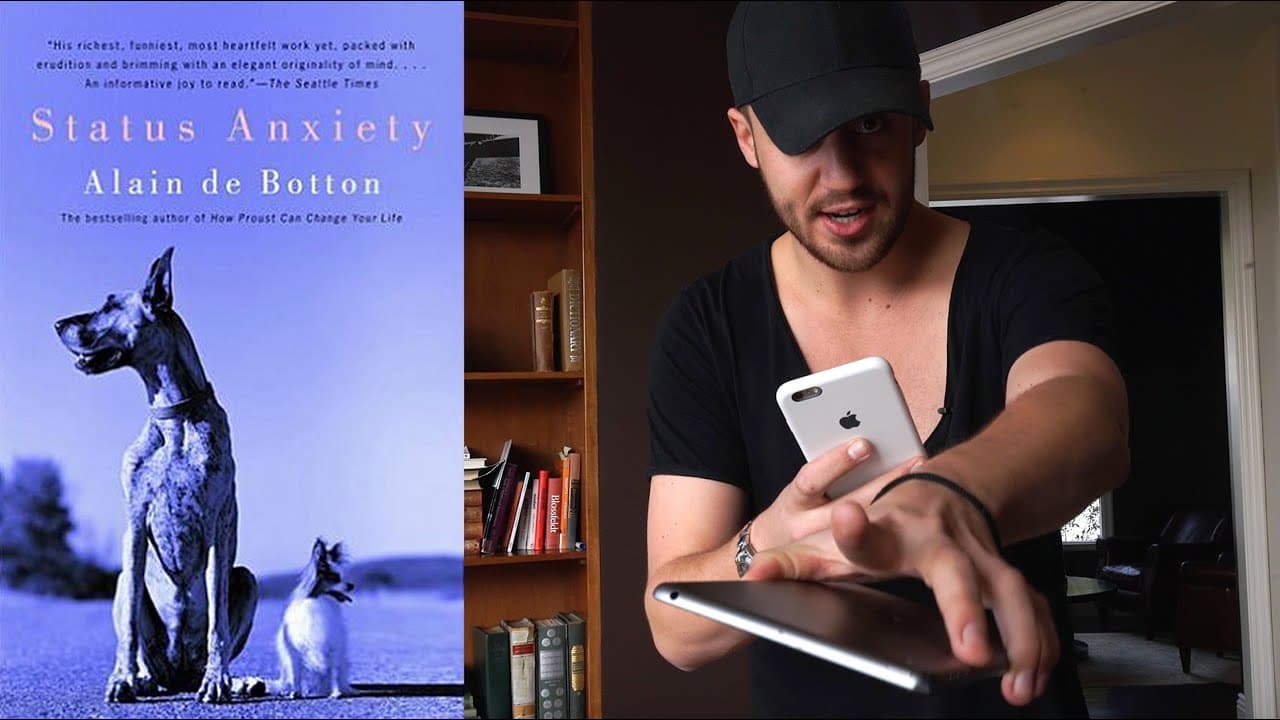
Status Anxiety: What Are YOU Worth? (Alain De Botton Book Review - The School Of Life)
TL;DR
Status anxiety arises when people let social recognition determine their self-worth and compare their position with increasingly broad reference groups. Alain de Botton’s Status Anxiety identifies five causes, lovelessness, expectation, meritocracy, snobbery, and dependence, and proposes philosophy, art, politics, reflection on death, and a Bohemian attitude as responses. Read on to understand both the anxiety’s social roots and the book’s paths toward a more independent sense of value.
Transcript
this is Julian and this week's book is status anxiety by Al Bon and I was personally drawn to this book as this is something that I've been seen for years teaching dating advice for men okay where people will not just come into this to be in a healthy relationship but to actually gain status you know it's like hey if I sleep with a beautiful women ... Read More
Key Insights
- 🥰 Individuals seek status not only for material gains but also for the love and recognition it brings from others.
- 🖐️ Expectations and comparisons with others play a significant role in status anxiety.
- 🤳 Societal interpretations of poverty and social status influence self-esteem and anxiety levels.
- 🧍 Snobbery perpetuates status anxiety by determining how individuals are treated based on social standing.
- 💨 Dependence on unpredictable factors, such as talent and luck, contributes to anxiety in a fast-changing economy.
- 🥰 Philosophy, art, politics, reflection on death, and embracing a Bohemian attitude can help alleviate status anxiety.
- 🥺 Recognizing the arbitrariness of societal ideals and embracing individual values can lead to a more fulfilled life.
Install to Summarize YouTube Videos and Get Transcripts
Explore YouTube Video Summarizer or Get YouTube Transcript Extractor
Questions & Answers
Q: What are the causes of status anxiety in Alain de Botton’s Status Anxiety?
The book identifies five causes: lovelessness, expectation, meritocracy, snobbery, and dependence. Together, they make people seek recognition, compare themselves with others, worry about achievement and social position, and rely on unpredictable external factors for success.
Q: Why do people seek social status?
People seek status not only for material goods or power, but for the love and recognition associated with being considered important. Because people can be uncertain of their own value, others’ appraisals may determine how they see themselves.
Q: How does comparison create status anxiety?
People judge what level of wealth or esteem is appropriate by comparing themselves with a reference group they believe resembles them. Having more can produce satisfaction, while having less can create feelings of inferiority and anxiety.
Q: Why can a dynamic economy intensify status anxiety?
In a dynamic economy, status can rise or fall according to achievement rather than remaining fixed by family lineage. This expands the range of people individuals compare themselves with and increases expectations about who they might become.
Q: How do unlimited expectations contribute to status anxiety?
Unlimited expectations create persistent gaps between what people want and what they can afford, and between who they might be and who they are. When those expectations are not met, people can feel betrayed and anxious.
Q: How can philosophy help overcome status anxiety?
Philosophy challenges the idea that other people’s opinions should determine personal worth. Examining the source and value of those judgments can build a more independent perspective and reduce the effect of insults or negative appraisals.
Q: What role does art play in addressing status anxiety?
Art can reveal and challenge social ideas about status. Tragedy extends sympathy to people in catastrophe, while comedy exposes injustice, excess, envy, and social fragility, helping people recognize that they are not alone.
Q: What solutions does Status Anxiety propose?
The book proposes philosophy, art, politics, reflection on death, and a Bohemian attitude as ways to reduce status anxiety. These approaches question society’s judgments and conventions, highlight the limited worth of status-based attention, and encourage people to define value by their own standards.
Summary & Key Takeaways
-
Status anxiety is driven by the desire for love and recognition from others, leading individuals to obsess over social hierarchy and their place in it.
-
Causes of status anxiety include lovelessness, where individuals seek validation and love from the world, and expectation, where individuals compare themselves to others and feel either superior or inferior based on their social standing.
-
Other causes include the impact of poverty and low social position on self-esteem, the influence of snobbery in determining status, and the uncertainty of dependence on external factors for success.
Read in Other Languages (beta)
Share This Summary 📚
Summarize YouTube Videos and Get Video Transcripts with 1-Click
Try YouTube Summary with ChatGPT & Claude or YouTube Transcript Generator
Explore More Summaries from JulienHimself 📚


Summarize YouTube Videos and Get Video Transcripts with 1-Click
Try YouTube Summary with ChatGPT & Claude or YouTube Transcript Generator