How Can Outsider Perspectives Enhance Leadership Success?
TL;DR
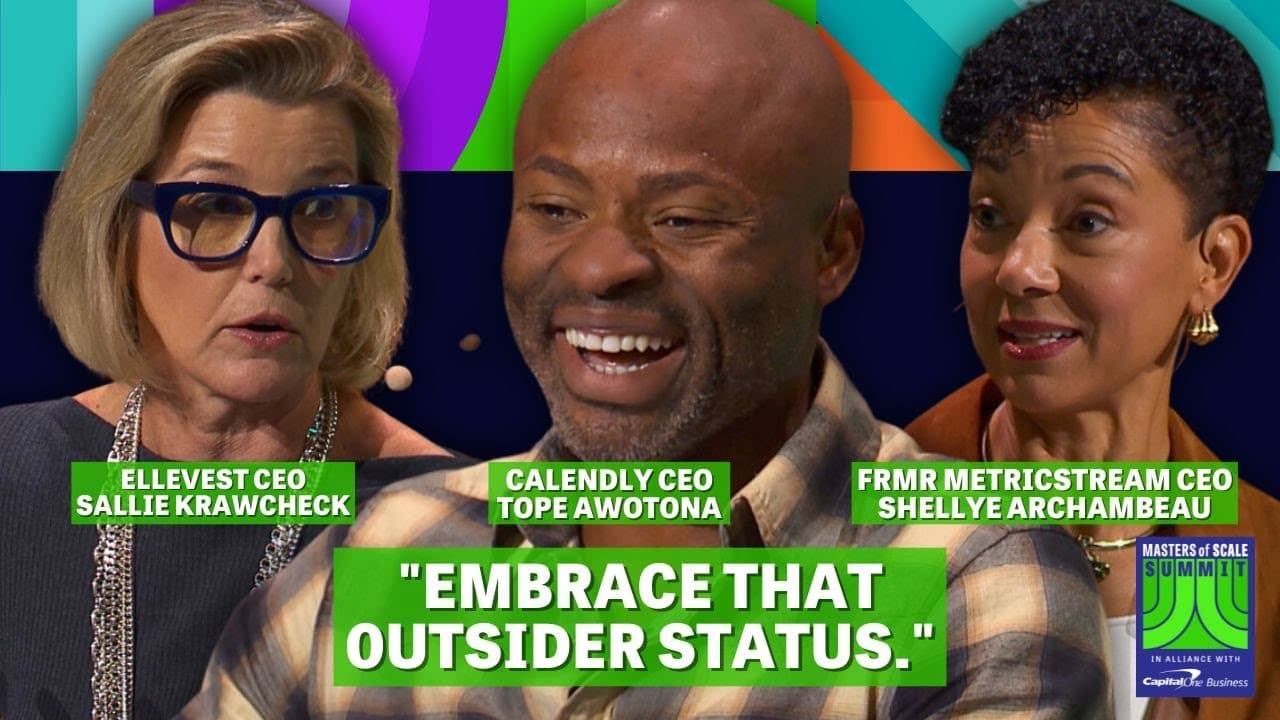
Outsider perspectives can significantly enhance leadership success by challenging conventional wisdom and sparking innovation. Leaders like Sallie Krawcheck, Tope Awotona, and Shellye Archambeau demonstrate that embracing an outsider status allows for unique strategies that better meet market needs, transforming traditional business practices into successful, adaptable frameworks.
Transcript
so uh we we were having our conversation about what makes leadership uh different and what I was going to say IO of you guys is that is that distinctive leadership is about thinking differently you know that's that's a lot of what it is which means thinking like an outsider which which all of you have done it's hard in all circumstances particularl... Read More
Key Insights
- Distinctive leadership often involves thinking like an outsider, which can be challenging but rewarding as it encourages innovation and different perspectives.
- Sallie Krawcheck's journey from Wall Street to founding Ellevest was driven by questioning conventional wisdom and addressing the unique financial needs of women.
- Tope Awotona's nontraditional background and outsider status led him to bootstrap Calendly into a successful global company by leveraging unique strategies and resourcefulness.
- Shellye Archambeau emphasized the importance of listening to the market and pivoting when necessary, turning MetricStream from a failing company into a market leader.
- Integrating outsider thinking within a team involves asking the right questions and reinforcing core values that encourage innovative and diverse perspectives.
- Being an outsider can be difficult due to stereotypes and preconceived notions, but embracing this status can lead to significant achievements and breakthroughs.
- Great leadership involves confidence in one's knowledge and decisions, as well as the ability to adapt and innovate in response to challenges and opportunities.
- Outsider thinking can be embedded in organizational culture through deliberate processes and values that encourage and reward innovative problem-solving.
Install to Summarize YouTube Videos and Get Transcripts
Explore YouTube Video Summarizer or Get YouTube Transcript Extractor
Questions & Answers
Q: What is the main theme discussed by the panelists?
The panelists discuss the power of outsider thinking in leadership and business. They emphasize how embracing an outsider perspective can lead to innovation, drive success, and create distinctive leadership styles. Each shared their personal experiences of navigating challenges and leveraging their outsider status to scale their businesses effectively.
Q: How did Sallie Krawcheck's outsider perspective influence her career?
Sallie Krawcheck's outsider perspective led her to question the conventional wisdom in the financial industry, particularly regarding the financial needs of women. This perspective inspired her to found Ellevest, a financial company by and for women, addressing the gender investing gap and challenging the traditional male-dominated financial advisory model.
Q: What strategies did Tope Awotona use to overcome his outsider status?
Tope Awotona overcame his outsider status by bootstrapping Calendly and focusing on a business model that was not capital-intensive. He leveraged a freemium model to drive growth and focused on understanding customer needs deeply, which allowed him to build a successful product and company without relying heavily on external funding.
Q: How did Shellye Archambeau pivot MetricStream successfully?
Shellye Archambeau successfully pivoted MetricStream by listening to the market and identifying a significant problem in corporate compliance. She transformed the company's focus from a failing product to addressing compliance and risk management, ultimately establishing MetricStream as a leader in the newly recognized GRC (Governance, Risk, and Compliance) category.
Q: How can outsider thinking be integrated into a team?
Outsider thinking can be integrated into a team by asking questions that encourage outside-in perspectives, reinforcing core values that promote innovation, and rewarding behaviors that align with these values. Leaders can foster an environment where diverse ideas are valued and where team members are encouraged to challenge conventional thinking.
Q: What challenges do outsiders face in leadership roles?
Outsiders in leadership roles face challenges such as stereotypes, preconceived notions, and the difficulty of being different in a conformist environment. However, embracing outsider status can lead to significant achievements by allowing leaders to approach problems with fresh perspectives and innovative solutions, ultimately driving success.
Q: What role do core values play in fostering outsider thinking?
Core values play a crucial role in fostering outsider thinking by providing a framework that encourages innovative problem-solving and diverse perspectives. By clearly defining and reinforcing values that support resourcefulness, human-centric decision-making, and adaptability, organizations can cultivate a culture that embraces and benefits from outsider perspectives.
Q: Why is it important for leaders to have confidence in their decisions?
Leaders must have confidence in their decisions because they possess the deepest understanding of their company and its challenges. Confidence allows leaders to trust their judgment, adapt to changing circumstances, and guide their teams effectively. It also enables them to embrace outsider thinking and pursue unconventional strategies that can lead to significant success.
Summary & Key Takeaways
-
In the Masters of Scale Summit 2022, leaders Sallie Krawcheck, Tope Awotona, and Shellye Archambeau shared their experiences as outsiders in their respective industries, highlighting how this perspective can fuel innovation and success. They discussed the importance of questioning norms and embracing unique strategies to overcome challenges.
-
Sallie Krawcheck discussed founding Ellevest to address the financial needs of women, challenging the traditional male-dominated financial industry. Tope Awotona shared how his outsider status led him to bootstrap Calendly, focusing on resourceful growth strategies without relying heavily on institutional capital.
-
Shellye Archambeau emphasized the importance of listening to the market and pivoting strategies to meet consumer needs, transforming MetricStream into a leader in governance, risk, and compliance. The panel highlighted that outsider thinking can be a powerful tool for leadership and scaling businesses.
Read in Other Languages (beta)
Share This Summary 📚
Summarize YouTube Videos and Get Video Transcripts with 1-Click
Try YouTube Summary with ChatGPT & Claude or YouTube Transcript Generator