How to Master Any Skill in 3 Mastery Paths to Success
TL;DR
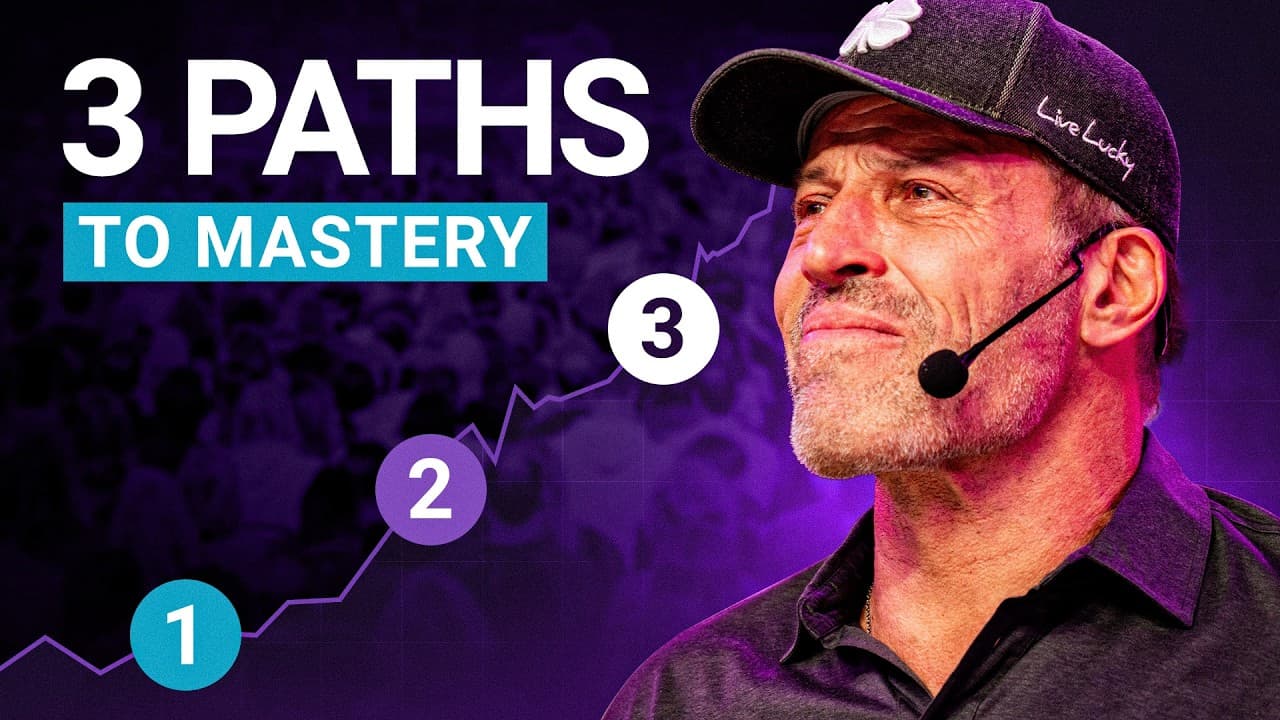
Mastery comes from repeated practice, emotional engagement, and physical execution across three stages. Cognitive mastery is understanding, emotional mastery is feeling and applying, and physical mastery is doing without thinking. Hunger or drive sustains consistent effort, turning private practice into public mastery and lasting results.
Transcript
Michael Jordan's one of my clients this is why he is a six times national champion no one's done this he won three championships in a row in NBA basketball he then retired and came back and won three times a row again but what was his secret he made it look so easy Michael make 500 shots a day every single practice and he would do two practices a d... Read More
Key Insights
- Mastery requires repetition and consistent practice over time to convert knowledge into skill.
- The three stages of mastery are cognitive, emotional, and physical, each enabling deeper levels of performance.
- Energy and emotion amplify learning, making information more memorable when tied to action.
- Great athletes exemplify mastery by repeating core actions until they become automatic.
- Hunger is the defining driver of sustained effort and breakthrough success.
- Pattern awareness helps people separate identity from actions and enables change.
- Public rewards reinforce private practice, accelerating progress.
- Focus on improving existing patterns rather than chasing new information constantly.
Install to Summarize YouTube Videos and Get Transcripts
Explore YouTube Video Summarizer or Get YouTube Transcript Extractor
Questions & Answers
Q: What are the three paths or stages to mastery mentioned in the video?
The video describes three stages of mastery: cognitive Mastery, which is understanding the concept; emotional Mastery, where understanding is paired with feeling and repeated practice; and physical Mastery, where the skill becomes automatic through motion and repetition. Each stage builds on the previous, turning knowledge into skill and eventually into effortless execution.
Q: Why is repetition emphasized as essential to mastery?
Repetition is emphasized because athletes and high achievers repeat core actions over and over to engrain the skill in muscle memory and behavior. Without repetition, knowledge remains theoretical and does not translate into reliable performance. Repetition makes actions automatic and reliable, which is crucial for consistent mastery.
Q: What role does hunger play in achieving mastery according to the speaker?
Hunger is described as the driving force behind sustained effort and achievement. It is a persistent desire to do more, create more, and improve continuously. The speaker asserts that this hunger enables people to overcome obstacles, persist through challenges, and find ways to achieve mastery even with limited resources.
Q: How does the speaker suggest handling energy and emotion in learning?
The speaker suggests creating emotion through action rather than relying on passive thinking. By pairing effort with emotional energy during practice, learning becomes memorable and durable. Energy helps retention, and emotion provided by motion reinforces the lessons, making it easier to apply them later.
Q: What mistake about knowledge does the speaker highlight and how can it be avoided?
The speaker highlights the mistake of equating knowledge with power. Knowledge without execution is ineffective. It is essential to move from understanding to doing, to apply what is learned through consistent practice, leading to real results rather than mere awareness.
Q: How does the speaker describe the relationship between goals and action?
The speaker notes that huge goals are often not reached because people fail to apply what they learn. The path to mastery involves translating insights from seminars or books into consistent, repeated action. Without this translation into practice, goals remain unachieved.
Q: What is the difference between cognitive and emotional mastery?
Cognitive mastery is understanding the concept, while emotional mastery involves integrating that understanding with feeling and habitual practice. Emotional mastery requires sustaining the energy and emotional engagement necessary to perform the skill regularly, turning knowledge into practiced behavior.
Q: Why is public reward important in the context of mastery?
Public rewards reinforce private practice by providing external validation for the skills honed in private. When people see that persistence and consistent practice lead to visible outcomes, they are motivated to maintain or increase their efforts, accelerating progress toward mastery.
Summary & Key Takeaways
-
Mastery is achieved through deliberate repetition and consistent effort, not just knowledge. The three stages are cognitive, emotional, and physical, each building on the last to turn understanding into automatic skill. A hungry, driven mindset sustains practice and accelerates progress.
-
Energy and emotion amplify retention; information without emotion is rarely retained, while strong emotion helps embed skills through physical repetition and motion.
-
True mastery requires translating private practice into public achievement, recognizing patterns, and continuously refining technique rather than merely accumulating information.
Read in Other Languages (beta)
Share This Summary 📚
Summarize YouTube Videos and Get Video Transcripts with 1-Click
Try YouTube Summary with ChatGPT & Claude or YouTube Transcript Generator
Explore More Summaries from Tony Robbins 📚



Summarize YouTube Videos and Get Video Transcripts with 1-Click
Try YouTube Summary with ChatGPT & Claude or YouTube Transcript Generator