Education gap: The root of inequality
TL;DR
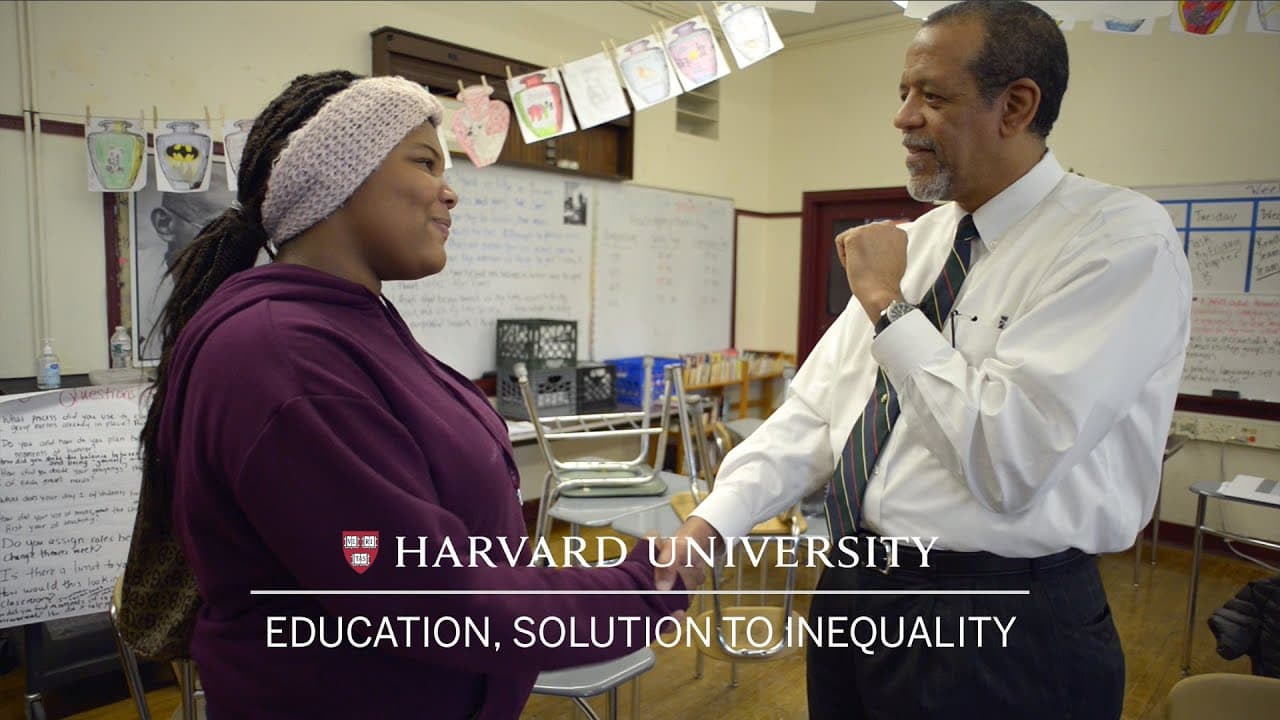
Educational inequality is a major cause of broader social inequalities, impacting access to jobs, income, and political engagement. To achieve equity, it's essential to address disparities in educational outcomes based on race, gender, and socioeconomic status, starting from early childhood and adapting educational approaches to meet diverse student needs.
Transcript
educational inequality is probably more than anything else the fundamental root of broader inequality if we look at inequality and access to particular careers inequality and income and wealth inequality in the nature of political participation all those things are mitigated by equalizing the skills that education produces not only the academic ski... Read More
Key Insights
- ♿ Educational inequality is a significant contributor to broader inequality, affecting access to careers, income, wealth, and political participation.
- 🐎 Achieving educational equity requires addressing disparities based on race, gender, and socioeconomic status in different contexts.
- 🖐️ Early childhood initiatives play a crucial role in bridging educational disparities and ensuring children start on an equal footing.
- 🧑🎓 Intervening in youth culture and helping students shape the school culture they desire can promote positive behaviors and values.
- 👍 Progress in inner-city schools proves that with political will and collective effort, educational equity is achievable.
Install to Summarize YouTube Videos and Get Transcripts
Explore YouTube Video Summarizer or Get YouTube Transcript Extractor
Questions & Answers
Q: Why is educational inequality considered the root cause of broader inequality?
Educational inequality hinders equal access to opportunities and resources, perpetuating disparities in careers, income, wealth, and political participation. By equalizing educational outcomes, we can mitigate these broader inequalities.
Q: How does Boston address educational equity issues?
Boston recognizes the disparities in educational outcomes based on race and gender and aims to achieve equitable results for all. The city is focused on addressing educational equity issues and making necessary changes to deliver excellence.
Q: What challenges must be addressed when addressing achievement gaps?
Achieving true equality involves addressing not only racial achievement gaps but also disparities in high-income suburban districts and inner-city schools. The key challenge is finding ways to meet the unique needs of students in different contexts to ensure excellence.
Q: How can early childhood initiatives address educational disparities?
The "Boston basics" initiative targets early childhood parenting and aims to provide five basic ideas to parents, ensuring their children don't fall behind by the age of two. It focuses on building social support networks and providing information to all parents, regardless of race, ethnicity, or socioeconomic background.
Summary
In this video, the speaker emphasizes the importance of educational equity in tackling broader societal inequality. He discusses the need to equalize skills and opportunities provided by education in order to mitigate disparities in various aspects of life, such as income, wealth, and political participation. The speaker also highlights the educational equity issues in Boston and the challenges faced in addressing achievement gaps based on race, gender, and socioeconomic status. He stresses the significance of early childhood education and parenting support, as well as the role of youth culture in creating a positive school environment. The speaker concludes by urging the importance of taking action to ensure equal educational opportunities for all, regardless of race, ethnicity, or socioeconomic background.
Questions & Answers
Q: Why is educational equity considered the fundamental root of broader inequality?
Educational equity is seen as the key to mitigating broader inequality because it equalizes the skills that education produces, not just in terms of academic proficiency, but also in terms of dispositions, such as diligence, conscientiousness, and a sense of agency. By raising outcomes in the field of education, we can create a society where an individual's race or ethnicity tells us nothing about their test scores, grades, or occupation. Therefore, addressing educational inequality is crucial in creating a more equal and fair society.
Q: What are the educational equity issues in Boston?
In Boston, there are disparities in educational outcomes based on gender and race. To achieve equal results for all students, Boston needs to confront educational equity issues. This means addressing the achievement gaps observed among students of different racial backgrounds. Moreover, educational equity in Boston also entails catering to students of color in high-income suburban districts who lag behind their white counterparts and inner-city school districts with high levels of poverty that struggle to attract qualified teachers.
Q: How can inner-city schools adapt to the needs of their students?
Inner-city schools must focus on adapting to the unique needs of their students, which are often different from those of children in upper-income suburbs. The most effective schools and teachers understand and meet the needs of these students by creating a person-environment fit. By doing so, students are met where they are, and their specific needs are addressed throughout their educational journey. If this approach can be adopted on a larger scale, it holds the potential to reduce poverty in future generations and create a society that addresses racial disparities effectively.
Q: How do achievement gaps manifest across different demographics?
Achievement gaps based on race, gender, and socioeconomic status are evident in national data. These gaps are already stark by the age of two, indicating that the necessary interventions cannot wait until school starts. To tackle this issue, Boston has launched an initiative called the Boston basics, which focuses on providing parents of young children with five fundamental principles of early childhood parenting. This initiative aims to ensure that children don't fall behind by the age of two, regardless of their racial, ethnic, or socioeconomic background.
Q: How does the youth culture play a role in educational equity?
Youth culture has a significant impact on educational equity. Schools have their curriculum, but there is also the culture that students themselves create. The misbehavior observed in schools often stems from students trying to fit in rather than genuinely wanting to engage in certain behaviors. It is crucial to intervene in the youth culture and help students develop the culture they truly desire. By shaping the culture in alignment with their values, students can foster an environment of mutual support and cooperation. Encouraging student leadership and giving them the opportunity to organize projects that promote honest dialogue can empower them to positively shape their schools and, in turn, influence other students around the country.
Q: Why is it important to take action on educational equity regardless of optimism or pessimism?
The current educational landscape and societal challenges are reminiscent of the 60s and early 70s, suggesting that certain issues have resurfaced despite previous progress. Nevertheless, considerable progress has been made in inner-city schools, indicating that with sufficient political will, positive change can be achieved. It is the generational responsibility of individuals to address educational equity, irrespective of whether they feel optimistic or pessimistic about the outcome. Failing to take action would have detrimental consequences, making it imperative to confront these issues head-on and strive for equal educational opportunities for all.
Takeaways
Educational equity is the key to addressing broader societal inequality. By equalizing the skills and opportunities provided by education, we can mitigate disparities in various aspects of life, such as income, wealth, and political participation. In Boston and across the nation, there are achievement gaps based on race, gender, and socioeconomic status that need to be addressed. Early childhood education and parenting support are crucial to ensure that children don't fall behind by the age of two. Youth culture plays a significant role in shaping the educational environment, and empowering students to lead and create a positive culture can foster support and cooperation among peers. Taking action on educational equity is a necessity regardless of individual optimism or pessimism, as it is a generational responsibility to strive for equal educational opportunities for all.
Summary & Key Takeaways
-
Educational inequality is a fundamental factor contributing to broader inequality in areas such as career access, income, wealth, and political participation.
-
Boston, although a leader in education, still faces challenges in delivering desired outcomes and achieving educational equity.
-
Achievement gaps exist not only along racial lines but also in high-income suburban districts and inner-city school districts. Efforts are needed to adapt educational approaches and meet the diverse needs of students.
Read in Other Languages (beta)
Share This Summary 📚
Summarize YouTube Videos and Get Video Transcripts with 1-Click
Try YouTube Summary with ChatGPT & Claude or YouTube Transcript Generator
Explore More Summaries from Harvard University 📚





Summarize YouTube Videos and Get Video Transcripts with 1-Click
Try YouTube Summary with ChatGPT & Claude or YouTube Transcript Generator