How to Build an Optimistic, People-First Company
TL;DR
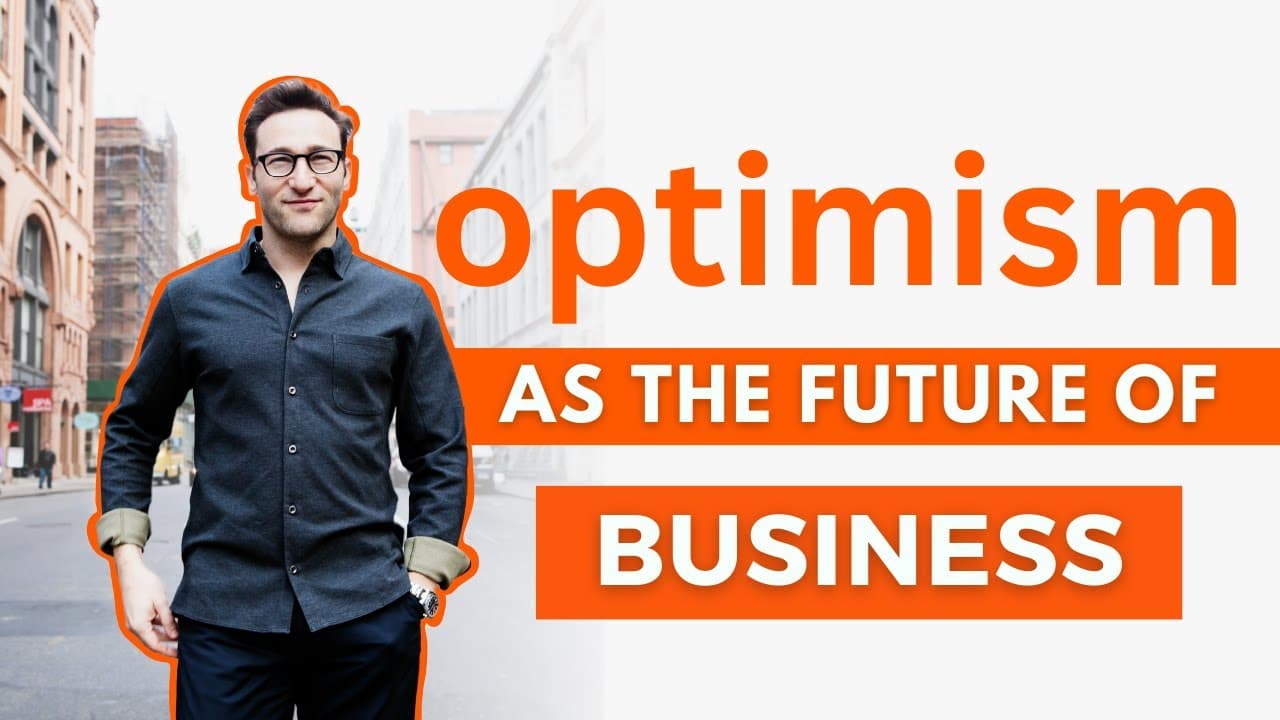
Build an optimistic company by defining a vision of a better world, then choosing tools and opportunities that move the organization toward it. Sustainable leadership also requires human skills such as listening, empathy, feedback, and difficult conversations, along with a commitment to employees and customers that takes priority over arbitrary short-term financial projections.
Transcript
so welcome everyone hello it's my pleasure to um invite you here all today um and thank you for joining us my name is Melissa Brennan and I work in the institutional advancement um an alumni relations office at brandise University and we're very excited to have with us today uh our guest speaker Simon cnnic class of 95 uh the title of the talk is w... Read More
Key Insights
- Entrepreneurs are problem solvers, not simply people who start or own small businesses. They can apply entrepreneurial thinking inside governments, large corporations, or growing companies, and their defining contribution is finding ways to solve problems that matter within a broader purpose.
- An optimistic entrepreneur is guided by a vision of a world that does not yet exist. That vision provides direction, while entrepreneurship supplies the search for products, technologies, and other practical tools that can move people closer to the imagined future.
- A vision is a description of a better future, not a promise to produce the best, most reliable, or highest-quality product. Product excellence can support a vision, but it does not replace the idealistic picture that inspires people to participate.
- Products are mechanisms for advancing a vision rather than the vision itself. Steve Jobs and Steve Wozniak imagined individuals competing with corporations, and the personal computer became the available tool for pursuing that revolutionary idea within the conditions of their time.
- Shareholder-first management weakened the traditional relationship among companies, employees, and customers. When external shareholder value takes precedence, leaders may neglect the competitive pursuit of better products and the responsibility to care for people who contribute to the organization.
- Mass layoffs can damage trust when profitable companies eliminate jobs merely because results missed arbitrary projections. Employees who witness such decisions learn that loyalty may not be reciprocated, making corporate complaints about younger workers' limited loyalty difficult to justify.
- Human skills are essential business capabilities that complement the technical skills required to perform a job. Listening, empathy, feedback, and difficult conversations enable leaders to build trust, develop culture, and guide organizations through emotionally challenging circumstances.
- Difficult conversations can begin with an honest admission of fear and fallibility. A leader can acknowledge the possibility of saying the wrong thing, ask the team for help, and explain that discussing an important issue matters more than avoiding it because of discomfort.
Install to Summarize YouTube Videos and Get Transcripts
Explore YouTube Video Summarizer or Get YouTube Transcript Extractor
Questions & Answers
Q: What makes an entrepreneur different from a small business owner?
An entrepreneur is fundamentally a problem solver, while a small business owner is someone who owns a small business. Entrepreneurship is not limited to starting companies because entrepreneurial people also work in governments and large corporations. The strongest entrepreneurs do not solve random problems. They pursue problems connected to an idealistic vision of a world that does not yet exist.
Q: How can an entrepreneur build a company around optimism?
An entrepreneur can build around optimism by articulating a vision of a better future and continually searching for tools that move society closer to it. The vision should describe a world that does not yet exist, rather than merely promising the best or most reliable product. Products, technologies, and business models then serve as mechanisms for advancing that larger aspiration.
Q: What is the difference between a company vision and a product goal?
A company vision describes an imagined future that can inspire people, while a product goal focuses on qualities such as reliability, quality, or competitive performance. Claiming that a company will build the best product is not a vision. The product should instead function as a practical tool that helps the organization make progress toward the better world it wants to create.
Q: Why does shareholder-first management weaken company culture?
Shareholder-first management can weaken culture by placing the demands of an external constituency above customers and employees. Leaders may use mass layoffs to satisfy arbitrary financial projections even when the company remains profitable. Such decisions can balance short-term figures while damaging long-term trust, breaking the reciprocal expectation that companies will care for employees and employees will respond with loyalty.
Q: Why do younger employees appear less loyal to companies?
Younger employees have grown up seeing mass layoffs treated as normal, including cases where workers lost jobs through no fault of their own. That experience signals that employers may not reciprocate loyalty when financial projections are missed. It is therefore inconsistent for companies to lament limited employee loyalty after decades of weakening their own commitment to workers and making employment more transactional.
Q: What human skills do modern business leaders need?
Modern business leaders need listening, empathy, the ability to give and receive feedback, and the capacity to conduct difficult conversations. These human skills complement the job-specific abilities sometimes called hard skills. They are necessary for building trust, shaping culture, handling emotionally charged events, and helping people work effectively together, especially when circumstances become uncertain or uncomfortable.
Q: How should a leader begin a difficult workplace conversation?
A leader can begin by openly acknowledging that the subject is difficult and admitting fear of saying the wrong thing or accidentally upsetting someone. The leader can then ask the team for help, recognize that the conversation may involve mistakes, and explain why discussing the issue is more important than remaining silent. This approach combines vulnerability, honesty, and responsibility.
Q: How should universities prepare students for entrepreneurship and work?
Universities should teach human skills alongside balance sheets, profit-and-loss concepts, and other technical business knowledge. Students need structured opportunities to practice listening, empathy, feedback, and difficult conversations because these abilities support trust, culture, and leadership. Better preparation is especially important when companies are not equipping employees with these skills, leaving future leaders responsible for bringing them into business.
Summary & Key Takeaways
-
Entrepreneurs are problem solvers who can operate in startups, governments, or large corporations. The strongest entrepreneurs pursue a vision of a world that does not yet exist and select products, technologies, or other tools according to how effectively those mechanisms advance that larger vision.
-
Business became more transactional when shareholder value began taking priority over customers and employees. Mass layoffs designed to meet arbitrary financial projections weakened the reciprocal promise that companies would care for employees and employees would respond with loyalty, while also causing long-term damage to organizational culture.
-
Modern professionals need both job-specific capabilities and human skills. Listening, empathy, giving and receiving feedback, and conducting difficult conversations help leaders build trust, strengthen culture, and manage sensitive situations. These abilities can be taught, learned, and practiced, making them essential preparation for entrepreneurship and workplace leadership.
Read in Other Languages (beta)
Share This Summary 📚
Summarize YouTube Videos and Get Video Transcripts with 1-Click
Try YouTube Summary with ChatGPT & Claude or YouTube Transcript Generator
Explore More Summaries from Simon Sinek 📚

Summarize YouTube Videos and Get Video Transcripts with 1-Click
Try YouTube Summary with ChatGPT & Claude or YouTube Transcript Generator