What Justifies Obedience to Government, Hobbes Explains
TL;DR
Obedience to a strong sovereign is justified by the state of nature and fear of chaos, not by divine right. Hobbes argues that people form a Leviathan to escape nasty, brutish life, and have a duty to submit to a ruler even when that ruler is imperfect, unless the ruler threatens their lives.
Transcript
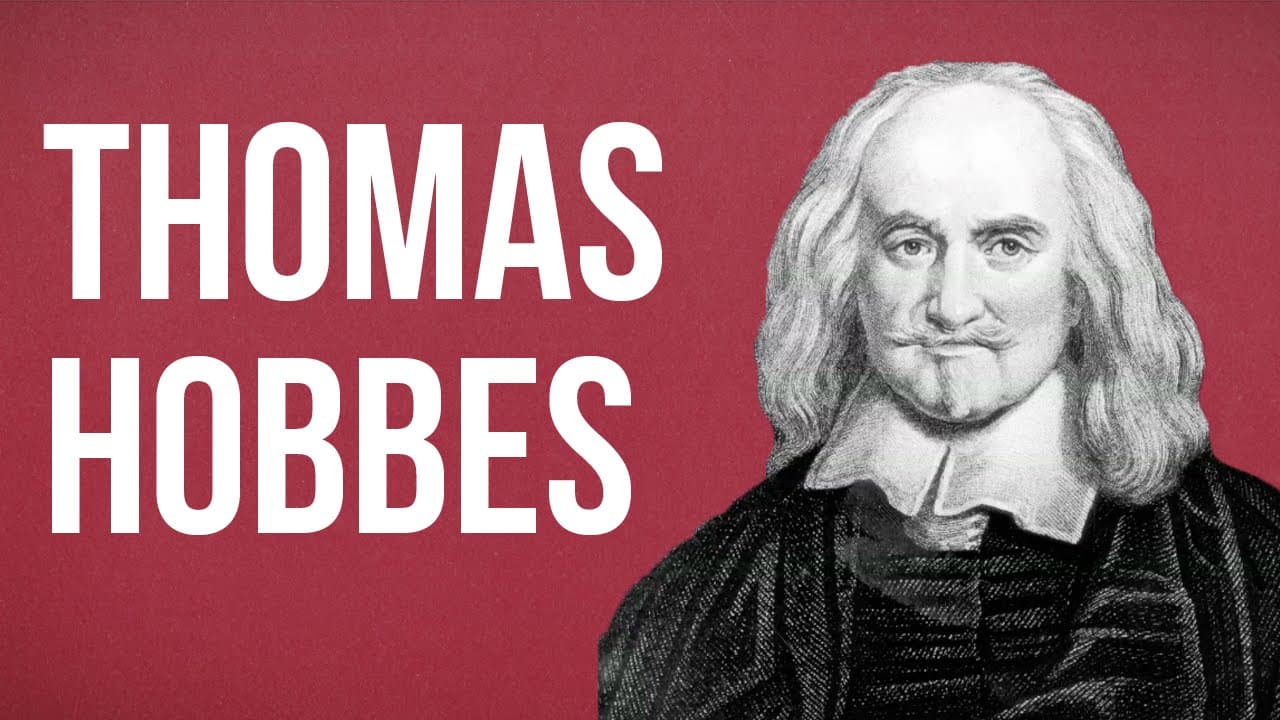
Thomas Hobbes was a 17th century English Philosopher. Who is on hand to guide us through one of the thorniest issues of politics. To what extent should we patiently obey rulers, especially those who are not very good and to what extent should we start revolutions and depose governments, in search of a better world. Hobbes's thinking is inseparable ... Read More
Key Insights
- Security over liberty drives political obligation
- The state of nature is nasty, brutish, and short
- People consent to authority to avoid chaos
- Leviathan embodies the social contract
- Obedience is owed unless rulers threaten lives
- Divine right loses persuasive power as religion declines
- Rulers may be wicked but still legitimate if order is preserved
- Revolutions are only justified when the ruler directly endangers lives
Install to Summarize YouTube Videos and Get Transcripts
Explore YouTube Video Summarizer or Get YouTube Transcript Extractor
Questions & Answers
Q: What is Hobbes's basic claim about why people form government?
Hobbes asserts that people form governments to escape the state of nature, where life would be nasty, brutish, and short. To avoid constant fear and violent conflict, individuals collectively agree to surrender some freedom to a sovereign who can enforce peace and prevent the chaos that would arise if everyone acted on their own. This creates the social contract and yields security through centralized authority.
Q: Why does Hobbes reject the divine right of kings in his theory?
Hobbes rejects the divine right of kings because it relies on religious justification and does not account for the practical necessity of security and order. As religious observance declines, the divine right loses persuasiveness, making stable governance rely more on the power of a sovereign and the people’s consent to prevent civil war and disorder.
Q: What is the Leviathan and what role does it play in Hobbes’s argument?
The Leviathan is the sovereign authority created by the social contract to enforce peace and prevent the state of nature. It embodies centralized coercive power that individuals submit to for security. Hobbes argues that obedience to this sovereign is essential, as it is the only way to avoid endless conflict and ensure collective survival.
Q: Under what conditions can people justifiably protest against the ruler?
People can justifiably protest if the ruler directly threatens their lives. Otherwise, Hobbes holds that opposition is unnecessary and counterproductive, as the ruler’s primary role is to maintain order and prevent chaos. Even if the ruler imposes taxes or suppresses dissent, these acts do not by themselves justify rebellion.
Q: How does Hobbes describe life in the state of nature?
Life in the state of nature, according to Hobbes, would be nasty, brutish, and short. Without a central authority to enforce rules, individuals would be driven by fear, leading to squabbling, infighting, and ongoing danger. This bleak scenario motivates citizens to seek protection through a strong sovereign.
Q: What danger does the social contract address aside from chaos?
The social contract addresses the danger of civil war and the collapse of social order. By agreeing to obey a sovereign, people reduce the risk of violent conflict and maintain a stable framework for economic activity, social cooperation, and peaceful advancement, even if the sovereign is not perfect.
Q: Does Hobbes think revolutions are always wrong?
Hobbes does not condemn revolutions categorically, but he doubts their efficacy. He argues that revolutions are dangerous and can lead to worse conditions if the new government cannot swiftly establish order. Real change should aim to preserve security and prevent chaos, rather than provoke more bloodshed.
Q: What is the central tension in Hobbes’s theory between liberty and security?
The central tension is that true liberty is limited by the need for security. To avoid the state of nature, individuals accept a sovereign with broad powers, sacrificing certain freedoms. The payoff is a stable society where peaceful coexistence and productive activity become possible, even if it means frequent compliance.
Summary & Key Takeaways
-
Hobbes frames politics around security over liberty, arguing that authority arises from fear and the need to avoid chaos. The Leviathan represents the social contract that binds subjects to a sovereign. Revolutions are morally permissible only if the ruler directly threatens lives. The state of nature is used as a baseline to justify centralized power.
-
Hobbes critiques the divine right of kings as insufficient and historically unpersuasive as religious authority wanes. He privately doubts religion but prioritizes order. The social contract is a practical solution to human conflict, enforcing obedience to prevent civil war and bloodshed. Authority is maintained through coercive power.
-
Hobbes presents a cautious, pessimistic view of government, where safety justifies limitation of rights. Even tyrannical rulers may be morally legitimate if their rule prevents worse outcomes. The core message emphasizes stability, prevention of chaos, and the duty to obey for the common good.
Read in Other Languages (beta)
Share This Summary 📚
Summarize YouTube Videos and Get Video Transcripts with 1-Click
Try YouTube Summary with ChatGPT & Claude or YouTube Transcript Generator