Why Did RAF Use Pink Camouflage on Spitfires?
TL;DR
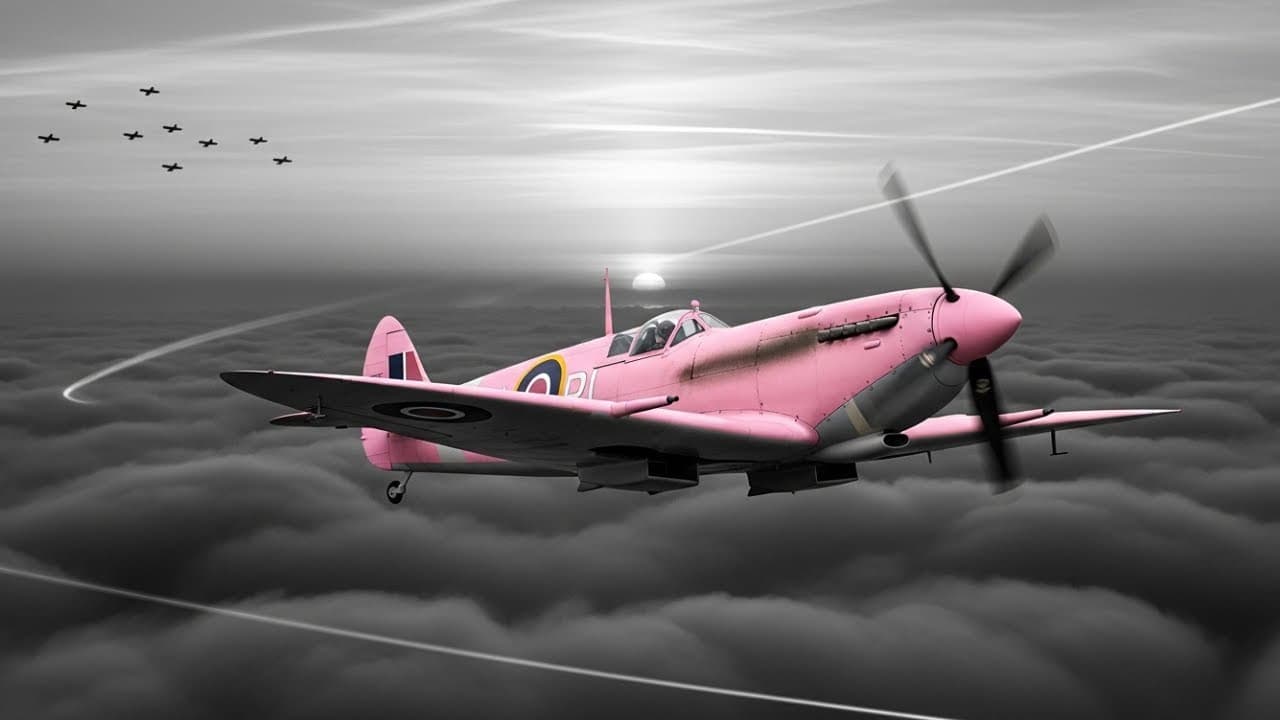
RAF Spitfires were painted pink to exploit atmospheric haze and dawn light, making them invisible during reconnaissance missions over Nazi territory. This unconventional camouflage, known as PRU Pink, allowed pilots to gather critical intelligence without being detected, challenging traditional military camouflage strategies.
Transcript
On the morning of June 30th, 1940, at precisely 11:00 hours, a lone Spitfire painted in an absurd shade of pale pink roared across the English Channel at 30,000 ft. Its target, the newly occupied German naval base at Lveok Pulmick in Britany, barely 11 days after Vermach forces had seized it. The pilot, pilot officer George Patterson Christy of the... Read More
Key Insights
- PRU Pink was a camouflage color used by the RAF to make Spitfires invisible during dawn and dusk.
- The pink paint matched the atmospheric light conditions, reducing contrast against the sky.
- Sydney Cotton, an aviation pioneer, developed the concept of using speed and camouflage over armor.
- Reconnaissance Spitfires flew unarmed, relying on speed and invisibility for protection.
- The pink color specifically matched UV light reflection at low sun angles.
- Reconnaissance missions gathered 80% of Allied intelligence during WWII.
- The strategy involved precise timing, altitude, and specific paint application.
- PRU Pink Spitfires flew at medium altitudes, avoiding detection by blending with atmospheric haze.
Install to Summarize YouTube Videos and Get Transcripts
Explore YouTube Video Summarizer or Get YouTube Transcript Extractor
Questions & Answers
Q: Why were RAF Spitfires painted pink during WWII?
RAF Spitfires were painted pink, specifically in a shade known as PRU Pink, to exploit the atmospheric conditions at dawn and dusk. The pink color matched the UV light and atmospheric haze, making the aircraft nearly invisible to enemy forces during reconnaissance missions, allowing them to gather intelligence without being detected.
Q: How did PRU Pink camouflage work?
PRU Pink camouflage worked by matching the specific light wavelengths scattered by atmospheric particles during low sun conditions. This pale pink color reduced contrast against the sky at dawn and dusk, effectively making the aircraft blend with the atmospheric haze and rendering them nearly invisible to enemy observers.
Q: Who was Sydney Cotton and what was his contribution?
Sydney Cotton was an Australian aviation pioneer who developed the concept of using speed and camouflage instead of armor for reconnaissance missions. He convinced the RAF to adopt his approach, leading to the use of PRU Pink and other innovative strategies that significantly improved the effectiveness and survivability of reconnaissance flights during WWII.
Q: What was the role of reconnaissance Spitfires in WWII?
Reconnaissance Spitfires played a critical role in gathering intelligence for the Allies during WWII. By flying unarmed and using innovative camouflage like PRU Pink, these aircraft were able to penetrate deep into enemy territory, photographing key installations and movements, and providing vital information that informed military strategies and operations.
Q: What challenges did reconnaissance pilots face during missions?
Reconnaissance pilots faced numerous challenges, including navigating long missions without radio communication, maintaining precise altitudes and courses, operating cameras, and avoiding enemy detection. They flew unarmed, relying on speed and camouflage for protection, and had to manage fuel carefully to ensure they could return safely from deep into enemy territory.
Q: How did the use of PRU Pink influence military camouflage strategies?
The use of PRU Pink challenged traditional military camouflage strategies by demonstrating the effectiveness of matching environmental light conditions rather than terrain or sky directly. This approach showed that understanding and exploiting specific atmospheric conditions could significantly enhance the effectiveness of camouflage, influencing future military strategies and applications.
Q: What was the impact of PRU Spitfires on Allied intelligence efforts?
PRU Spitfires had a profound impact on Allied intelligence efforts, flying approximately 16,000 sorties and gathering an estimated 80% of all Allied intelligence in Europe during WWII. Their ability to operate undetected allowed for the collection of critical information that informed military decisions and operations, playing a key role in the success of the Allied war effort.
Q: Why was PRU Pink specifically chosen for reconnaissance missions?
PRU Pink was specifically chosen for reconnaissance missions because it matched the scattered light wavelengths present in atmospheric haze during dawn and dusk. This pale pink color reduced the visibility of aircraft against the sky, making them difficult to detect by enemy forces and allowing pilots to conduct missions with a lower risk of interception.
Summary & Key Takeaways
-
During WWII, RAF Spitfires were painted in PRU Pink, a pale pink color, to make them invisible during reconnaissance missions at dawn and dusk. The color matched the atmospheric haze and UV light conditions, allowing the aircraft to blend seamlessly with the sky, thus avoiding detection by German forces.
-
Sydney Cotton, an aviation pioneer, developed the concept of using speed and camouflage instead of armor and guns for reconnaissance missions. This approach allowed unarmed Spitfires to gather critical intelligence, challenging traditional military strategies and proving highly effective in avoiding enemy interception.
-
PRU Pink Spitfires played a crucial role in gathering 80% of Allied intelligence during WWII. The success of these missions relied on a combination of precise timing, altitude, and the innovative use of camouflage, demonstrating the effectiveness of understanding and exploiting environmental conditions for military advantage.
Read in Other Languages (beta)
Share This Summary 📚
Summarize YouTube Videos and Get Video Transcripts with 1-Click
Try YouTube Summary with ChatGPT & Claude or YouTube Transcript Generator
Explore More Summaries from WW2 Recode 📚
Summarize YouTube Videos and Get Video Transcripts with 1-Click
Try YouTube Summary with ChatGPT & Claude or YouTube Transcript Generator