Why Did He Leave the Hidden Camera in His Smoke Detector, and What Did His Daughter Reveal?
TL;DR
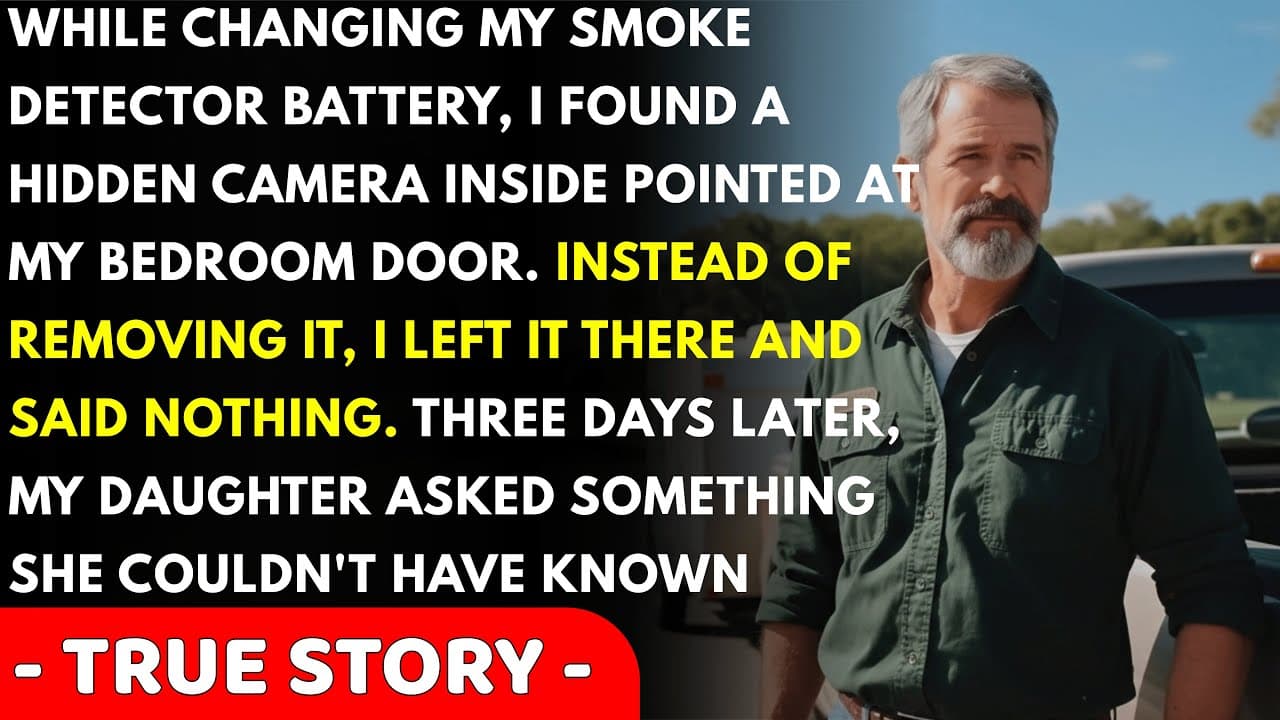
A 67-year-old retired forensic accountant left a hidden camera inside his smoke detector so the installer would think it remained undiscovered while he gathered evidence. His investigation uncovered more cameras, unauthorized transfers to Morrison Financial Services, and suspicious questions from his daughter Sandra about his health, banking, will, and 400-acre farm. Read on to see how he followed the money and exposed the suspected plan.
Transcript
I found a hidden camera inside my smoke detector while changing the battery. Professional installation wireless connection pointed directly at my bedroom door. At 67 years old, living alone on my farm outside Red Deer. Why would anyone need to watch me sleep? To find the truth, I left that camera exactly where it was. I didn't tell anyone. I just s... Read More
Key Insights
- The hidden surveillance is presented as professionally installed equipment concealed inside an ordinary smoke detector and aimed toward the bedroom door. Its placement indicates deliberate observation inside the farmhouse rather than an accidental or openly disclosed home security arrangement.
- The narrator's investigative strategy is to leave the discovered camera untouched so whoever installed it will believe the surveillance remains secret. His experience examining fraud leads him to observe behavior, preserve potential evidence, and avoid confronting his suspected family members prematurely.
- Sandra's behavior raises suspicion because she asks about her father's medications, doctor, sleep, will, banking arrangements, and plans for the farm. Her attention repeatedly shifts toward household detectors, documents, mail, and information that could provide access to his finances or support claims about his competence.
- The surveillance extends beyond the smoke detector because cameras are also found in a living room light fixture, a kitchen clock, and the office. The office camera points toward the desk containing financial documents and a written password list, connecting the monitoring operation to sensitive account information.
- The financial loss is revealed through repeated unauthorized wire transfers from the narrator's savings account to Morrison Financial Services. His search finds no website, registration, or business license for that name, leading him to view it as a ghost company associated with the suspected theft.
- The police response emphasizes that suspicion alone cannot establish who conducted the transfers. The cameras and missing money are concerning, but officers still require concrete evidence connecting Sandra to the financial activity before they can pursue the accusation as a provable case.
- The private investigator identifies a pattern in which adult children may monitor a parent's routines, obtain financial information, exploit accounts, and later seek formal legal control. In the story, Sandra's questions about health and future property plans appear consistent with that suspected progression.
- The channel description states that its stories are entirely fictional works inspired by themes of betrayal, justice, family conflict, and resilience. The account should therefore be understood as a dramatic fictional narrative, even though the description labels the episode as a true story elsewhere.
Install to Summarize YouTube Videos and Get Transcripts
Explore YouTube Video Summarizer or Get YouTube Transcript Extractor
Questions & Answers
Q: How did the narrator discover the hidden camera?
He found it while performing the smoke-detector battery check his late wife Helen had started 30 years earlier. The detector felt too heavy for its 9V battery and wiring, and inside he found a thumb-sized black cylinder whose lens pointed through a drilled hole toward his bedroom door.
Q: Why did he leave the hidden camera inside the smoke detector?
He wanted the installer to believe the surveillance remained secret while he investigated and gathered evidence. Drawing on 38 years as a forensic accountant, he restored the detector exactly as he found it and began closely observing his family.
Q: What made him suspect his daughter Sandra?
Sandra had been visiting every Sunday for 3 months and had repeatedly been alone in every room of the farmhouse. She also asked about his medications, doctor, sleep, will, banking, and plans for the farm, and her eyes moved toward the hallway detector when she visited.
Q: Where were the other hidden cameras located?
He later found concealed cameras in a living-room light fixture, the kitchen clock, and his office. The office camera faced the desk where he kept financial papers, his bank book, and a written password list.
Q: How did he uncover the unauthorized bank transfers?
Concerned that his home devices might also be monitored, he used a public-library computer to access his bank account. He found that the balance was much lower than expected and saw repeated wire transfers to Morrison Financial Services that he had never authorized.
Q: Why did Morrison Financial Services appear suspicious?
The narrator did not recognize the company and had never approved payments to it. His search found no website, registration, or business license, so his fraud-investigation experience led him to view it as a ghost company receiving stolen funds.
Q: Why could the police not immediately act against Sandra?
The available evidence did not directly prove that Sandra initiated the transfers. Police explained that the missing money could have resulted from a stranger, identity theft, or a banking error, and they advised him to document everything.
Q: What broader plan did private investigator Patricia Fong suspect?
Patricia Fong identified a possible progression from surveillance and gathering private information to financial exploitation. She believed a later step could involve seeking power of attorney or guardianship, giving someone control over his property, accounts, residence, and personal decisions.
Summary & Key Takeaways
-
A retired forensic accountant finds a professionally installed camera concealed inside a hallway smoke detector and aimed toward his bedroom door. Instead of removing it or confronting anyone, he restores the detector, reviews who had access to his farmhouse, and begins observing his daughter Sandra and her husband Greg more carefully.
-
Sandra and Greg ask pointed questions about his sleep, medications, banking, will, and valuable farmland. After they leave, he searches the house and discovers additional cameras in a living room fixture, kitchen clock, and office. The office camera faces the desk where he stores financial records and written passwords.
-
Using a library computer, he discovers repeated unauthorized transfers to an apparently nonexistent company. Police say they need evidence directly connecting Sandra to the transactions, so he contacts private investigator Patricia Fong. She identifies a possible pattern involving surveillance, financial exploitation, and an eventual attempt to secure legal authority over him.
Read in Other Languages (beta)
Share This Summary 📚
Summarize YouTube Videos and Get Video Transcripts with 1-Click
Try YouTube Summary with ChatGPT & Claude or YouTube Transcript Generator
Explore More Summaries from Shattered Vengeance 📚






Summarize YouTube Videos and Get Video Transcripts with 1-Click
Try YouTube Summary with ChatGPT & Claude or YouTube Transcript Generator