What Ancient Knowledge Lies Behind UFOs and Pyramids?
TL;DR
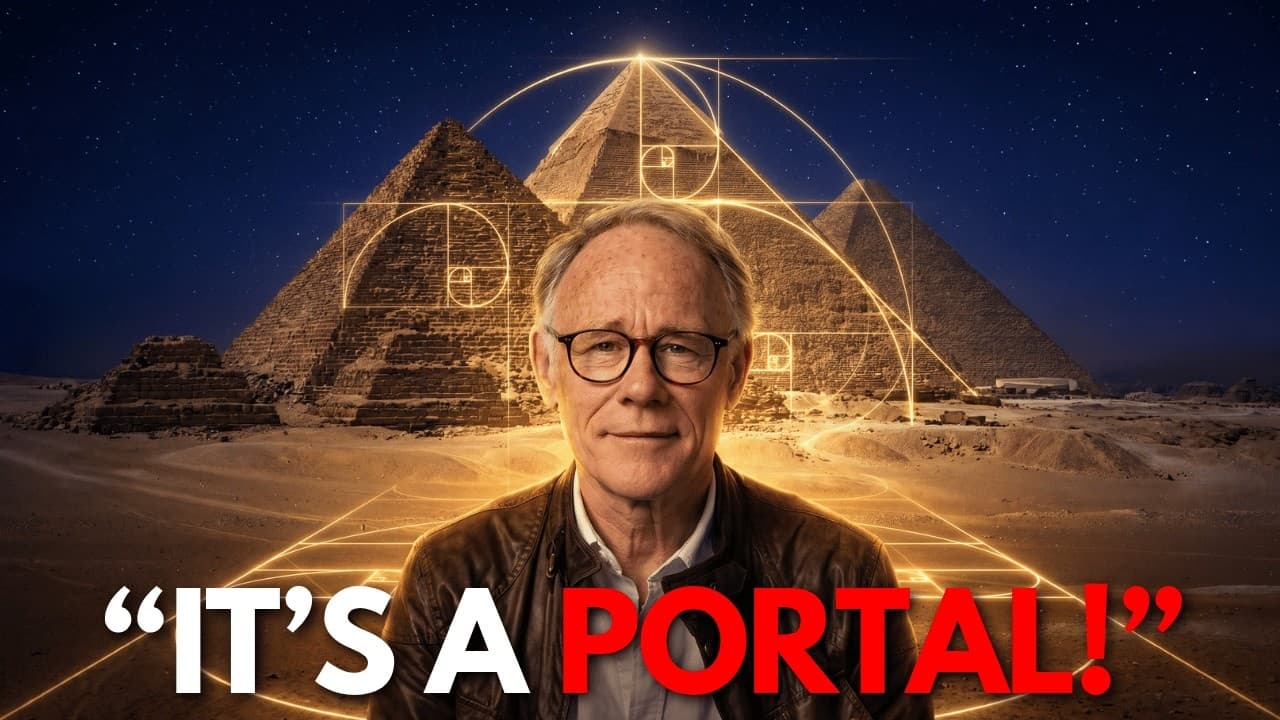
Ancient civilizations may have possessed profound astronomical and spiritual knowledge, suggesting that structures like the Great Pyramid served purposes beyond burial. Graham Hancock challenges mainstream archaeology, emphasizing the significance of exploring alternative viewpoints. His theories connect global myths, such as the flood and Atlantis, to humanity's understanding of consciousness and the cosmos.
Transcript
I will remember this this phrase forever he he said because it is a thing of fire oh that it's one of the very few traditions of a global flood that destroys a former civilization as I say there's up to 200 of them it's one of the only ones which actually gives a date so are you are you getting to some sort of more true Prot... Read More
Key Insights
- Graham Hancock challenges traditional archaeology by suggesting a lost civilization with advanced knowledge existed thousands of years ago.
- The Great Pyramid of Giza is argued to be more than just a tomb, possibly serving astronomical or spiritual purposes.
- Hancock's work is often criticized by mainstream archaeologists, yet he insists on the importance of alternative perspectives.
- There is a global tradition of a great flood, with Hancock suggesting it could relate to the Atlantis story and other ancient myths.
- The alignment of ancient structures with celestial bodies indicates a sophisticated understanding of astronomy by ancient cultures.
- Hancock emphasizes the importance of firsthand exploration and local investigation in understanding ancient history.
- He explores the idea that consciousness and altered states could hold keys to understanding ancient mysteries and UFO phenomena.
- Hancock suggests that humanity's current trajectory, particularly in terms of nuclear power, requires a shift in consciousness for survival.
Install to Summarize YouTube Videos and Get Transcripts
Explore YouTube Video Summarizer or Get YouTube Transcript Extractor
Questions & Answers
Q: What does Graham Hancock believe about the Great Pyramid of Giza?
Graham Hancock believes that the Great Pyramid of Giza is not merely a tomb, as traditionally thought by archaeologists. Instead, he suggests that it serves a more complex purpose, possibly related to astronomy or spiritual practices. He points out the precision and complexity of the pyramid's construction, which he argues could not have been achieved within the 23-year reign of Pharaoh Khufu, suggesting a much longer construction period possibly involving ancient advanced knowledge.
Q: How does Hancock view the relationship between ancient myths and historical events?
Hancock views ancient myths as potentially rooted in historical events, particularly when they align with known geological or astronomical phenomena. He cites the story of Atlantis, as told by Plato, and its correlation with the global flood myths found worldwide. Hancock argues that these myths should not be dismissed as mere fables but rather explored for potential connections to real historical events, such as the end of the last Ice Age and significant sea-level rises.
Q: What is Hancock's stance on traditional archaeology?
Hancock is critical of traditional archaeology, which he believes is too rigid and dismissive of alternative theories. He argues that archaeology often ignores or undermines evidence that could suggest advanced ancient civilizations. Hancock advocates for a more open-minded approach that considers a broader range of evidence, including oral traditions and firsthand exploration, to better understand humanity's past.
Q: What role does consciousness play in Hancock's theories?
Consciousness plays a significant role in Hancock's theories, as he suggests that altered states of consciousness may provide insights into ancient mysteries and even modern UFO phenomena. He points to shamanic practices and the use of psychedelics like ayahuasca as means of accessing different realms of reality, which could hold answers to questions about ancient civilizations and their advanced knowledge.
Q: How does Hancock connect ancient structures with celestial bodies?
Hancock connects ancient structures with celestial bodies by highlighting their precise astronomical alignments. He argues that many ancient monuments, such as the pyramids and the Sphinx, were deliberately aligned with stars and constellations, indicating a sophisticated understanding of the cosmos. This alignment suggests that ancient cultures possessed advanced astronomical knowledge, possibly passed down from a lost civilization.
Q: What evidence does Hancock provide for a lost civilization?
Hancock provides evidence for a lost civilization through the examination of shared symbols, myths, and advanced astronomical knowledge found across ancient cultures worldwide. He argues that the precision and complexity of ancient structures, along with global flood myths and the alignment of monuments with celestial bodies, suggest the existence of a civilization with advanced knowledge that predates known history.
Q: What is Hancock's view on the potential dangers of nuclear power?
Hancock views nuclear power as a potentially catastrophic threat to humanity, likening it to the power of gods in the hands of irresponsible leaders. He criticizes global political leaders for their reckless handling of nuclear weapons and advocates for a shift in consciousness towards more responsible and harmonious living. Hancock believes that humanity must change its approach to power and leadership to ensure a sustainable future.
Q: How does Hancock address criticism from mainstream archaeologists?
Hancock addresses criticism from mainstream archaeologists by emphasizing the importance of alternative perspectives and the limitations of traditional archaeology. He argues that archaeology often dismisses evidence that doesn't fit established narratives and that a more open-minded approach is necessary to uncover the full scope of human history. Hancock encourages a dialogue that respects differing viewpoints and explores a wider range of evidence.
Summary & Key Takeaways
-
Graham Hancock explores the idea of a lost civilization with advanced astronomical and spiritual knowledge, challenging traditional archaeology. He argues that structures like the Great Pyramid were not merely tombs but served greater purposes.
-
Hancock's theories are often met with skepticism by mainstream archaeologists, yet he emphasizes the importance of exploring alternative perspectives and firsthand experiences to uncover truths about our past.
-
He delves into the connections between ancient myths, such as the global flood and Atlantis, and suggests that consciousness and altered states might offer insights into ancient mysteries and modern phenomena like UFOs.
Read in Other Languages (beta)
Share This Summary 📚
Summarize YouTube Videos and Get Video Transcripts with 1-Click
Try YouTube Summary with ChatGPT & Claude or YouTube Transcript Generator
Explore More Summaries from Jesse Michels 📚


![“My Hospital Operated On An Alien!” -Top Surgeon [Exclusive Interview] thumbnail](/_next/image?url=https%3A%2F%2Fi.ytimg.com%2Fvi%2FUkKwa4jU0fc%2Fhqdefault.jpg&w=750&q=75)
Summarize YouTube Videos and Get Video Transcripts with 1-Click
Try YouTube Summary with ChatGPT & Claude or YouTube Transcript Generator