How to Decide Equity Splits with Co-Founders
TL;DR
To determine equity splits with co-founders, prioritize long-term motivation by considering vesting schedules that include a four-year vesting period and a one-year cliff. This approach not only motivates co-founders to remain committed but also acts as a safeguard for the company if a co-founder leaves early.
Transcript
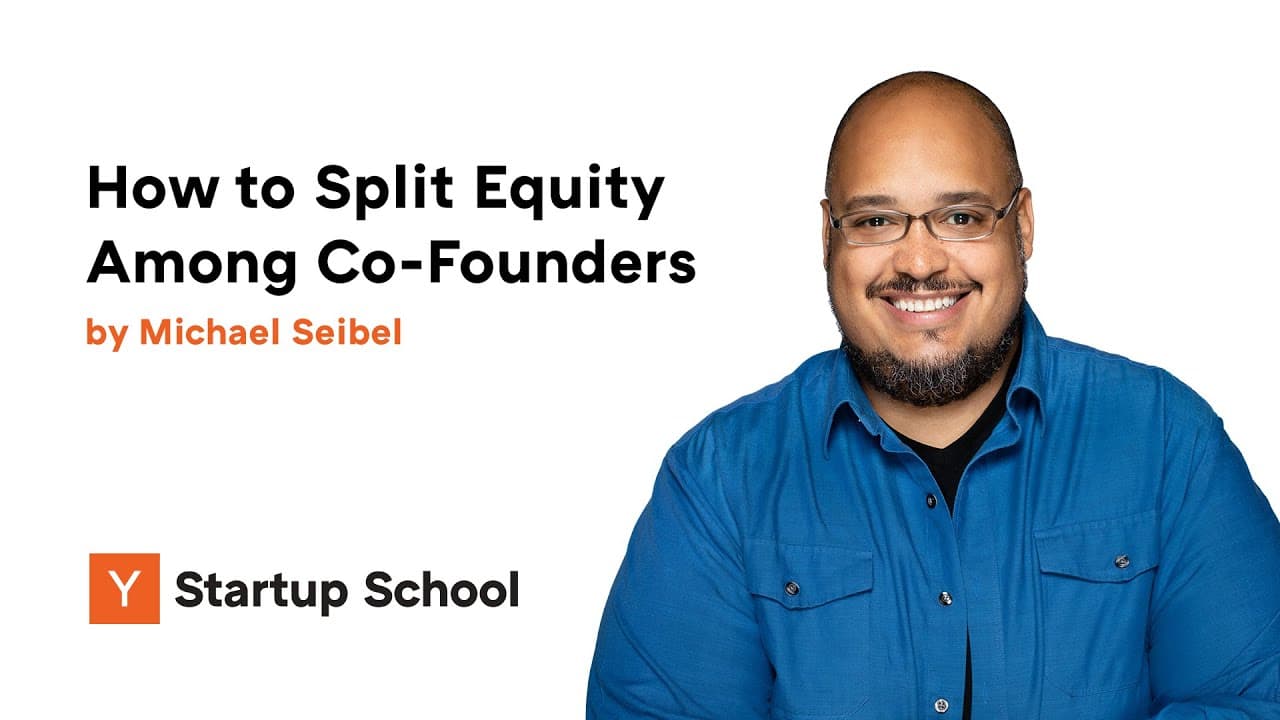
how much equity to give your co-founders this is a problem and a question that a lot of people have written about and you can see a lot of varied advice online my perspective is that most founders are missing a couple key points when divvying up their equity the first one is your equity splits with your co-founders are what's going to motivate your... Read More
Key Insights
- 🤝 Equity splits with co-founders should prioritize long-term motivation and commitment. Founders often underestimate the time commitment required for a startup's success.
- 🔑 The focus should be on maximizing teammates' motivation, not just negotiating an equity split.
- 🔒 Vesting and cliff periods provide a safety net when giving equity. Four-year vesting with a one-year cliff is a common practice.
- 💡 Being more generous with equity can benefit the CEO and the company by fostering long-term motivation and ownership among co-founders.
- 🏆 It is crucial for the CEO to create a situation where co-founders are truly dedicated to the company and feel like true owners.
- 💪 A CEO should prioritize the future motivation and commitment of co-founders. If co-founders are not valuable in the long term, reconsider their equity grants.
- 📈 While equal equity splits are often a good starting point, it may not always be applicable and should be tailored to each situation.
- ⚠️ It is important to consider the future viability of the company and the impact of equity on co-founder motivation when making decisions.
Install to Summarize YouTube Videos and Get Transcripts
Explore YouTube Video Summarizer or Get YouTube Transcript Extractor
Questions & Answers
Q: How can equity splits with co-founders motivate them to stick with the startup?
Equity splits play a significant role in motivating co-founders to stay committed to the company in the long term. By distributing equity in a fair and generous manner, co-founders are more likely to be deeply invested in the success of the startup. This motivation can drive them to put in extra effort, work longer hours, and recruit others to join the team.
Q: Why should CEOs prioritize long-term motivation over negotiation when determining equity splits?
Negotiation may lead to an equitable distribution of equity, but it doesn't necessarily maximize the motivation of co-founders. CEOs should consider the future motivation of their co-founders and ensure their equity stakes are substantial enough to incentivize loyalty and dedication. By focusing on long-term motivation instead of negotiation, CEOs can build a stronger and more committed founding team.
Q: How does vesting with a cliff protect the company in terms of equity distribution?
Vesting with a cliff ensures that co-founders earn their equity stake over time. A four-year vesting period means that co-founders must work for the company for at least four years to fully own their equity. The one-year cliff means that if a co-founder leaves or is fired within the first year, they receive no equity. This mechanism acts as a safety net for the company, allowing CEOs to correct any potential mistakes in co-founder selection within the first year without long-term harm.
Q: Why should CEOs consider being more generous with equity grants to co-founders?
Being more generous with equity grants to co-founders can lead to greater motivation and dedication to the startup. When co-founders feel like true owners of the company, they are more likely to put in extra effort, work during challenging times, and recruit their network to join the team. The equity stake becomes a powerful motivating factor for co-founders, ensuring their long-term commitment to the startup's success.
Summary & Key Takeaways
-
Equity splits with co-founders should be designed to motivate them in the long term and ensure commitment to the company.
-
Negotiation should not be the primary factor in determining equity splits; maximizing motivation should be the focus.
-
Vesting with a cliff (four-year vesting with a one-year cliff) serves as a safety mechanism to protect the company if co-founders leave early.
Read in Other Languages (beta)
Share This Summary 📚
Summarize YouTube Videos and Get Video Transcripts with 1-Click
Try YouTube Summary with ChatGPT & Claude or YouTube Transcript Generator
Explore More Summaries from Y Combinator 📚






Summarize YouTube Videos and Get Video Transcripts with 1-Click
Try YouTube Summary with ChatGPT & Claude or YouTube Transcript Generator