How AI Agents Will Transform Technology Development
TL;DR
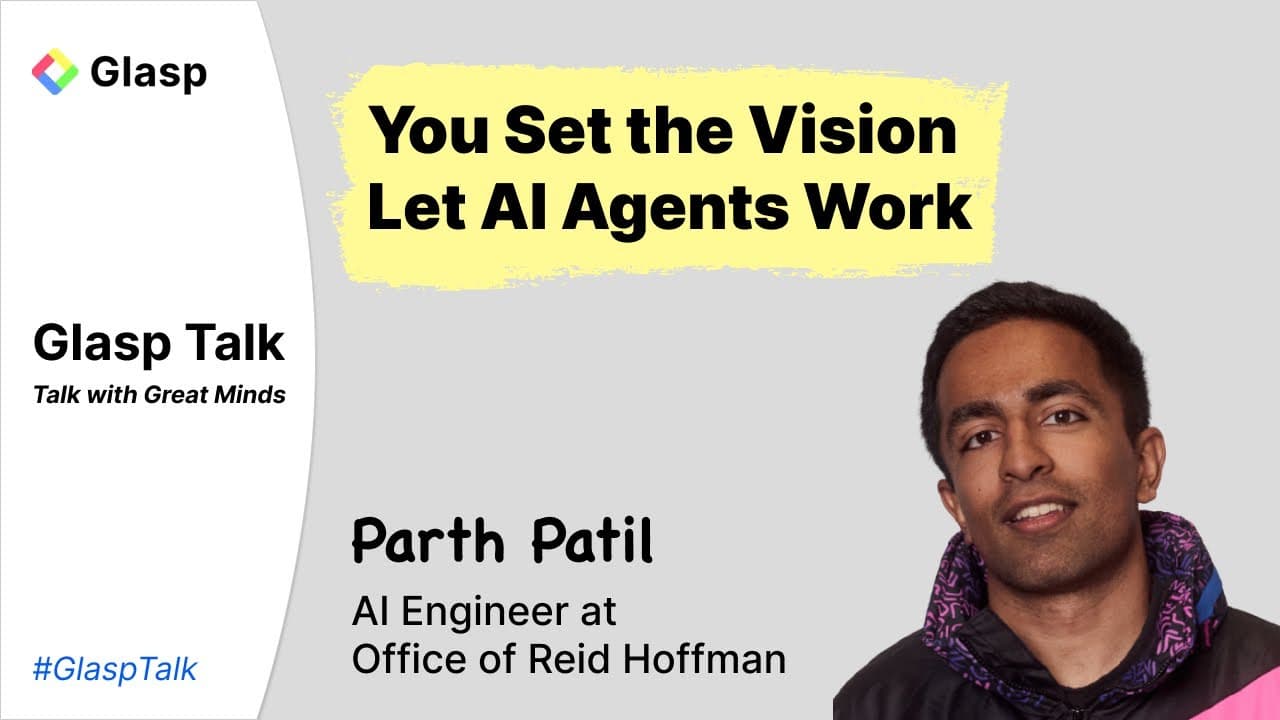
AI agents are revolutionizing the tech landscape by enabling rapid development and innovative solutions. Parth Patil, an AI engineer, discusses his work on Reid AI, a digital clone of Reid Hoffman, and the potential of AI agents in reshaping productivity and creativity. The conversation explores compositional software, vibe coding, and the balance between accessibility and safety in AI systems.
Transcript
I realized a lot of stuff is a lot easier now. Now you can do in three hours what used to take three years and that means that we have to be more ambitious, more creative and more optimistic too. We have to make the future that we want to live in and so like you have a chance to be a part of making that future. Hi everyone, welcome back to another ... Read More
Key Insights
- AI agents are transforming the way technology is built and used, enabling more rapid and creative development processes.
- Reid AI is a digital clone of Reid Hoffman, designed to explore identity and intelligence in AI applications.
- Vibe coding is a creative, intuition-driven approach to building with AI, emphasizing experimentation and rapid prototyping.
- AI agents can automate structured outputs, turning unstructured data into actionable insights.
- The balance between accessibility, safety, and creativity is crucial in the development of AI systems.
- AI clones have potential social and business value, offering unique perspectives and knowledge retrieval beyond human capabilities.
- Generative UI and advanced retrieval systems like graph RAG can enhance the user experience and improve data interaction.
- The future of AI includes the integration of local models and agentic capabilities for more personalized and efficient applications.
Install to Summarize YouTube Videos and Get Transcripts
Explore YouTube Video Summarizer or Get YouTube Transcript Extractor
Questions & Answers
Q: Is the AI project in Reid Hoffman’s office intended only for internal use, or will it be launched externally?
The AI project in Reid Hoffman's office is primarily intended for internal use, focusing on experimentation and learning. However, there is openness to external launches if the tools prove to be valuable and robust. The internal focus allows for rapid iteration and feedback, reducing risks associated with public deployment.
Q: What are the social and business values of AI clones for ordinary people, and what use cases do you see in the future?
AI clones offer social and business value by providing unique perspectives and knowledge retrieval capabilities that extend beyond human limitations. They can serve as personal assistants, capturing and organizing personal knowledge for easy access. In the future, AI clones could help in education, personalized content creation, and automating routine tasks, enhancing productivity and creativity.
Q: Did you use metrics to test how closely the Reid AI matched Reid Hoffman?
Metrics were used to evaluate Reid AI's performance in replicating Reid Hoffman's character. These included retrieval accuracy, conversational style, and voice replication. The evaluation process involved comparing AI responses to known data and refining the model through prompt engineering and knowledge base enhancements to align more closely with Reid Hoffman's public persona.
Q: Do you remember Reid AI’s first response — was Reid Hoffman satisfied or surprised?
Reid AI's first responses were a mix of satisfactory and surprising elements. Reid Hoffman found some responses acceptable but noted areas for improvement, particularly in reducing buzzword-heavy language. The initial feedback helped guide further refinement of the AI's conversational style and accuracy in representing Reid Hoffman's viewpoints.
Q: Since people’s views change over time, how did you ensure Reid AI stayed consistent with Reid Hoffman’s character when training on past data?
Ensuring consistency in Reid AI involved using advanced retrieval systems like graph RAG to capture the evolution of Reid Hoffman's views over time. This approach allowed for a more nuanced understanding of changes in perspective, ensuring the AI remained aligned with Hoffman's character while adapting to new information and insights.
Q: How did your impression of Reid Hoffman change after working with him, and what’s the biggest lesson you learned?
Working with Reid Hoffman reinforced the perception of him as a strategic thinker and philosopher. The biggest lesson learned was the importance of an experimental mindset, embracing rapid prototyping and learning from failures. Hoffman's approach to innovation emphasizes the value of being first to market and the advantages of exploring uncharted territories.
Q: Beyond being fast to market, what unexplored ideas do you see with huge potential?
Unexplored ideas with huge potential include generative UI, advanced retrieval systems like graph RAG, and generative games. These innovations can enhance user interaction and provide personalized experiences. Additionally, the integration of local models and agentic capabilities offers opportunities for more efficient and tailored applications across various industries.
Q: What are your main sources of information and ideas, and how do you collect them?
Main sources of information and ideas include a network of creative and diverse individuals, messaging apps, and platforms like Twitter and Clubhouse. Engaging with a community of builders and thinkers fosters the exchange of ideas and insights. Maintaining a dialogue with others and participating in hackathons also contribute to staying updated and inspired.
Summary & Key Takeaways
-
AI agents are reshaping technology development by allowing for faster and more creative solutions. Parth Patil discusses his work on Reid AI, a digital clone of Reid Hoffman, and the broader implications of AI agents in productivity and creativity. The conversation highlights the rise of compositional software and vibe coding as key trends in AI development.
-
Reid AI serves as a case study in exploring the potential of AI clones, offering insights into identity and intelligence. Patil emphasizes the importance of balancing accessibility, safety, and creativity in AI systems, and how these factors influence the development of next-generation tools.
-
The discussion also covers the potential of AI agents to automate structured outputs and enhance user interfaces through generative UI. Patil envisions a future where AI integrates local models and agentic capabilities, providing more personalized and efficient applications, and transforming daily life and work practices.
Read in Other Languages (beta)
Share This Summary 📚
Summarize YouTube Videos and Get Video Transcripts with 1-Click
Try YouTube Summary with ChatGPT & Claude or YouTube Transcript Generator
Explore More Summaries from Glasp 📚


Summarize YouTube Videos and Get Video Transcripts with 1-Click
Try YouTube Summary with ChatGPT & Claude or YouTube Transcript Generator