Should You Buy the RED Komodo 6K Cine Camera?
TL;DR
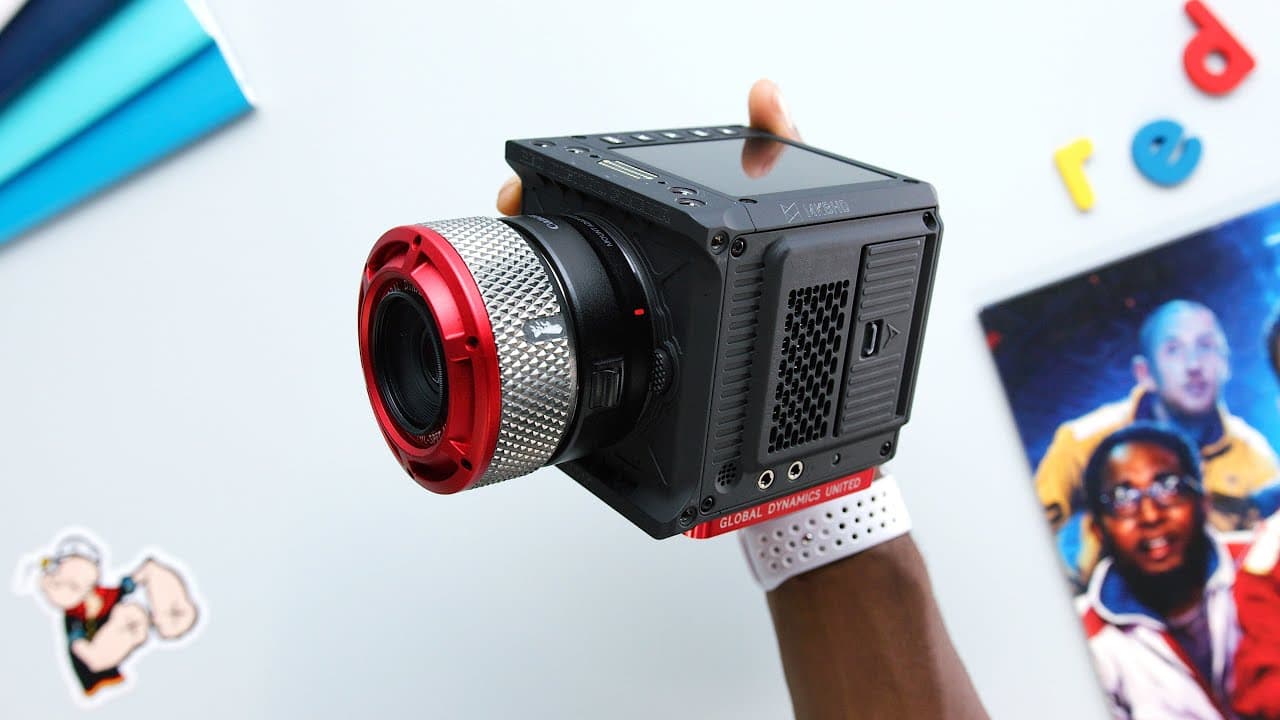
The RED Komodo offers 6K R3D RAW, 15 stops of dynamic range, a global shutter, and RED color science in a compact two-pound body, but buying it during beta is difficult to recommend. Its unfinished lens support, rudimentary autofocus, fixed top display, single card slot, and limited accessory support make its future potential stronger than its current reliability.
Transcript
what's up i'm kbhd here and this is the newest red camera this little guy right here it's called the red komodo this is one of the things i was looking forward to most at the beginning of this year now you know 2020 has gone a little bit sideways and a lot of things didn't go how we thought they were but i will say cameras especially in the last li... Read More
Key Insights
- The RED Komodo is a miniature cinema camera with a 6K Super 35 sensor, Canon RF mount, global shutter, and a compact four-inch cube body weighing two pounds. Its expected price is around $6,000, although the camera shown was still in beta and not officially released.
- The Komodo records either 6K R3D RAW or 4K ProRes and provides RED color science with a claimed 15 stops of dynamic range. Its smaller sensor produces somewhat more noise, but its footage can still look, grade, and behave similarly to footage from larger RED cameras.
- The global shutter eliminates rolling-shutter behavior and helps position the Komodo closer to conventional cinema cameras than mirrorless models. However, it has no in-body image stabilization, so handheld stability must come from camera support, stabilized lenses, a gimbal, or deliberate shooting technique.
- The Komodo cannot capture its fastest frame rates across the full sensor. Full-frame 6K recording reaches about 40 frames per second, while shooting at 60 or 120 frames per second requires a resolution change that crops further into the sensor, following a pattern found on other RED cameras.
- The dual Canon BP-series battery system supports hot swapping because the camera drains one battery at a time. Two BP-975 batteries delivered well over three hours of shooting, allowing the depleted battery to be replaced while the camera continues operating from the second battery.
- The Canon RF mount was not fully functional during the beta period because native RF lenses could not communicate electronically with the camera. An included RF-to-EF adapter allowed compatible EF lenses to communicate, but lens-dependent autofocus performance ranged from acceptable focus shifts to hunting, missed focus, or no response.
- The Komodo autofocus system was a rudimentary tap-to-focus implementation without eye tracking or subject tracking. Its inconsistent response made it unsuitable for shoots that depend on reliable autofocus, although future software and lens support could make the feature more useful.
- The Komodo reduces several traditional RED ecosystem costs by using off-the-shelf batteries and CFast 2.0 cards, while offering low-latency remote control through its Wi-Fi antenna. Its drawbacks include one card slot, SDI-only video output, a fixed top display, limited modularity, and incomplete accessory support.
Install to Summarize YouTube Videos and Get Transcripts
Explore YouTube Video Summarizer or Get YouTube Transcript Extractor
Questions & Answers
Q: What are the main specifications of the RED Komodo?
The RED Komodo is a two-pound cinema camera built as a roughly four-inch by four-inch cube. It has a 6K Super 35 sensor, a Canon RF lens mount, a global shutter, a small built-in touchscreen on top, autofocus, and one CFast 2.0 card slot. It records 6K R3D RAW or 4K ProRes, offers a claimed 15 stops of dynamic range, and was expected to cost around $6,000.
Q: How good is the RED Komodo image quality?
The Komodo produces footage with RED color science, a claimed 15 stops of dynamic range, and the flexibility of 6K R3D RAW files. Its footage can look, grade, and work similarly to footage from RED Monstro and Helium cameras. The smaller Super 35 sensor appeared somewhat noisier, but the camera still delivered convincing cinema-camera image quality, and the entire video was recorded using Komodo cameras.
Q: Does the RED Komodo have reliable autofocus?
The beta version did not offer autofocus reliability comparable to mirrorless cameras. Its system was primarily a simple tap-to-focus feature without eye tracking or subject tracking. Performance depended on the attached lens and could include smooth focus shifts, noticeable hunting, missed focus, or no response. Native RF lenses also lacked electronic communication, so autofocus testing depended on EF lenses connected through the included adapter.
Q: Can Canon RF and EF lenses work on the RED Komodo?
The camera physically uses the Canon RF mount, but native RF lens support was still under development in the tested beta version. RF lenses did not communicate electronic information to the camera at that stage. RED included an RF-to-EF adapter in the box, allowing an existing Canon EF lens collection to communicate with the camera, including access to its developing tap-to-focus autofocus function.
Q: How long does the RED Komodo battery last?
The Komodo has two rear battery slots that accept off-the-shelf Canon BP-series batteries. Using two BP-975 batteries provided well over three hours of shooting. The slots support hot swapping because the camera drains one battery at a time. When the active battery becomes low, it can be replaced while the camera continues running from the second battery, enabling extended recording without shutting down.
Q: What frame rates can the RED Komodo record?
The Komodo records full-sensor 6K footage at up to about 40 frames per second. Higher frame rates require changing resolution, which crops into the sensor. As a result, recording at 60 or 120 frames per second does not use the full sensor area. This limitation affects framing and field of view, so slow-motion shots may require different lens choices or camera positioning.
Q: What are the biggest disadvantages of the RED Komodo?
The tested Komodo was unfinished beta hardware with developing software, incomplete RF lens support, rudimentary autofocus, and limited officially supported accessories. It has only one CFast card slot, no HDMI output, no in-body image stabilization, and a fixed top display that is difficult to see from many shooting angles. Its box shape also provides less modularity and ergonomics than the reviewer wanted.
Q: Should you buy the RED Komodo during its beta stage?
Buying the RED Komodo during its beta stage was probably not advisable for most creators because important features and support remained unfinished. The image quality, compact size, global shutter, standard batteries, standard media, and potential accessory ecosystem were promising, but autofocus and RF lens communication were not dependable. Waiting would allow buyers to judge the completed software, supported accessories, and real production reliability.
Summary & Key Takeaways
-
The RED Komodo is a compact cinema camera built around a 6K Super 35 sensor, Canon RF mount, global shutter, and small top touchscreen. It records 6K R3D RAW or 4K ProRes to CFast 2.0 cards while delivering RED color science and a claimed 15 stops of dynamic range.
-
Its four-inch cube body weighs two pounds, making it practical for cars, confined spaces, and smaller gimbals. Two Canon BP-series battery slots provide more than three hours of shooting with the tested batteries and support hot swapping, while standard media and batteries reduce dependence on costly proprietary RED equipment.
-
The beta camera remains unreliable in several areas, especially autofocus, native RF lens communication, media support, and software responsiveness. It also lacks HDMI, in-body stabilization, dual card slots, and an adjustable display. Its image quality and ecosystem potential are compelling, but the current version is difficult to recommend for immediate purchase.
Read in Other Languages (beta)
Share This Summary 📚
Summarize YouTube Videos and Get Video Transcripts with 1-Click
Try YouTube Summary with ChatGPT & Claude or YouTube Transcript Generator
Explore More Summaries from Marques Brownlee 📚





Summarize YouTube Videos and Get Video Transcripts with 1-Click
Try YouTube Summary with ChatGPT & Claude or YouTube Transcript Generator