How to Draw Resonance Structures for Ions
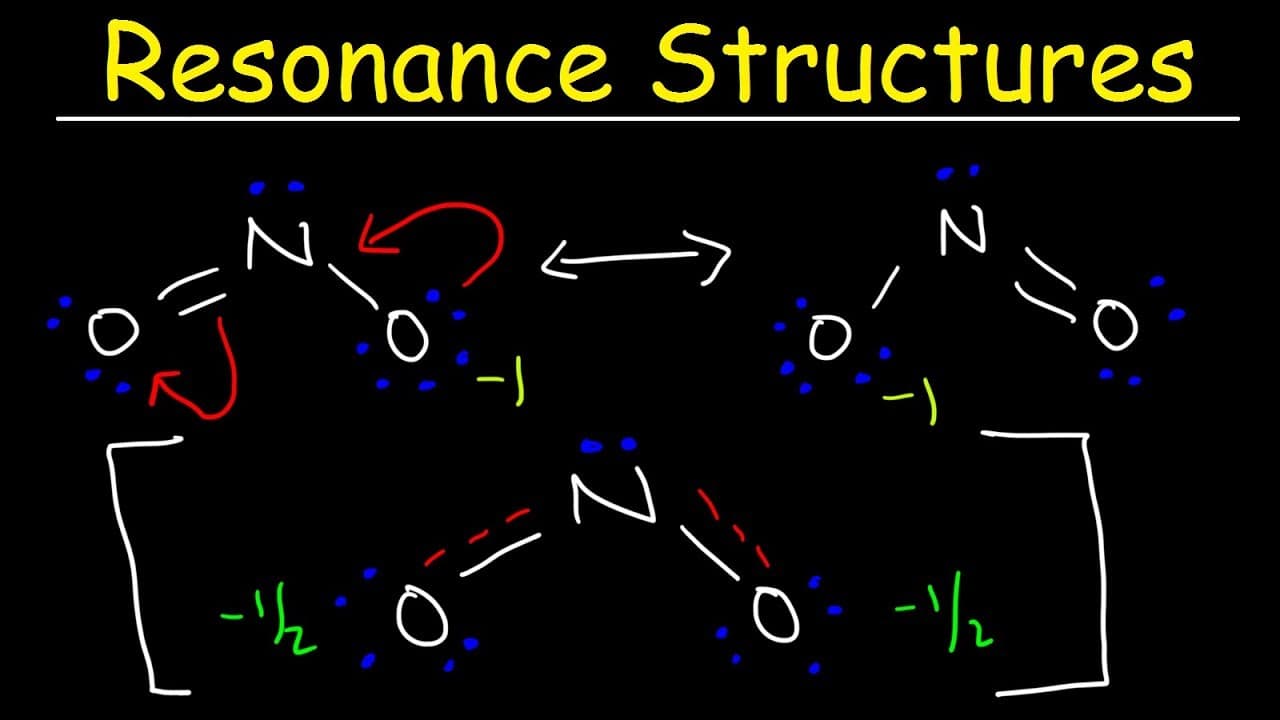
TL;DR
To draw resonance structures, first count the total valence electrons and calculate the number of lone pairs on the central atom. Then, use the electrons to create multiple valid structures by moving double bonds among the atoms, while ensuring that all atoms maintain their positions. The actual molecule is represented as a hybrid of these structures, reflecting the average charge distribution.
Transcript
in this video i'm going to talk about how to draw resonance structures so let's draw all the resonance structures of carbonate so this video is for those of you who might be taking general chemistry for those of you who are taking organic chemistry i have another video on resonance structures which you could find on youtube somewhere now in order t... Read More
Key Insights
- 🫀 Drawing resonance structures involves counting valence electrons, determining lone pairs, and moving the double bond among atoms.
- 😑 The true representation of a molecule or ion with resonance is a hybrid of all the resonance structures.
- 🈂️ In the carbonate ion, each oxygen atom has an average charge of -2/3 due to the overall charge distribution.
Install to Summarize YouTube Videos and Get Transcripts
Explore YouTube Video Summarizer or Get YouTube Transcript Extractor
Questions & Answers
Q: How do you calculate the number of lone pairs on the central atom in a Lewis structure?
To calculate the number of lone pairs on the central atom, subtract 8 times the number of non-central atoms from the total number of valence electrons, and divide by 2.
Q: How do you determine the charge on each oxygen atom in the carbonate ion?
The charge on the carbonate ion is -2, and since there are three oxygen atoms sharing the charge, each oxygen atom has an average charge of -2/3.
Q: Can you move the atoms when drawing resonance structures?
No, when drawing resonance structures, only move the electrons. The atoms should stay in their respective positions.
Q: How many resonance structures can be drawn for the nitrate ion?
There are two resonance structures for the nitrate ion. The double bond can be placed on each of the two oxygen atoms.
Summary & Key Takeaways
-
The video explains how to draw the Lewis structure of carbonate ion, starting with counting valence electrons and calculating the number of lone pairs on the central atom.
-
It demonstrates how to draw the resonance structures of carbonate ion by moving the double bond among the oxygen atoms.
-
The video also teaches how to draw the Lewis structure of nitrate ion, and then shows the resonance structures and resonance hybrid of the ion.
Read in Other Languages (beta)
Share This Summary 📚
Summarize YouTube Videos and Get Video Transcripts with 1-Click
Try YouTube Summary with ChatGPT & Claude or YouTube Transcript Generator
Explore More Summaries from The Organic Chemistry Tutor 📚



Summarize YouTube Videos and Get Video Transcripts with 1-Click
Try YouTube Summary with ChatGPT & Claude or YouTube Transcript Generator