Do Carbon Fiber Brushes Remove Record Static?
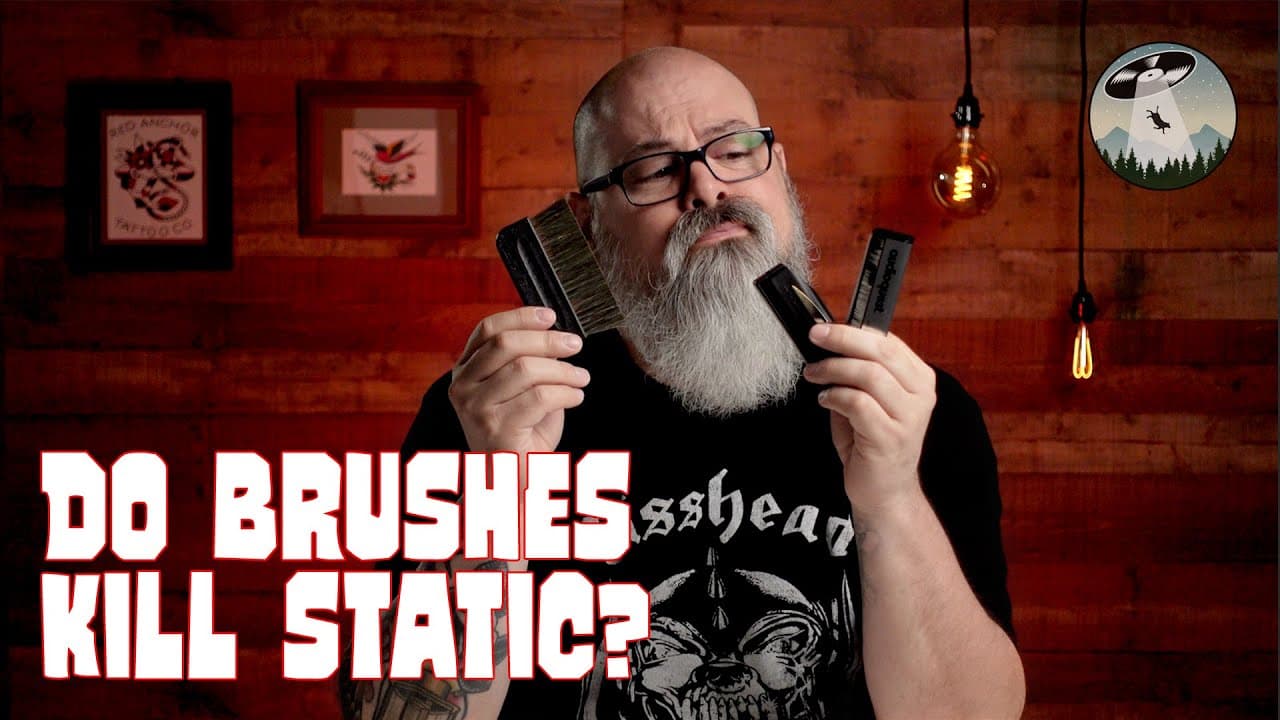
TL;DR
The tested silver AudioQuest carbon fiber brush did not meaningfully eliminate static from records, despite the claim printed on its packaging. The measurements also showed that placing a record on the turntable can temporarily dissipate much of its charge, so readings taken only on the platter may misrepresent a brush’s performance. Wet cleaning remains the recommended method for embedded debris, while brushes are best reserved for surface dust.
Transcript
my name is chris and today we're going to test these welcome to the vinyl attack one of the very first accessories someone buys when entering the hobby is an anti-static brush right away people realize that combating dirt dust and debris is one of the cornerstones of getting quality sound and playback from the records but in the ever controversial ... Read More
Key Insights
- A wet cleaning is the recommended method for removing dirt and debris embedded in record grooves. The suggested options include cleaning in a sink with distilled water, using a record vacuum machine, using a Spin Clean, or using an ultrasonic cleaner, followed by a distilled-water rinse.
- A surfactant is a wetting agent that breaks the surface tension of water on vinyl. This allows the cleaning solution to flow into the grooves instead of beading on the surface, helping it reach the accumulated material that a dry brush cannot thoroughly remove.
- A record brush is primarily useful for removing dust after a record has already been wet cleaned and stored. The presenter’s routine is to neutralize static with a D-Stat, place the record on the platter, and then give it a quick pass with a carbon fiber brush.
- The silver AudioQuest brush costs $17 and claims on its packaging that it kills static. The presenter challenges the argument that it was never intended to eliminate static, noting that the product’s printed claim explicitly presents static removal as one of its functions.
- The gold AudioQuest brush costs $30 and claims to contain more than 1.2 million conductive carbon fibers. Its stated purposes are to reach into record grooves, collect dust and dirt, and eliminate static, while its gold contacts are held during the prescribed cleaning procedure.
- The Thunderon brush costs $30 and combines Thunderon fibers with fine goat hair. Its manufacturer describes Thunderon as material created through a chemical reaction that bonds copper sulfide molecules with host fibers, while the brush seller claims it reduces static and reaches deeply into record grooves.
- The testing method separates readings taken with a record in hand from readings taken on the turntable. This distinction matters because the demonstrated records lost much of their measured charge while on the platter, then regained substantial positive readings after being lifted from it.
- The silver AudioQuest brush did not produce a meaningful or consistent reduction in static during the demonstrated trials. Although some individual readings changed, the records remained strongly positive after removal from the turntable, leading the presenter to attribute minor differences to handling and charge movement.
Install to Summarize YouTube Videos and Get Transcripts
Explore YouTube Video Summarizer or Get YouTube Transcript Extractor
Questions & Answers
Q: Do carbon fiber brushes remove static from vinyl records?
The demonstrated tests did not show meaningful static removal from the silver AudioQuest carbon fiber brush. Static readings fell sharply when the records were placed on the turntable, but substantial positive charge returned when they were lifted. The presenter concluded that minor differences were more plausibly caused by handling and charge movement through the turntable than by effective neutralization from that brush.
Q: Why should record static be measured both by hand and on a turntable?
A record can show very different static readings depending on whether it is held in the hand or resting on the turntable. In the demonstrated trials, high positive readings dropped to low values on the platter and rose again after the record was lifted. Measuring in both positions helps separate actual brush performance from temporary charge dissipation through the turntable.
Q: What is the best use for a carbon fiber record brush?
A carbon fiber brush is presented as a tool for removing surface dust from a record that has already received a proper wet cleaning. The presenter’s preferred routine is to clean the record, store it in a new anti-static inner sleeve, neutralize static when needed, place it on the platter, and use the brush briefly to collect settled dust before playback.
Q: How should a vinyl record be cleaned before using a brush?
The recommended approach is a wet cleaning with distilled water, using a sink method, record vacuum machine, Spin Clean, or ultrasonic cleaner. A suitable surfactant can help the solution enter the grooves by breaking water’s surface tension. After following the cleaning product’s mixing directions, the process should be completed with a distilled-water rinse before storage or playback.
Q: What does a surfactant do when cleaning vinyl records?
A surfactant, also called a wetting agent, breaks the surface tension of water on the vinyl surface. Instead of allowing the cleaning solution to bead on top, it helps the liquid flow into the grooves where accumulated material resides. The presenter mentions Triton X and TergiKleen as examples and recommends mixing the chosen product according to its directions.
Q: How does AudioQuest instruct users to operate its record brushes?
AudioQuest instructs the user to start the turntable, hold the brush by its contacts, and place the fibers gently across the grooves without bending them. After several rotations, the wrist and brush are rotated counterclockwise while the fibers are lifted. The brush is then rotated within its handle to remove collected dust, and additional passes can be performed when necessary.
Q: How is the Thunderon conductive record brush used?
The Thunderon brush is used while holding the record rather than placing it on the turntable. The directions call for a light whisking motion around the record’s circumference several times to reduce static. The seller’s demonstration used 22 brushing motions without a strict pattern, so the presenter planned to repeat 22 motions when applying that procedure to each tested brush.
Q: How do the three tested record brushes differ?
The silver AudioQuest brush costs $17 and carries a claim that it kills static. The gold AudioQuest brush costs $30, claims more than 1.2 million conductive carbon fibers, and includes gold contacts. The $30 Thunderon brush combines Thunderon fibers with fine goat hair and is promoted for reducing static while brushing dust from deep within record grooves.
Summary & Key Takeaways
-
Carbon fiber record brushes are commonly purchased to combat dust and static, but their effectiveness is debated. The test compares two AudioQuest brushes with a Thunderon conductive brush. Measurements are taken both while each record is held and while it rests on the turntable, helping distinguish brush performance from charge dissipation through the equipment itself.
-
A thorough wet cleaning is recommended for removing dirt and debris from record grooves. Distilled water can be used with a sink method, record vacuum machine, Spin Clean, or ultrasonic cleaner. A surfactant breaks water’s surface tension so the cleaning solution enters the grooves, and a distilled-water rinse should follow the cleaning process.
-
The silver AudioQuest brush produced no meaningful static reduction across the demonstrated trials. Records showed much lower readings while resting on the turntable, but substantial positive static returned when they were lifted. The presenter therefore attributed small measurement changes to record handling and charge movement through the turntable rather than to effective neutralization by the brush.
Read in Other Languages (beta)
Share This Summary 📚
Summarize YouTube Videos and Get Video Transcripts with 1-Click
Try YouTube Summary with ChatGPT & Claude or YouTube Transcript Generator