How Can Tongue Twisters Improve English Pronunciation?
TL;DR
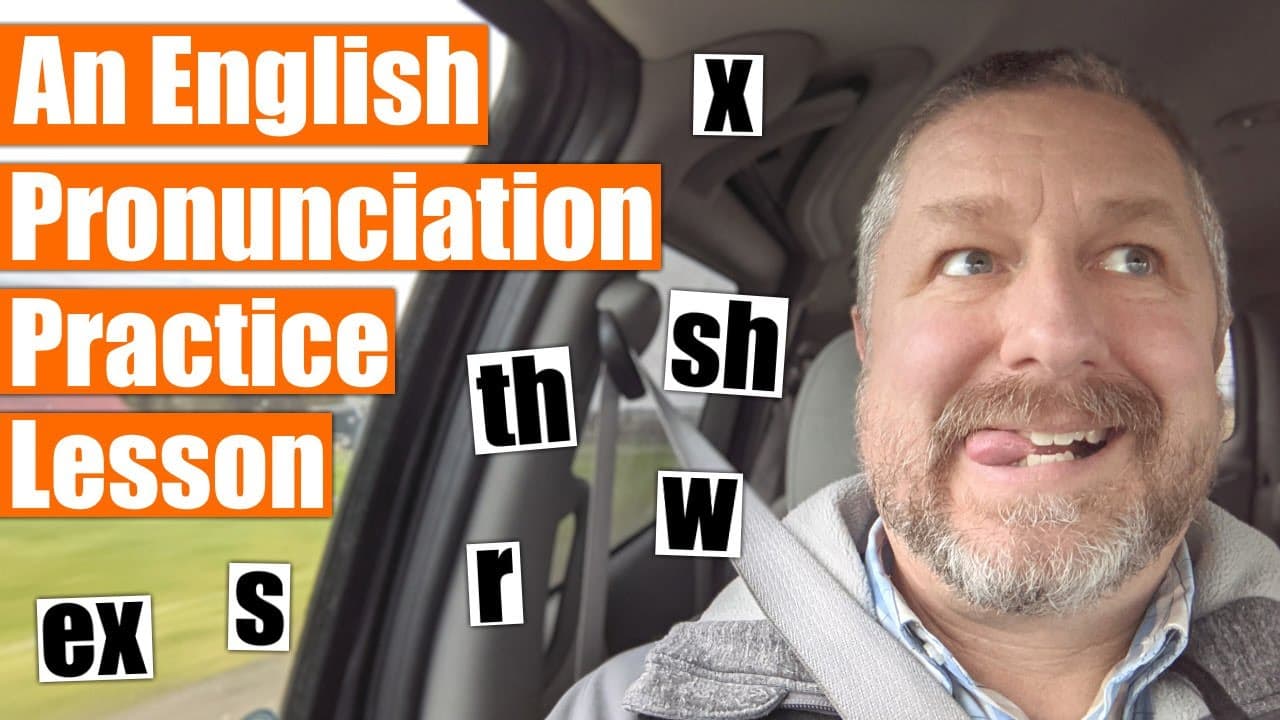
Tongue twisters can significantly enhance English pronunciation by targeting specific challenging sounds such as /r/, /th/, /s/, /sh/, and /w/. Practicing these unique phrases regularly, both slowly and quickly, enables learners to improve their articulation and fluency. Writing them down and recording oneself saying them can also boost retention and self-correction.
Transcript
Hi, Bob the Canadian here. Welcome to this English pronunciation lesson where I'm going to teach you five completely new tongue twisters that no one in the world has ever heard before, because I wrote them myself. I sat down and I thought there are sounds that English learners have trouble saying. There are words that English learners have trouble ... Read More
Key Insights
- 😋 Bob the Canadian created original tongue twisters to help English learners improve their pronunciation.
- 👂 The tongue twisters focus on different sounds in the English language, such as /r/, /th/, /s/, /sh/, and /w/ sounds.
- 🤩 Practice and repetition are key to improving pronunciation skills.
- 😋 Learners are encouraged to record themselves saying the tongue twisters and listen back for self-correction.
- 😋 The tongue twisters can be practiced daily for maximum improvement.
- 😋 Writing down the tongue twisters can help reinforce correct pronunciation.
- 😋 Bob's favorite tongue twister is "We want warm woolen, winter hats, where would we find them?"
Install to Summarize YouTube Videos and Get Transcripts
Explore YouTube Video Summarizer or Get YouTube Transcript Extractor
Questions & Answers
Q: Why did Bob create these tongue twisters?
Bob created these tongue twisters because he noticed that English learners often struggle with certain sounds and words in the English language. He wanted to provide learners with an opportunity to practice and improve their pronunciation.
Q: What sound does the first tongue twister focus on?
The first tongue twister focuses on the /r/ sound. It uses the sentence "I read that really rare rats run around on the roof" to help learners practice pronouncing the /r/ sound correctly.
Q: Which sound does the third tongue twister help practice?
The third tongue twister helps practice the /s/ sound and the /sh/ sound. It uses the sentence "She sees squirrels on Saturdays, so she shares some snacks with them" to give learners an opportunity to practice these sounds.
Q: What is the purpose of the fifth tongue twister?
The fifth tongue twister is designed to help learners practice the /x/ sound or the /ex/ sound. It uses the sentence "Six experts are excited for the exhibit about Texas" to give learners a chance to practice this specific sound.
Summary & Key Takeaways
-
Bob the Canadian introduces five new tongue twisters that focus on different sounds in the English language.
-
Each tongue twister is designed to help English learners practice specific sounds, such as /r/, /th/, /s/, /sh/, and /w/ sounds.
-
Bob provides slow and fast versions of each tongue twister, giving learners time to practice and improve their pronunciation.
Read in Other Languages (beta)
Share This Summary 📚
Summarize YouTube Videos and Get Video Transcripts with 1-Click
Try YouTube Summary with ChatGPT & Claude or YouTube Transcript Generator
Explore More Summaries from Learn English with Bob the Canadian 📚



Summarize YouTube Videos and Get Video Transcripts with 1-Click
Try YouTube Summary with ChatGPT & Claude or YouTube Transcript Generator