How Does IShowSpeed Train for Competitive Eating?
TL;DR
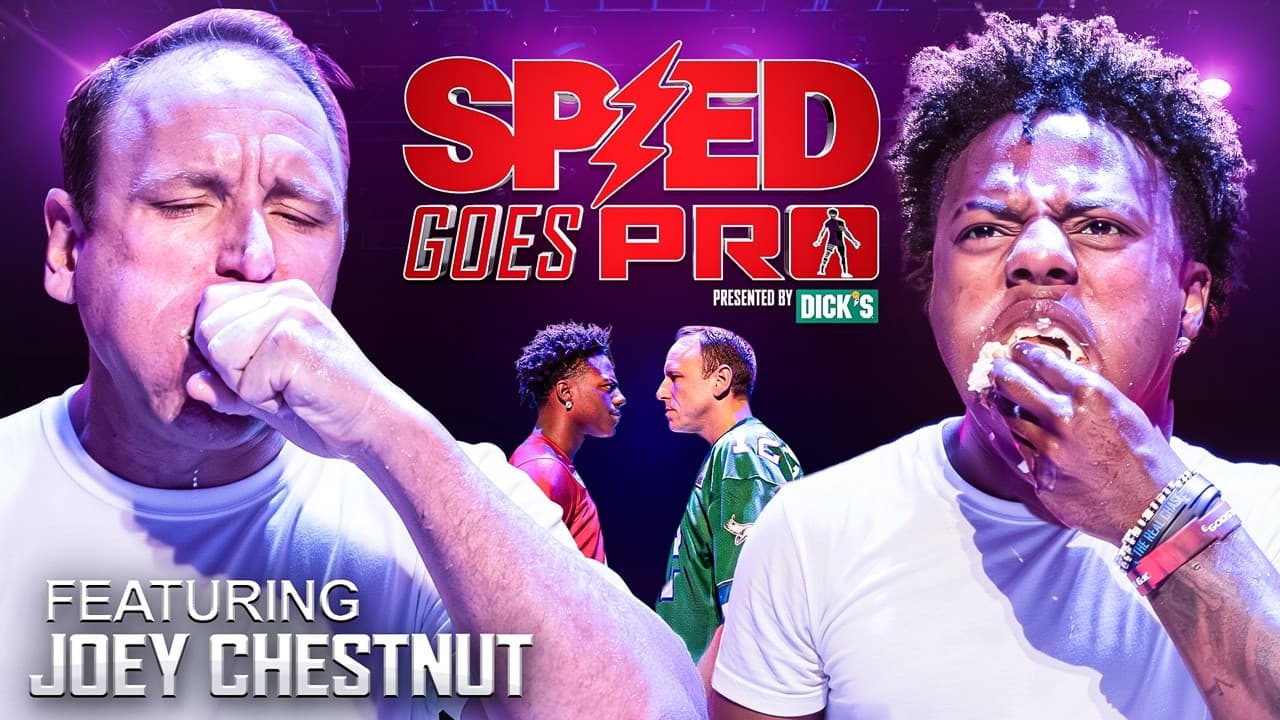
Competitive eating depends on capacity, jaw endurance, breathing, efficient hand movements, water-assisted swallowing, and staying calm under time pressure. IShowSpeed trains with Miki Sudo before completing Joey Chestnut’s food challenges for head-start time, but a hot dog becomes lodged in his throat, showing why swallowing food whole is dangerous.
Transcript
[Applause] [Applause] [Applause] Joey, you may begin eating in 5 4 3 2 1 begin. In the beginning, there was hunger. From the dawn of man, when fire meant flesh, eating wasn't a contest. It was survival. Through the ages, humanity refined the art of the bite. From the feasts of kings to the banquetss of empires. As eating evolved, so too did the eat... Read More
Key Insights
- Competitive eating is a combination of capacity, speed, technique, and composure. Miki Sudo teaches Speed that success requires coordinated biting, swallowing, drinking, and hand movements rather than simply taking the largest possible bites.
- Stomach-capacity training can involve drinking a 2 L bottle of soda without releasing the carbonation. Miki advises minimizing agitation and pouring smoothly, while Speed struggles with the volume and recognizes the difference between his capacity and hers.
- Jaw endurance is essential because tired chewing muscles can push an eater toward the back of the field. Speed uses a resistance device and works until he feels a burn, demonstrating that competitive eating places sustained physical demands on the face and jaw.
- Efficient eating requires planning the next movement before the current bite is finished. For wings, Joey tells Speed to pull meat from one wing while preparing to pick up the next, reducing pauses during the 30-second challenge.
- Safe swallowing requires breaking food into manageable pieces instead of forcing it down whole. A hot dog becomes stuck when Speed tries to swallow it whole, and both Miki and Joey warn against repeating that approach with hot dogs or eggs.
- Water is used to help dry or dense food move more easily. Miki pairs water with smashed hard-boiled eggs and dunked buns, while Joey tells Speed to keep water ready and use it to clear the chalky egg yolks.
- The 30-second clearance rule allows food already inside the mouth to be swallowed after the timed eating period ends. Speed relies on this rule after reaching his fourth egg, then stays calm and uses water to complete the challenge.
- Head-start time is crucial because the final hot dog contest lasts only three minutes. Each successful food challenge gives Speed another 30 seconds before Joey begins, creating a meaningful advantage against a holder of 55 eating world records.
Install to Summarize YouTube Videos and Get Transcripts
Explore YouTube Video Summarizer or Get YouTube Transcript Extractor
Questions & Answers
Q: How does IShowSpeed train for competitive eating?
IShowSpeed trains under Miki Sudo by practicing capacity, jaw endurance, rapid hand movement, and food-specific techniques. He attempts to drink a 2 L bottle of soda without burping, uses a jaw resistance device, and practices eggs, wings, pie, pizza, oysters, and hot dogs. The training emphasizes controlled bites, water-assisted swallowing, steady movement, and staying calm.
Q: What techniques does Miki Sudo teach for eating hot dogs quickly?
Miki Sudo teaches Speed to separate the hot dog meat from the buns, work with two items at a time, and divide the meat with several bites instead of swallowing it whole. While swallowing the meat, the eater dunks a bun, rolls it into a compact ball, places it in the mouth, chews, and repeats the sequence.
Q: Why does IShowSpeed choke during hot dog practice?
IShowSpeed begins choking because he attempts to swallow a hot dog whole, but it does not slide down and becomes stuck in his throat. After his throat clears, he says he respects competitive eaters but does not want to die. The incident shows why food should be divided into manageable pieces and swallowed carefully.
Q: How does the competitive eating head-start system work?
Joey Chestnut arranges five eating challenges at five restaurants before the final hot dog contest. Every challenge that Speed completes successfully earns him a 30-second head start. Because the head-to-head hot dog event lasts only three minutes, each earned interval gives Speed valuable uncontested eating time before Joey is allowed to begin.
Q: How does IShowSpeed complete the hard-boiled egg challenge?
Speed must eat four hard-boiled eggs in 30 seconds, compared with Joey Chestnut’s stated record of 141 eggs in eight minutes. Joey advises him to use two or three bites, avoid holding food in his cheeks, keep water ready, and breathe. Speed reaches the fourth egg, then swallows it during the 30-second clearance period.
Q: What is the 30-second clearance rule in competitive eating?
The 30-second clearance rule begins when the official eating time expires. It gives a competitor time to swallow food that is already in the mouth rather than requiring an immediate empty mouth at the buzzer. Speed uses the clearance period after the egg challenge, staying calm and taking water until he successfully gets the remaining food down.
Q: How does IShowSpeed approach the chicken wing challenge?
Speed must eat five wings in 30 seconds and leave the bones sufficiently clean to receive credit. Joey tells him to stretch his jaw, pull meat from each wing efficiently, and prepare the next wing while chewing the current one. Speed cleans the wings rapidly, finishes with his mouth already clear, and earns another 30-second head start.
Q: Why is breathing important during timed eating challenges?
Breathing helps an eater remain calm and continue swallowing under intense time pressure. After Speed struggles with the eggs, Joey admits that he forgot to remind him to breathe. Speed describes the combination of dry yolk, water, repeated bites, and growing fullness as mentally difficult, making controlled breathing part of maintaining composure and coordination.
Summary & Key Takeaways
-
Miki Sudo prepares IShowSpeed for a competitive eating challenge against Joey Chestnut. Her training covers stomach capacity, jaw endurance, rapid hand movements, water-assisted swallowing, and techniques for wings, eggs, pie, pizza, oysters, and hot dogs. Speed discovers that professional eating requires more control and specialized preparation than expected.
-
Speed attempts to drink a 2 L bottle of soda without burping, practices with a jaw exercise, and learns item-specific methods. During hot dog practice, he tries to swallow the meat whole and begins choking. The incident reinforces the importance of breaking food apart, swallowing carefully, and prioritizing safety.
-
Joey Chestnut creates five restaurant challenges that can each earn Speed a 30-second advantage in their three-minute hot dog contest. Speed completes four hard-boiled eggs under the clearance rule and cleans five wings quickly enough to earn credit, securing head-start time while experiencing the physical difficulty of timed eating.
Read in Other Languages (beta)
Share This Summary 📚
Summarize YouTube Videos and Get Video Transcripts with 1-Click
Try YouTube Summary with ChatGPT & Claude or YouTube Transcript Generator
Explore More Summaries from IShowSpeed 📚





Summarize YouTube Videos and Get Video Transcripts with 1-Click
Try YouTube Summary with ChatGPT & Claude or YouTube Transcript Generator