How to Stay Mindful and Reframe Life's Setbacks
TL;DR
Accepting uncertainty helps you pay attention, notice change, and respond with greater flexibility. Mindfulness becomes practical when you stop treating assumptions as absolute facts, actively observe context, and recognize that events gain much of their meaning from how you interpret them. This approach can renew interest in work, improve relationships, and create more choices during setbacks.
Transcript
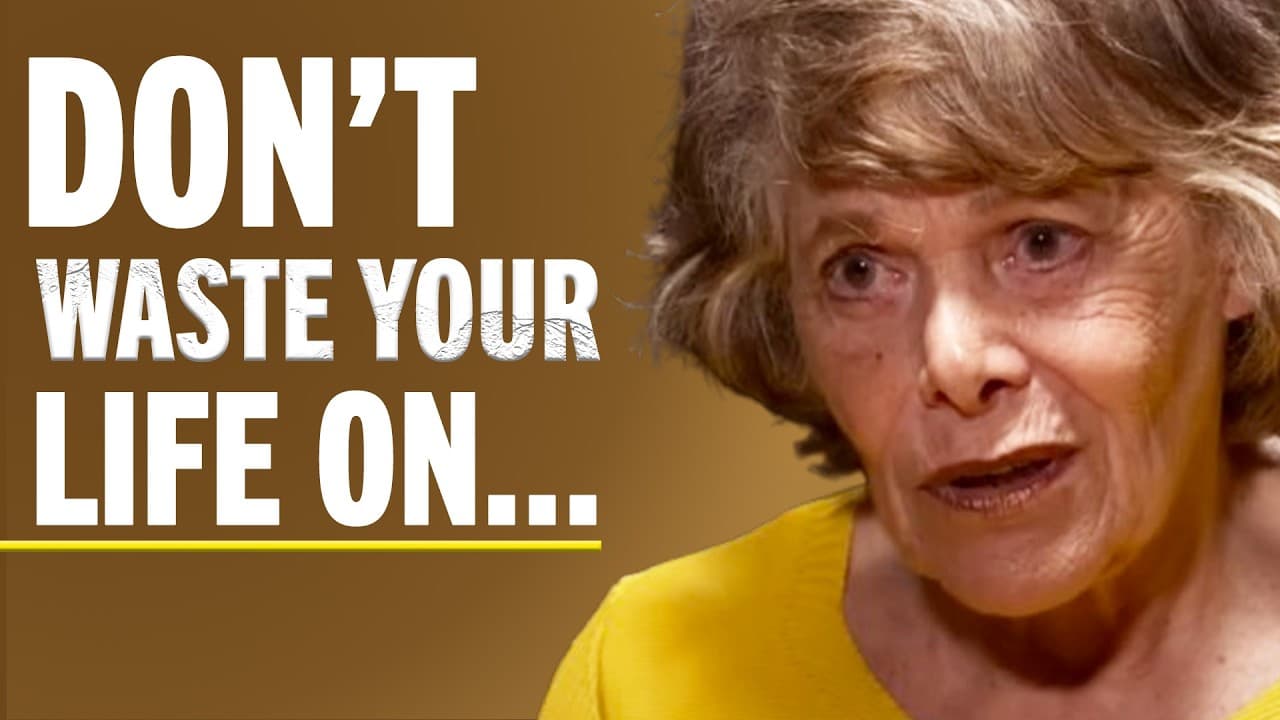
what would you say is the most important mindset shift that we can all make if we want to live a life full of meaning and purpose and free from regret I think it's realizing that uncertainty is the rule not the exception and when we know we don't know then we naturally tune in and people are oblivious to the fact that most people are not there they... Read More
Key Insights
- Uncertainty is the rule rather than the exception, and recognizing it naturally encourages attention. When people assume they already know, they stop examining context, overlook change, and behave automatically instead of participating fully in what is happening.
- Mindlessness resembles robotic behavior because a person repeats familiar responses without actively noticing the present. Asking questions about surroundings, people, and possibilities can make an experience engaging without requiring strained effort or a formal meditation practice.
- Facts depend on context more often than conventional schooling suggests. Even one plus one can produce different answers when the number system changes or when physical things such as clouds, chewing gum, pizzas, and lasagnas are combined.
- Scientific conclusions express probabilities rather than universal certainties. A study can show what most subjects do under particular conditions, but differences among individuals and circumstances mean that a general finding should not automatically be treated as true for everyone.
- Medical knowledge is probabilistic, so physicians benefit from remaining open to individual variation. Recognizing uncertainty can change how clinicians observe patients, return some control over health to individuals, and improve the clinician's engagement, well-being, and relationships.
- Burnout results from mindlessly repeating the same activity until being present becomes unbearable. Recognizing that people and situations continually change creates reasons to notice new details, making familiar work more engaging and potentially healthier for everyone involved.
- Preparation can sometimes narrow attention when it creates false certainty. After losing her teaching notes, Langer used a former student's notes and had to make sense of each detail in the moment, which made her more present and produced her best course.
- Events are neither inherently positive nor negative because interpretation shapes their meaning. After a destructive fire, Langer preserved her calm, treated the loss as an opportunity for reinvention, and remembered unexpected human warmth more clearly than the possessions she lost.
Install to Summarize YouTube Videos and Get Transcripts
Explore YouTube Video Summarizer or Get YouTube Transcript Extractor
Questions & Answers
Q: What mindset shift helps create a meaningful life?
The central mindset shift is recognizing that uncertainty is normal rather than exceptional. When you accept that you do not fully know what will happen or what something means, you have a reason to pay attention. This awareness makes life more interesting, reveals choices, and prevents assumptions from turning everyday experience into automatic, robot-like behavior.
Q: How does mindfulness differ from mindless behavior?
Mindfulness involves actively noticing what is changing, how something looks from different perspectives, and which contextual details matter. Mindless behavior occurs when assumed certainty removes the reason to pay attention. A mindless person may repeat familiar actions automatically, while a mindful person asks questions, detects differences, and becomes more fully present without forcing concentration.
Q: Why does uncertainty make life more interesting?
Uncertainty creates curiosity because it leaves room for questions, alternatives, and new observations. If you believe you already know everything relevant about a person or situation, there is little reason to tune in. When you acknowledge that circumstances continually change, you naturally look again, notice context, and discover possibilities that certainty would have hidden.
Q: Why are facts often dependent on context?
Many apparent facts rely on unstated conditions. One plus one equals two in a base ten number system, but it is written as ten in a base two system. Combining one piece of chewing gum with another can produce one larger piece, while combining clouds or lasagnas can similarly challenge a fixed arithmetic interpretation.
Q: How should physicians think about medical knowledge?
Physicians should treat medical information as probability rather than an absolute rule that applies identically to every person. Individual patients differ, and both patients and clinicians continually change. Acknowledging uncertainty encourages closer observation, supports more responsive decisions, gives individuals a greater role in their health, and can improve engagement and the clinician-patient relationship.
Q: How can mindfulness help reduce burnout at work?
Burnout can emerge when work becomes the mindless repetition of supposedly identical tasks. Mindfulness restores engagement by emphasizing that no patient, colleague, or situation is exactly the same from moment to moment. Actively noticing differences gives the worker something new to attend to, which can make familiar responsibilities more interesting and support healthier relationships.
Q: How can someone reframe losing possessions in a fire?
A person can protect their remaining well-being by recognizing that losing calm after losing possessions only adds another cost. Langer viewed her destroyed belongings as representations of who she had been, not necessarily who she was at that moment. She treated the loss as an opportunity for reinvention and focused on kindness that emerged afterward.
Q: Are difficult events inherently positive or negative?
Events themselves are not necessarily positive or negative because interpretation strongly influences their meaning. Greater mindfulness creates more possible ways to understand what happened. Langer's fire destroyed much of what she owned, yet she remembered the generosity of hotel workers and the opportunity to reconsider her identity more clearly than most lost possessions.
Summary & Key Takeaways
-
Dr. Ellen Langer defines mindfulness as actively noticing change, context, and multiple perspectives. Because certainty discourages attention, acknowledging that you do not know everything makes ordinary experiences more interesting. This beginner-like awareness creates choices, engages the mind, and helps people participate in life instead of functioning automatically like robots.
-
Facts taught as absolutes are often context-dependent probabilities. Examples involving arithmetic, clouds, chewing gum, pizza, lasagna, and a horse eating a hot dog demonstrate how categories and conclusions can change with circumstances. Recognizing this uncertainty can help physicians remain attentive to individual patients rather than assuming general medical knowledge applies identically to everyone.
-
Langer describes losing most of her possessions in a fire without surrendering her calm. She viewed the loss as an opportunity to reconsider who she was, discovered that many possessions were not memorable, and experienced unexpected kindness from hotel workers. Her conclusion is that events acquire positive or negative meaning through interpretation.
Read in Other Languages (beta)
Share This Summary 📚
Summarize YouTube Videos and Get Video Transcripts with 1-Click
Try YouTube Summary with ChatGPT & Claude or YouTube Transcript Generator
Explore More Summaries from Dr Rangan Chatterjee 📚

Summarize YouTube Videos and Get Video Transcripts with 1-Click
Try YouTube Summary with ChatGPT & Claude or YouTube Transcript Generator