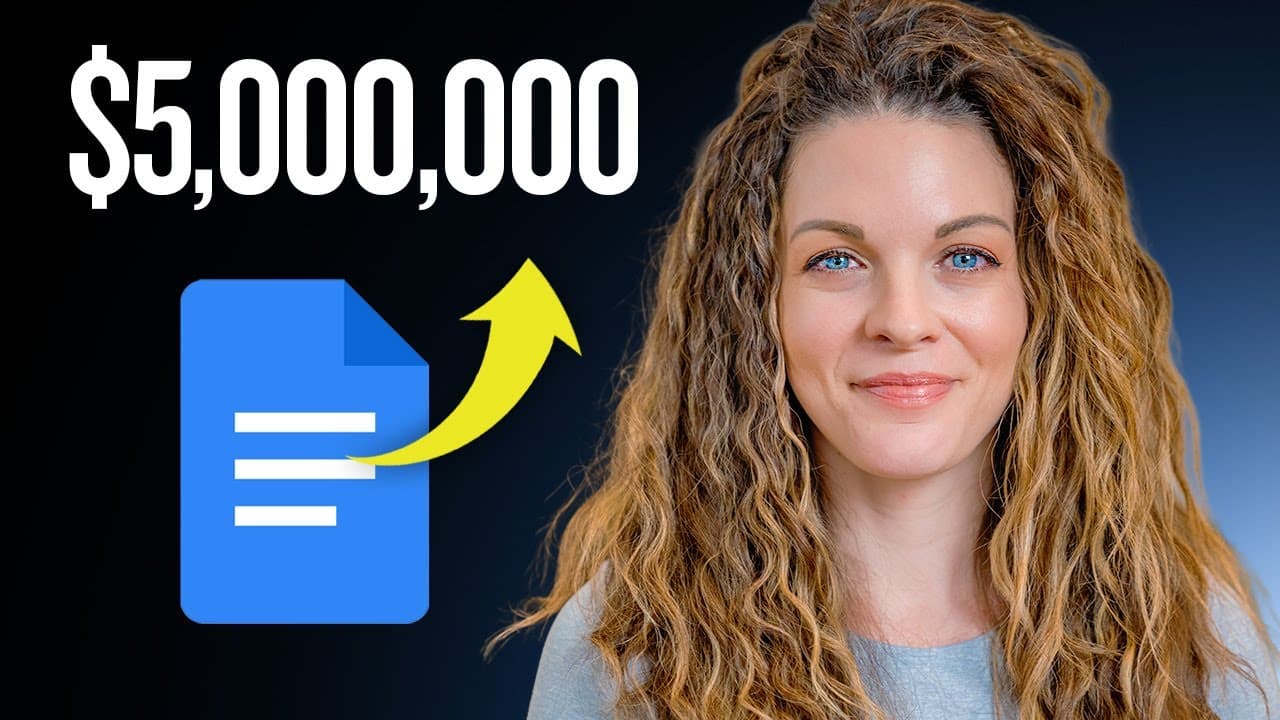
How to Run a $5M Online Business with Google Docs
TL;DR
Google Docs powers a multimillion dollar online education operation by keeping systems simple and scalable. The plan centers on delivering real client transformation, validating offers live with the POP method, and building curriculum directly in Google Docs for speed and adaptability. This approach minimizes friction and emphasizes impact over polish.
Transcript
No notion, no ASA, no fancy schmancy project management software that's way too complicated. Just Google Docs. The very same thing that maybe you write your grocery list on is the very backbone of our $5 million a year business. I'm going to kind of break down what exactly that means inside of this video. But there's three really important factors ... Read More
Key Insights
- Google Docs is the backbone of the business, simplifying content creation and updates.
- Simplicity scales faster than complexity, reducing friction for clients and the team.
- The client impact rule prioritizes value over perfect visuals or fancy features.
- The POP method validates the program with real buyers before full launch.
- Curriculum can be built and iterated inside Google Docs for speed.
- Backups are essential to prevent data loss and ensure reliability.
- Live testing informs what the offer actually needs, not assumptions.
- Packaging and pre-recorded programs come after successful live validation.
Install to Summarize YouTube Videos and Get Transcripts
Explore YouTube Video Summarizer or Get YouTube Transcript Extractor
Questions & Answers
Q: How can I start an online program using Google Docs as the core tool
To start an online program with Google Docs, first define the transformation you want to deliver. Use Google Docs to create the curriculum, document weekly content, and store all concepts. Validate the idea by delivering a live prototype to real buyers, then adjust based on feedback. Keep processes lightweight and scalable.
Q: Why does the speaker warn against overemphasizing production value
The speaker emphasizes client impact over production value because real results come from how well the content helps people transform, not from flashy slides. High polish often creates unnecessary friction and delays. By prioritizing practical value, you can deliver faster improvements, learn from real client feedback, and scale more efficiently.
Q: What is the POP method and why is it important
The POP method stands for prototype, offer, and production, and it validates the program with real clients during a live phase. This approach ensures the curriculum delivers actual transformation, not presumed outcomes. It helps identify unnecessary topics early, speeds up iteration, and increases confidence before packaging into a self-contained program.
Q: How does building curriculum in Google Docs benefit a small team
Building curriculum in Google Docs benefits a small team by reducing the need for expensive tools and complex workflows. It enables rapid updates, easy collaboration, and quick reorganization of content. This approach minimizes friction, accelerates delivery to clients, and allows the team to scale without heavy investment in software.
Q: What role do backups play in this system
Backups are critical to prevent data loss and ensure continuity. The speaker keeps backups of Google Docs on external drives and cloud storage, creating redundancies that protect content like curriculum, concepts, and client materials. This habit reduces risk and gives peace of mind during revisions and scaling.
Q: When should you move from live validation to a packaged program
Move to a packaged program after live validation proves the concept works for real clients. Once the live prototype delivers consistent transformations and the team can maintain quality, you can repackage into a pre-recorded format. This sequence builds credibility, ensures demand, and scales revenue without compromising client outcomes.
Q: What is meant by focusing on the transformation rather than visuals
Focusing on transformation means centering the program around the actual changes clients experience, not how shiny or polished the materials appear. The value derived from applying the knowledge is what drives results, referrals, and ongoing demand. Visual polish is secondary to delivering measurable outcomes.
Q: How does the guidance suggest handling perfectionism in launching an offer
The guidance recommends treating your product as a living, improving asset rather than a perfect final version. Launch early with a solid core, then optimize over time using feedback from real clients. This reduces delay, builds confidence, and accelerates growth by continuously refining the offer based on evidence.
Summary & Key Takeaways
-
A simple tool, Google Docs, underpins a high revenue online education business and replaces complex software. The focus is on delivering value and transformation to clients rather than optimizing visuals. This approach enables rapid iteration and fast scaling.
-
A live validation process with real clients guides product development, ensuring the offer meets market needs. The prototype concept attracts buyers early, then live delivery informs improvements, making it easier to package a compelling pre-recorded program later.
-
Simplified systems reduce internal friction and accelerate onboarding for clients. The emphasis on rapid curriculum creation, with back ups and clear accountability, helps a small team deliver results without dependency on heavy tech or elaborate project management tools.
Read in Other Languages (beta)
Share This Summary 📚
Summarize YouTube Videos and Get Video Transcripts with 1-Click
Try YouTube Summary with ChatGPT & Claude or YouTube Transcript Generator
Explore More Summaries from Sunny Lenarduzzi 📚

Summarize YouTube Videos and Get Video Transcripts with 1-Click
Try YouTube Summary with ChatGPT & Claude or YouTube Transcript Generator