How Does ICT Analyze Smart Money Concepts? January 29, 2026 Lecture
TL;DR
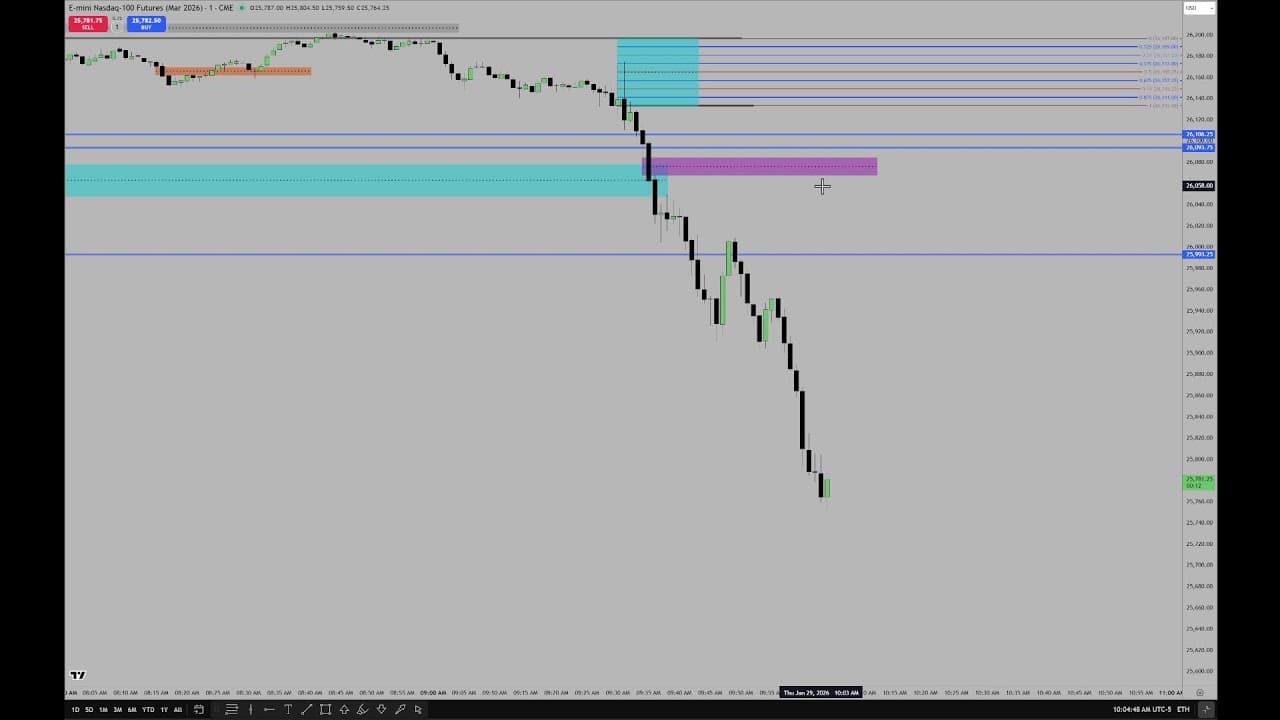
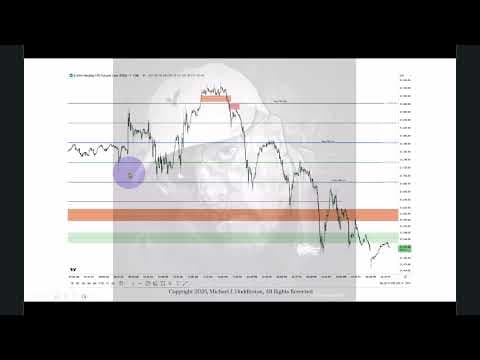
ICT analyzes smart money concepts by defining a relevant market range, marking its midpoint, and watching how price interacts with liquidity and inefficiencies. In the January 29, 2026 lecture, he studies the opening range gap, buy-side liquidity above the 375 level, and pre-session behavior before the 9:30 a.m. Eastern opening bell. Read on for the specific levels, patterns, and timing used in the analysis.
Transcript
Oh, hello. Hello. Audio check. Hello. See if we can get somebody to confirm they can hear the old man. I'm looking at X and I have no idea if you can hear me or not. So, if you could be wonderful if you said something back whether if you can hear me. Is this [clears throat] repel trigger? Thank you. Thank you, Diamond Heaven. Thank you, Michael Dav... Read More
Key Insights
- Understanding market ranges is crucial for identifying potential price movements.
- Liquidity pools and inefficiencies are key targets for market movements.
- The opening range gap can provide insights into potential market directions.
- Patience and practice are essential in developing effective trading skills.
- 8:30 AM and 9:30 AM are significant times for market movements due to news and market openings.
- Volatility can be both an opportunity and a risk, requiring careful risk management.
- Trading with a plan and defined risk parameters is essential for long-term success.
- A disciplined approach to learning and trading can lead to consistent profitability.
Install to Summarize YouTube Videos and Get Transcripts
Explore YouTube Video Summarizer or Get YouTube Transcript Extractor
Questions & Answers
Q: How does ICT analyze smart money concepts in the January 29, 2026 lecture?
ICT marks the opening range gap, nearby liquidity, and price inefficiencies, then defines a range using relevant highs and lows. He splits that range at its midpoint and watches how price trades within it before the 9:30 a.m. Eastern opening bell.
Q: What is the opening range gap in this ICT analysis?
ICT identifies the opening range gap from regular trading hours and extends its levels onto the chart. He notes that these levels were useful overnight and highlights an overshoot below the gap that took out a previous session low before price moved higher.
Q: Where does ICT identify buy-side liquidity?
He identifies buy-side liquidity and a smaller pool of buy-side liquidity just above the 375 level. During the lecture, he observes that price is getting ready to engage that area.
Q: What inefficiencies does ICT mark on the chart?
ICT points to a volume imbalance followed by a continuation of sell-side imbalance and buy-side inefficiency. He treats the combined structure as another PD array that can serve as a draw for price.
Q: How should the full inefficiency range be drawn?
ICT says the entire sequence should be encapsulated when price leaves a candlestick low, sells off, creates an imbalance or inefficiency, forms a volume imbalance, and then begins another downside-closing candle. Including the whole structure provides the full range and its available precision.
Q: Why does ICT split the defined range at its midpoint?
He performs a classic split of the marked range to establish its mid-range. He then watches whether price trades into the range and how it behaves around that internal reference point.
Q: Why are 8:30 a.m. and 9:30 a.m. important in this lecture?
ICT anticipates employment-related data, including unemployment claims and labor costs, at 8:30 a.m. He then studies the pre-session range to see how price uses its high and low before the 9:30 a.m. Eastern opening bell.
Q: Which pre-session levels does ICT monitor before the opening bell?
ICT defines a pre-session range and focuses specifically on its high and low. He wants to see how price uses those boundaries to set the market’s tone before the 9:30 a.m. opening.
Summary & Key Takeaways
-
The video emphasizes the importance of understanding where the market is likely to move next, focusing on liquidity pools and inefficiencies. This understanding is crucial for determining entry and exit points in trading. Patience, practice, and a disciplined approach are necessary for developing effective trading skills.
-
Key market times like 8:30 AM and 9:30 AM are highlighted as significant for observing price movements due to news releases and market openings. The video stresses the importance of managing risk and having a defined trading plan to navigate market volatility.
-
The speaker encourages traders to focus on learning to identify market ranges and liquidity targets, rather than seeking quick profits. Developing a deep understanding of market dynamics can lead to consistent profitability and long-term success in trading.
Read in Other Languages (beta)
Share This Summary 📚
Summarize YouTube Videos and Get Video Transcripts with 1-Click
Try YouTube Summary with ChatGPT & Claude or YouTube Transcript Generator
Explore More Summaries from The Inner Circle Trader 📚


Summarize YouTube Videos and Get Video Transcripts with 1-Click
Try YouTube Summary with ChatGPT & Claude or YouTube Transcript Generator