How to Study Less and Get Higher Grades in University
TL;DR
To study less and get higher grades, stop note dumping, stop highlighting without processing, and stop over-relying on flashcards. Learning depends on high-quality processing, the thinking that encodes information into long-term memory. Treating learning as a system of techniques, rather than adding more volume and time, is what cuts study time while improving results.
Transcript
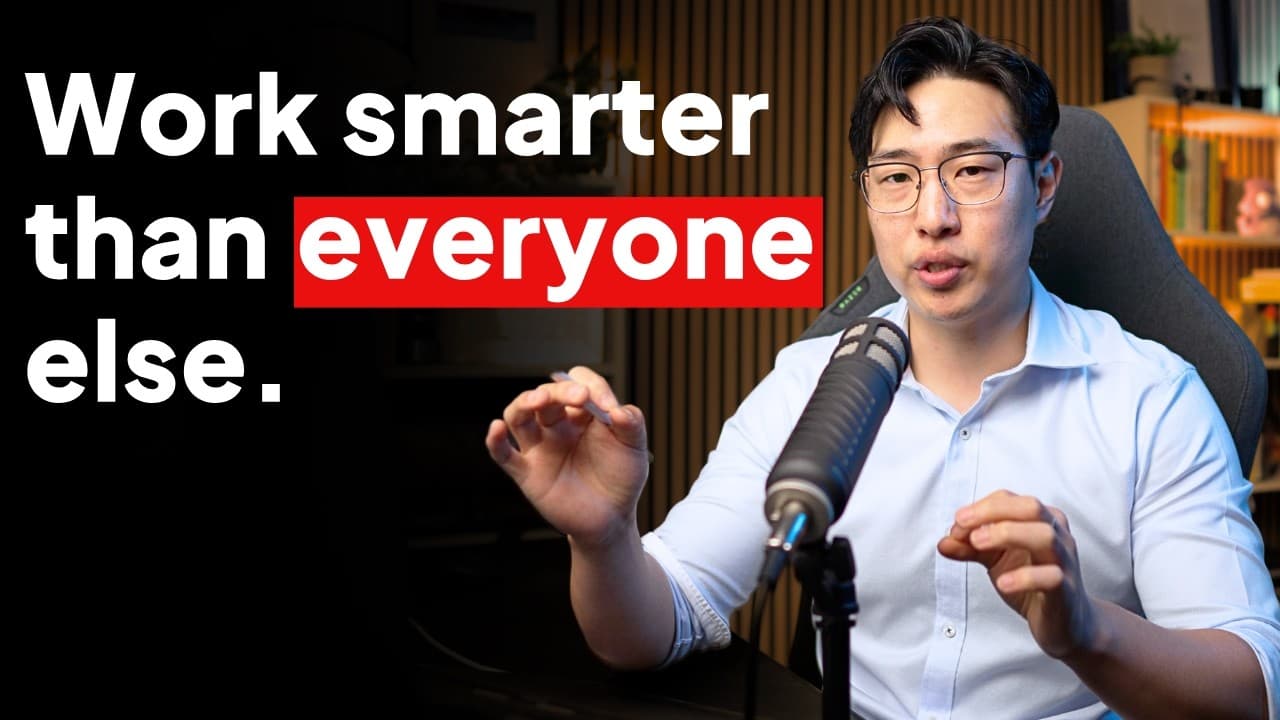
In this video, I'm going to show you how you can get higher grades while studying less, especially if you're in university. I do this by showing you three things every student does that you need to stop doing because it's a complete waste of time and what you should actually be doing instead. For me, doing this helped me cut down my studying time b... Read More
Key Insights
- Note dumping is writing information into notes just because it feels necessary, without thinking about it. It takes a long time, produces little memory, and creates extra work later when forgotten material must be relearned.
- A simple test for note dumping is to check your retention one week after taking notes. Retaining less than 50%, or holding only superficial knowledge, is a clear sign that note-taking has become note dumping.
- Learning works as a sequence: information comes in, the brain processes it, and the quality of that processing determines how well it is encoded into long-term memory. High-quality processing is what produces lasting knowledge.
- Paint and pray is highlighting everything that seems important and hoping the act of highlighting puts it into memory. It requires even less effort than notes, so it feels productive without creating learning.
- Highlighting creates a paradox of learning: marking something as important enough to highlight while not treating it as important enough to process. In effect, learners highlight the things they are deciding to forget.
- Flashcards in tools like Anki are good for remembering small discrete facts and details. They are poor for higher-order knowledge such as problem solving, holding discussions, or writing essays.
- Repeating flashcards many times shifts retrieval from recall toward recognition. A warning sign is answering a card before reading the whole question, because you are only matching familiar words to a memorized answer.
- Studying less while getting better results requires treating learning as a system. Techniques can be optimized before collecting information, during consumption, during processing and encoding, and during retrieval to reduce forgetting.
Install to Summarize YouTube Videos and Get Transcripts
Explore YouTube Video Summarizer or Get YouTube Transcript Extractor
Questions & Answers
Q: What is note dumping and why is it a waste of time?
Note dumping is putting information into your notes simply because you feel you need to have it written down, without actually thinking about it. It avoids the mental effort of processing, so very little is encoded into long-term memory. It takes a lot of time, yields poor retention, and creates future work because the forgotten material has to be relearned repeatedly.
Q: How can I tell if my note-taking is effective or just note dumping?
Take your notes as usual, then test yourself about a week later. Check how much you actually retain and how deep and nuanced your knowledge is, including your ability to use what you learned. Most people retain less than 50% and only at a superficial level. That result is a clear sign that the note-taking has been note dumping rather than effective learning.
Q: Why does highlighting a textbook not help you learn?
Highlighting is even less effortful than writing notes, so it skips the processing step that learning requires. It makes you feel productive without putting information into memory. This is called paint and pray. It also creates a paradox: you mark content as important enough to highlight, yet not important enough to do anything useful with, so you are effectively highlighting what you will forget.
Q: How does learning actually work in the brain?
Information first comes into the brain, and then the brain thinks about it, a step called processing. The quality of that processing determines how well the information is stored, a step called encoding, into long-term memory. Building knowledge, expertise, and problem-solving ability requires high-quality knowledge with strong retention in long-term memory, which in turn depends on high-quality processing.
Q: Are flashcards like Anki a good way to study?
Flashcards are useful tools for a specific type of learning: remembering small, discrete facts and details. They are not a solution to every learning problem. Like using only a screwdriver to build a house, relying solely on flashcards is ineffective. They are poor for higher-order knowledge such as problem solving, holding discussions, or writing essays, so they should be one tool among several.
Q: What is the difference between recall and recognition in learning?
Recognition means identifying something when you see it, like recognizing a highlighter or a coin when shown it. Recall is much more demanding: closing your eyes and accurately drawing the highlighter from memory. With knowledge, recognizing a fact or correct answer is very different from retrieving it from memory without help or prompting. Effective learning should build recall, not just recognition.
Q: What is the warning sign that flashcards are training recognition instead of recall?
A red flag is being able to answer a flashcard without fully reading the question. You recognize the first few words, identify which card it is, and produce the associated answer. After six or seven repetitions, you start training an association between that card's question and its answer. This only helps if the exam tests you exactly the same way as the flashcard.
Q: How can students study less and still get better grades?
Students need to think of learning as a system of techniques rather than relying on volume and time. There are techniques to apply before collecting information, while consuming it, during processing to improve encoding into long-term memory, and during retrieval to reduce forgetting. This avoids constantly relearning material. The first replacement technique recommended after dropping bad habits is pattern mining.
Summary & Key Takeaways
-
Three common student habits waste time: note dumping, highlighting without processing, and abusing flashcards. Stopping them and replacing them with better techniques reportedly cut the speaker's study time by over 80% and helped him graduate medical school and rank first in a master's degree while working full-time.
-
Learning depends on processing. Information enters the brain, is thought about, and is encoded into long-term memory based on the quality of that thinking. Note dumping and highlighting both skip processing, which makes learners feel productive while leaving them with weak, superficial memory and more relearning later.
-
Flashcards are useful for discrete facts but not for higher-order skills, and heavy repetition trains recognition rather than recall. Learning should be treated as a system of techniques across consumption, processing, encoding, and retrieval. The first recommended replacement technique is pattern mining.
Read in Other Languages (beta)
Share This Summary 📚
Summarize YouTube Videos and Get Video Transcripts with 1-Click
Try YouTube Summary with ChatGPT & Claude or YouTube Transcript Generator
Explore More Summaries from Justin Sung 📚


Summarize YouTube Videos and Get Video Transcripts with 1-Click
Try YouTube Summary with ChatGPT & Claude or YouTube Transcript Generator