Is Artaud's Heliogabalus Worth Reading?
TL;DR
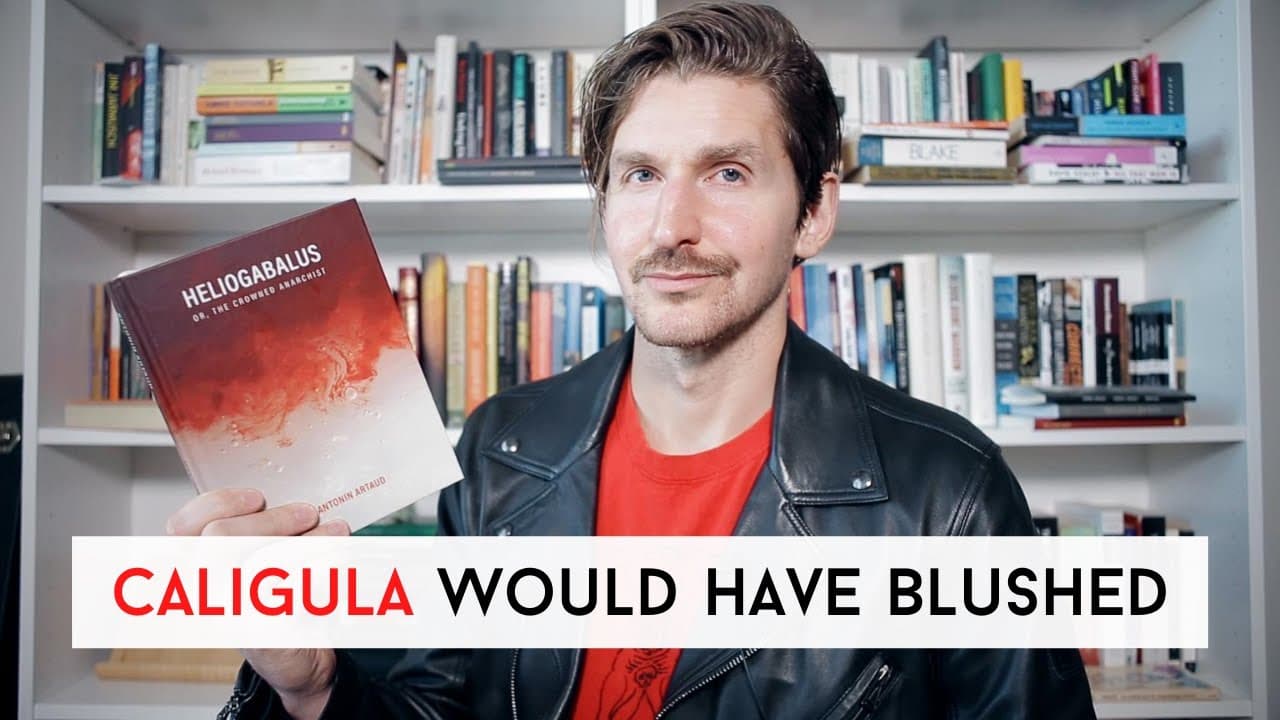
Antonin Artaud's Heliogabalus is worth reading for readers drawn to grotesque history, mythology, transgressive art, and avant-garde commentary. The book combines historical research with Artaud's identification with a teenage Roman emperor who introduced chaos into established order, producing an accessible but dense mixture of biography, historical exposition, violent imagery, and reflections on artistic rebellion.
Transcript
mental illness often improves art better than food man good afternoon everyone welcome to better food book reviews i'm your host clifford lee sergeant hope you're doing well great to see you as always get that coffee quick caveat this review and book are not for those who are uninterested in a boiling cauldron of grotesque history m... Read More
Key Insights
- Heliogabalus is portrayed as a teenage Roman emperor who took the throne in the year 218, ruled for four years, and was murdered at eighteen alongside his mother before being thrown into a river.
- The book is a hybrid of historical study, transgressive fiction, art-book design, and occult atmosphere, making it accessible in its narrative outline while still demanding attention to complicated families, bloodlines, religion, politics, and violence.
- Artaud's central artistic connection to Heliogabalus is their shared introduction of chaos into established order. The reviewer distinguishes Artaud's theatrical rebellion from the emperor's criminality while presenting both figures as forces that attacked defined systems and conventions.
- Heliogabalus's rise is driven by Julia Maesa and Julia Soaemias, his grandmother and mother, who seek to restore their family's political power after Macrinus gains the throne and the family is sent away from Rome to Emesa in Syria.
- The battle at Antioch is the book's most energetic passage, depicting the young Heliogabalus charging with cavalry while his mother and grandmother fight in support, ultimately contributing to Macrinus's defeat and Heliogabalus's elevation as emperor.
- Artaud conducted library research while writing the book, as described in letters to Anaïs Nin included in the reviewed edition. The result contains substantial exposition and historical commentary rather than functioning merely as a sensational list of alleged excesses.
- The historical record presented in the review contains uncertainty because stories about Heliogabalus may have been exaggerated, invented, or based on rumor. The book even omits famous allegations, including the story that dinner guests were smothered beneath falling flowers.
- Infinity Land Press's edition emphasizes the work as a physical art object through eclipse collage, images of damaged or warring Roman statues, distinctive chapter presentation, a photograph of Artaud, and a reproduction associated with the original publication.
Install to Summarize YouTube Videos and Get Transcripts
Explore YouTube Video Summarizer or Get YouTube Transcript Extractor
Questions & Answers
Q: What is Antonin Artaud's Heliogabalus about?
Antonin Artaud's Heliogabalus examines a teenage Roman emperor associated with sun worship, political intrigue, violence, and scandal. It follows the family campaign that places him on the throne, his defeat of Macrinus, and his destructive reign. More importantly, Artaud uses this historical figure to explore how explosive anarchy can enter, disrupt, and poison an established social order.
Q: Is Heliogabalus a history book or a novel?
Heliogabalus combines several forms rather than fitting neatly into one category. The reviewer describes it as a history book crossed with a transgressive novel, presented as an art book and carrying the atmosphere of an occult text. It includes researched political and family history, dramatic battle writing, mythology, commentary, and Artaud's personal identification with the emperor's disruptive relationship to order.
Q: Why does Artaud identify with Heliogabalus?
Artaud identifies with Heliogabalus because both figures introduce chaos into a defined order. Heliogabalus does so through an explosive and destructive reign, while Artaud seeks to break barriers and conventions in theater and art. The comparison does not claim that Artaud shared the emperor's criminality or excesses. It focuses on their parallel roles as disruptive forces within established systems.
Q: How did Heliogabalus become Roman emperor?
Heliogabalus becomes emperor through a family effort led by his grandmother, Julia Maesa, and his mother, Julia Soaemias. After Macrinus gains power and their family is pushed away from Rome to Emesa in Syria, they work to restore the dynasty. Heliogabalus then participates in the battle at Antioch, where Macrinus is defeated and the teenager is established as emperor.
Q: What makes the battle at Antioch important in the book?
The battle at Antioch marks the defeat of Macrinus and the rise of Heliogabalus to imperial power. It is also the most energetic section highlighted by the reviewer. Artaud depicts the young claimant charging on horseback with Scythian cavalry while his mother and grandmother attack in support, surrounding the combat with vivid images of sunlight, dust, blood, wounded soldiers, animals, and clashing metal.
Q: How historically reliable are the stories about Heliogabalus?
The review treats the stories about Heliogabalus cautiously. It acknowledges controversy over whether the emperor was a political pawn and whether scandalous accounts were fictional, exaggerated, or based partly on truth. The book does not reproduce every famous allegation. For example, it omits the story that Heliogabalus killed dinner guests by smothering them beneath flowers released from above.
Q: Is Artaud's Heliogabalus accessible to new readers?
The reviewer considers Heliogabalus both extreme and comparatively accessible. Some passages are complicated because the history involves bloodlines, competing families, political plots, religion, and violence, but the central narrative is described as fairly straightforward once the major figures are identified. Readers should still expect substantial exposition, mythology, grotesque material, and avant-garde commentary rather than light reading.
Q: What is distinctive about the Infinity Land Press edition?
The Infinity Land Press edition is presented as a carefully designed transgressive art book. Its visual elements include an eclipse collage, beheaded or warring Roman statues, striking chapter layouts, a photograph of Artaud, and an image connected to the original publication. The publisher describes its books as clandestine works outside the established book market, and the reviewer notes that this edition is not available on Amazon.
Summary & Key Takeaways
-
Artaud presents Heliogabalus as a teenage Roman emperor shaped by sun worship, dynastic ambition, violence, and claims of divinity. His mother and grandmother help place him on the throne after Macrinus displaces their family, while the battle at Antioch becomes the book's most energetic and vividly narrated historical sequence.
-
The book is less a catalogue of debauchery than a fusion of history and Artaud's troubled artistic consciousness. Artaud identifies with Heliogabalus as someone who introduces explosive anarchy into a defined order, connecting the emperor's disruptive reign with his own effort to dismantle conventions and barriers in theater.
-
Infinity Land Press presents the work as a carefully designed transgressive art book featuring collage, Roman imagery, chapter designs, a photograph of Artaud, and an image of the original publication. The reviewer finds the work dense but comparatively accessible, combining extensive research, historical exposition, mythology, commentary, and occult atmosphere.
Read in Other Languages (beta)
Share This Summary 📚
Summarize YouTube Videos and Get Video Transcripts with 1-Click
Try YouTube Summary with ChatGPT & Claude or YouTube Transcript Generator
Explore More Summaries from Better Than Food 📚




Summarize YouTube Videos and Get Video Transcripts with 1-Click
Try YouTube Summary with ChatGPT & Claude or YouTube Transcript Generator