How Does Apple Test iPhone Durability in Secret Labs?
TL;DR
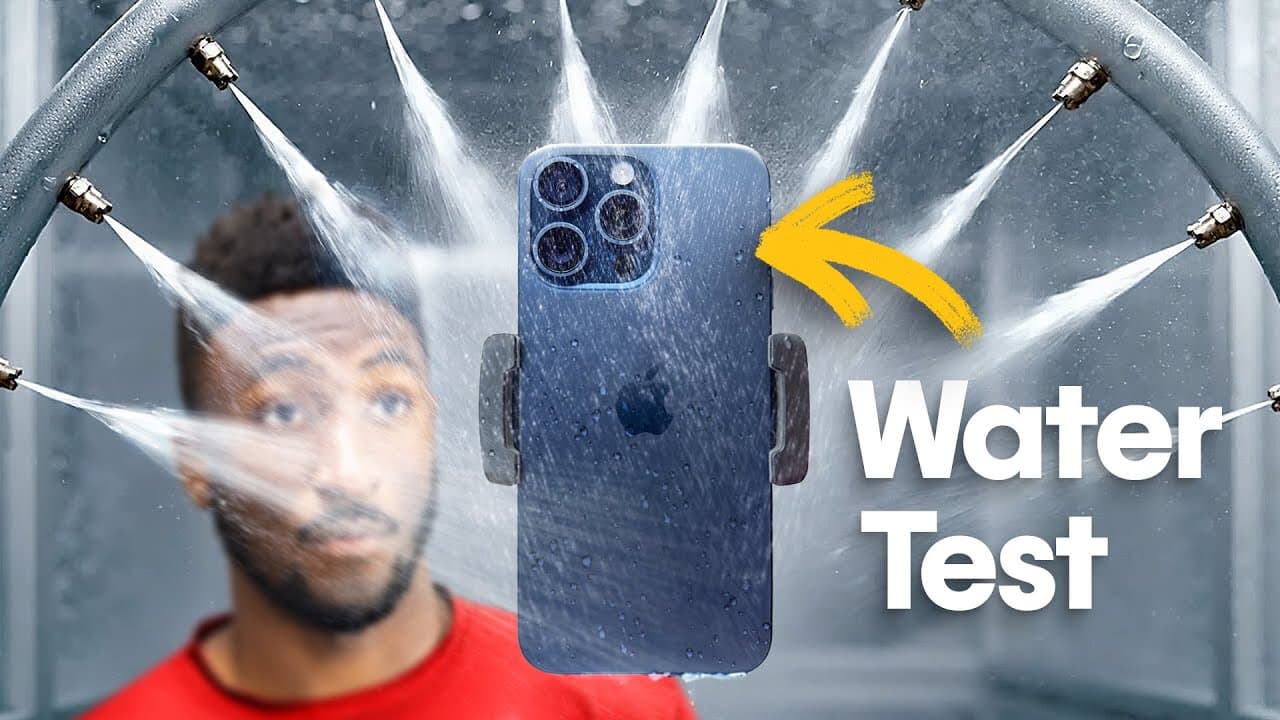
Apple tests iPhone durability using advanced equipment in secret labs, conducting rigorous assessments for water resistance, drop tests, and vibration simulations. They utilize high-pressure water jets, pressurized tanks, and industrial robots to ensure iPhones can withstand real-world conditions. This extensive testing process can involve up to 10,000 prototypes before a final product is approved, highlighting the challenge of balancing durability and repairability.
Transcript
♪ Ah, ah, ah, yeah, yeah ♪ ♪ Ah, ah, ah, yeah, yeah, yeah ♪ - So a couple days ago I dropped a Twitter thread, yes, I still call it Twitter, and I severely underestimated how many of you guys would be interested in it. But then a lot of the conversation that it drove was really interesting, and a lot of discussions that happened afterward were fun ... Read More
Key Insights
- 💦 Apple's iPhone durability testing labs are equipped with advanced technology designed to simulate real-world conditions to assess water resistance and impact durability.
- 💦 The IP rating system, especially IP68, helps consumers understand the level of protection a device offers against water and dust intrusions.
- 👻 Extensive testing, often involving thousands of units, allows Apple to refine their designs and enhance the durability of their products before launch.
- 🚄 Apple's testing equipment includes specialized robotics and high-speed cameras, enabling precise and consistent drop testing.
- 😀 There is an ongoing debate about the balance between creating durable products and ensuring they remain easily fixable, an area where Apple has faced criticism.
- 🏆 Submersion tests in pressurized tanks help simulate various depths to evaluate how iPhones perform when fully immersed.
- 🗯️ The durability-enhancing features, such as seals and adhesives, while improving performance, make devices harder to repair which poses concerns for consumer rights.
Install to Summarize YouTube Videos and Get Transcripts
Explore YouTube Video Summarizer or Get YouTube Transcript Extractor
Questions & Answers
Q: How does Apple test iPhone durability in its secret labs?
Apple exposes iPhones to water, controlled drops, and repeated vibration before release. Its equipment includes pressurized water tanks, an Epson industrial robot, high-speed Phantom cameras, and machines that reproduce frequencies from motorcycle engines, car engines, or subway cars.
Q: How does Apple test an iPhone's water resistance?
Testing begins with a drip ceiling that simulates rain and splashing, followed by rotating jets that spray the device from every angle. Apple then uses high-pressure water and sealed tanks, including a pressurized tank that simulates different depths for full-submersion testing.
Q: What do the numbers in an IP68 rating mean?
IP means ingress protection, with the first number representing protection from solids and the second representing protection from liquids. Higher numbers indicate greater protection, and IP68 means the phone can remain underwater for an extended period.
Q: How does Apple conduct iPhone drop tests?
An Epson industrial robot repeatedly drops an iPhone at the same angle and onto a selected surface. Ultrahigh-speed Phantom cameras record the impact under bright lights so engineers can compare results across materials such as granite, marble, corkboard, wood, and asphalt.
Q: What do Apple's vibration tests simulate?
Apple straps trays of devices to machines that shake them thousands of times at a specified frequency. The machines can reproduce vibrations associated with a motorcycle engine, car engine, or subway car to simulate long-term real-world exposure.
Q: How many prototype iPhones can Apple use during durability testing?
John Ternus, Apple's head of hardware engineering, said Apple sometimes goes through 10,000 prototype iPhones before shipping a final phone. Those prototypes are used across durability tests intended to simulate years of customer wear before release.
Q: Why can greater iPhone durability make repairs harder?
Water resistance depends on seals, gaskets, and adhesives that prevent water ingress, but those same measures can make access for repairs more difficult. Ternus used battery replacement as an example: batteries wear out and still need a repair solution even when the phone is designed for greater water resistance.
Q: Why does Apple prioritize durability despite the repairability trade-off?
Ternus argued that a more reliable product is better for customers and the environment because it requires fewer repairs. He said failure rates and the number of needed repairs dropped sharply after iPhones reached IP68, reducing the replacement materials introduced through repairs.
Summary & Key Takeaways
-
The video showcases Apple's secret testing labs where iPhones undergo rigorous evaluations for water resistance, drop tests, and vibration simulation, providing insights into their durability.
-
It explains the significance of the IP68 rating and the methodologies used for water resistance tests, including high-pressure jets and submersion in tanks.
-
The discussion reveals Apple's approach to balancing durability with repairability, highlighting the conflicts between making devices more durable and easier to repair.
-
(Content reviewed on 2026-08-27.)
Read in Other Languages (beta)
Share This Summary 📚
Summarize YouTube Videos and Get Video Transcripts with 1-Click
Try YouTube Summary with ChatGPT & Claude or YouTube Transcript Generator
Explore More Summaries from Marques Brownlee 📚



Summarize YouTube Videos and Get Video Transcripts with 1-Click
Try YouTube Summary with ChatGPT & Claude or YouTube Transcript Generator