Is World War III Already Underway? Global Conflict Analysis
TL;DR
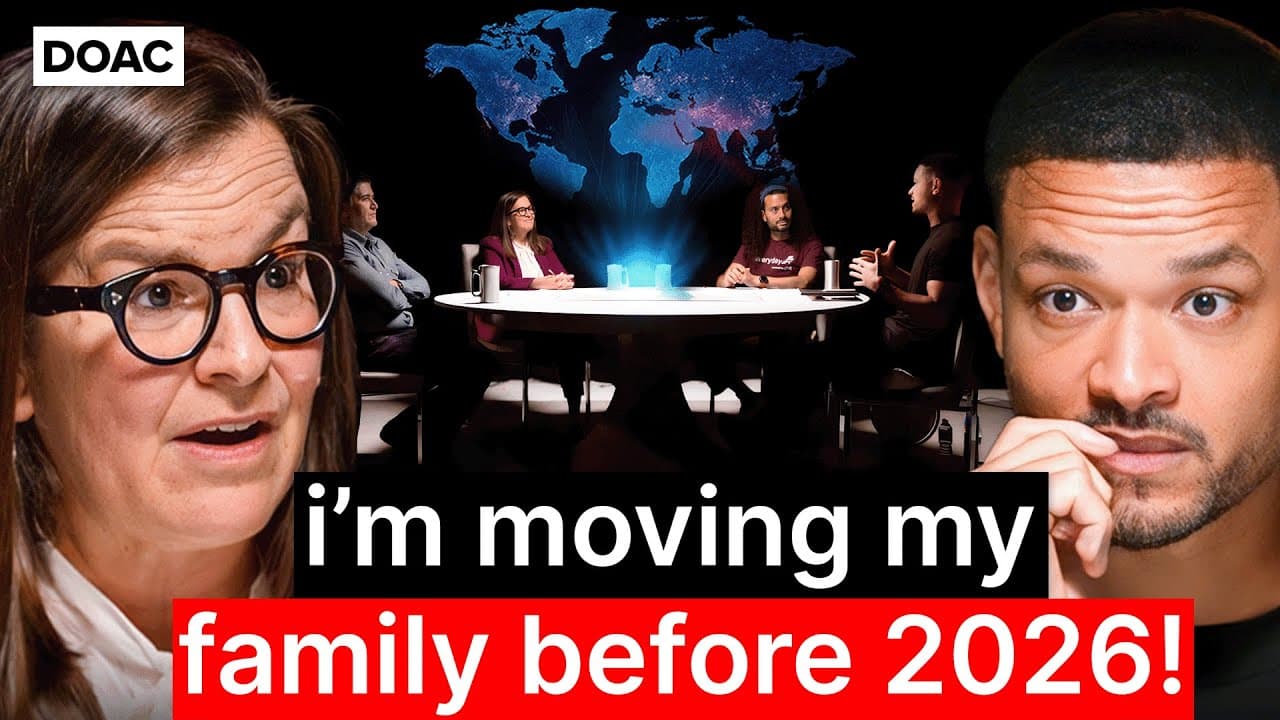
World War III may have already begun, characterized by proxy wars, digital warfare, and heightened global tensions. The risk of nuclear conflict is growing as political divisions and AI misinformation play destabilizing roles. Key regions of concern include US-Iran relations, Russia-Ukraine conflict, and China-Taiwan tensions, with each potentially serving as a catalyst for broader conflict.
Transcript
I believe that we are already at the early stages if not in World War II. It just doesn't look like the wars of the past. And people should understand what is at stake, which is we are one misunderstanding, one miscalculation away, or even one AI generated viral video from nuclear annihilation. Is there anything at all you're doing to prepare? I'm ... Read More
Key Insights
- World War III is believed to be in its early stages, marked by proxy wars and digital conflicts rather than traditional warfare.
- Nuclear weapons remain a critical threat, with the potential for miscommunication or AI-generated misinformation to trigger catastrophic events.
- Iran's nuclear ambitions and regional influence pose significant challenges to US and Israeli interests, complicating diplomatic efforts.
- China's strategic maneuvers in Taiwan and its economic warfare tactics suggest a long-term plan to shift global power dynamics.
- The rise of cyber warfare and social media as battlegrounds highlights the evolving nature of modern conflicts.
- Political polarization within the US and other Western nations is being exploited by adversaries to destabilize societies.
- Intelligence agencies face challenges in accurately predicting and preventing major attacks due to the complexity of modern warfare.
- The concept of deterrence remains central to nuclear policy, but the risk of non-state actors acquiring nuclear capabilities is a growing concern.
Install to Summarize YouTube Videos and Get Transcripts
Explore YouTube Video Summarizer or Get YouTube Transcript Extractor
Questions & Answers
Q: How is World War III different from past world wars?
World War III is characterized by proxy wars and digital conflicts rather than traditional warfare. Nations destabilize each other through cyber attacks, misinformation, and economic strategies instead of direct military confrontations. This shift reflects advancements in technology and changes in global power dynamics, making modern conflicts less visible but potentially more destructive.
Q: What role does nuclear deterrence play in modern conflicts?
Nuclear deterrence remains central to preventing the use of nuclear weapons, as it ensures mutual destruction if one nation launches an attack. However, the risk of non-state actors acquiring nuclear capabilities and the potential for miscommunication or AI-generated misinformation to trigger a nuclear response highlight the ongoing challenges in maintaining global security.
Q: Why is Iran's nuclear program a significant concern?
Iran's nuclear program is concerning because it threatens to shift the balance of power in the Middle East, potentially leading to a regional arms race. Iran's nuclear threshold status and its support for proxy groups like Hezbollah and Hamas complicate diplomatic efforts and increase the risk of conflict with Israel and the US, which are determined to prevent Iran from acquiring nuclear weapons.
Q: How does China plan to assert its influence over Taiwan?
China is using a combination of economic pressure, political influence, and military posturing to assert control over Taiwan. By meddling in Taiwanese elections and conducting military exercises, China aims to weaken Taiwan's resistance and create a narrative of inevitability regarding reunification. This strategy minimizes the need for direct military intervention while still achieving strategic goals.
Q: What is the significance of social media in modern warfare?
Social media serves as a powerful tool for information warfare, allowing nations and non-state actors to spread propaganda, misinformation, and influence public opinion. The rapid dissemination of content through platforms like TikTok and Twitter can destabilize societies, manipulate elections, and amplify divisions, making social media a critical battleground in modern conflicts.
Q: How do political divisions within the US impact global security?
Political polarization in the US weakens national unity and creates vulnerabilities that adversaries can exploit. Divisions between political parties can lead to inconsistent foreign policy, hinder effective decision-making, and embolden rivals like Russia and China to challenge US interests. This internal discord undermines the US's ability to lead and respond to global threats effectively.
Q: Why is the risk of nuclear conflict growing?
The risk of nuclear conflict is growing due to several factors, including the proliferation of nuclear technology, the potential for AI-generated misinformation to trigger false alarms, and the increasing number of nations with nuclear capabilities. Additionally, geopolitical tensions and the involvement of non-state actors in conflicts raise the likelihood of nuclear weapons being used in regional disputes.
Q: What challenges do intelligence agencies face in preventing attacks?
Intelligence agencies struggle with the complexity of modern warfare, where traditional methods of gathering information are less effective. The decentralized nature of digital communication, the rapid spread of misinformation, and the sophisticated tactics used by adversaries make it difficult to predict and prevent attacks. Agencies must adapt to these new challenges to maintain global security.
Summary & Key Takeaways
-
World War III may have already begun, characterized by proxy wars, digital warfare, and heightened global tensions. The risk of nuclear conflict is growing as political divisions and AI misinformation play destabilizing roles. Key regions of concern include US-Iran relations, Russia-Ukraine conflict, and China-Taiwan tensions, with each potentially serving as a catalyst for broader conflict.
-
The video discusses how nuclear weapons are more dangerous today due to their speed rather than size, and how Iran's influence in the Middle East is growing, posing challenges for the US. It highlights the significance of cyber attacks and social media as new battlegrounds of power, and China's long-term psychological and economic warfare strategy.
-
The discussion also covers the potential for AI-generated misinformation to trigger global catastrophes, the evolving nature of diplomacy in the digital age, and the importance of understanding the narratives that shape public perception and policy decisions in times of crisis.
Read in Other Languages (beta)
Share This Summary 📚
Summarize YouTube Videos and Get Video Transcripts with 1-Click
Try YouTube Summary with ChatGPT & Claude or YouTube Transcript Generator
Explore More Summaries from The Diary Of A CEO 📚



Summarize YouTube Videos and Get Video Transcripts with 1-Click
Try YouTube Summary with ChatGPT & Claude or YouTube Transcript Generator