How Did India's Space Program Rise to Success?
TL;DR
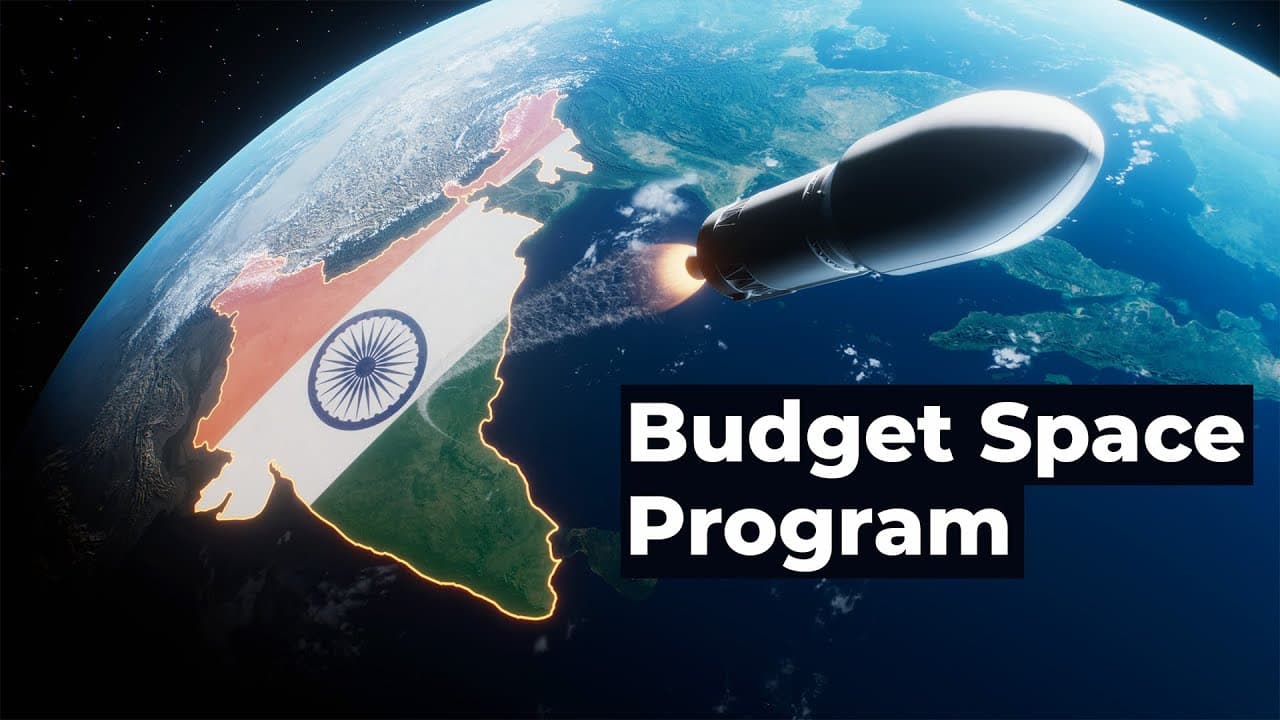
India's space program, ISRO, emerged from humble beginnings in the 1960s, using makeshift solutions and international collaboration to achieve significant milestones. Despite limited resources, ISRO developed indigenous satellite launch capabilities, discovered water on the moon, and reached Mars. Their journey exemplifies resourcefulness and educational empowerment, culminating in plans for human spaceflight and a space station.
Transcript
For decades, space exploration has seemed like a two-player game. The United States and the Soviet Union locked in a battle for dominance beyond Earth. But the landscape has shifted. New players have entered the race, quietly building momentum, challenging the old giants. One of the most unexpected and least talked about, India's space program. Whi... Read More
Key Insights
- ISRO's origins trace back to the 1960s, starting with limited infrastructure and resources.
- International cooperation was crucial, with support from NASA, France, and the Soviet Union.
- India's first sounding rocket launch was in 1963, marking the beginning of ISRO.
- ISRO's early focus was on developing indigenous satellite launch capabilities.
- The PSLV rocket became a cornerstone, achieving a 95% success rate in 61 launches.
- Chandrayaan-1 discovered water on the moon, while Mangalyaan reached Mars on a modest budget.
- ISRO's achievements are often underreported in Western media despite significant milestones.
- Future plans include human spaceflight and a permanent space station, showcasing ISRO's ambition.
Install to Summarize YouTube Videos and Get Transcripts
Explore YouTube Video Summarizer or Get YouTube Transcript Extractor
Questions & Answers
Q: How did ISRO start with limited resources?
ISRO began in the 1960s with limited infrastructure and resources. The initial launch base was a church, and rocket parts were transported by bicycle. International collaboration was crucial, with NASA, France, and the Soviet Union providing support. This resourcefulness and international cooperation laid the foundation for ISRO's success in developing indigenous satellite launch capabilities.
Q: What role did international collaboration play in ISRO's success?
International collaboration was pivotal in ISRO's success. NASA provided sounding rockets and training, France licensed rocket designs, and the Soviet Union supplied M100 sounding rockets. This cooperation allowed ISRO to gain valuable experience and build the capability to launch satellites from Indian soil, despite having limited resources and infrastructure initially.
Q: What were some early achievements of ISRO?
Some early achievements of ISRO include the launch of India's first sounding rocket in 1963 and the development of indigenous satellite launch capabilities. By 1980, ISRO successfully placed the Rohini 1 satellite into orbit, making India the sixth nation with independent launch capabilities. These milestones marked the beginning of ISRO's journey towards becoming a significant player in space exploration.
Q: How successful is the PSLV rocket?
The PSLV rocket is highly successful, with a 95% success rate in 61 launches. It has become a cornerstone of ISRO's achievements, launching 30 satellites for India's remote sensing program and serving as a ride-share launch system for 365 satellites from 36 countries. The PSLV's success has helped India build international diplomatic partnerships and expand its space exploration capabilities.
Q: What were the significant discoveries of Chandrayaan-1?
Chandrayaan-1, India's first mission to the moon, made significant discoveries, including the detection of water molecules in the lunar south pole. Launched in 2008, the mission carried tools to map the moon's surface and study its formation. The discovery of water was a major scientific breakthrough, helping to kick off a new global race to the lunar south pole.
Q: How did ISRO reach Mars with Mangalyaan?
ISRO reached Mars with Mangalyaan, India's first interplanetary mission, launched in 2013. The spacecraft carried instruments to study Mars' surface, atmosphere, and climate. Due to the limited power of the PSLV, Mangalyaan took a longer route, orbiting Earth for several weeks before escaping its gravity. Despite budget constraints, the mission was successful, providing critical insights into Martian conditions.
Q: What are ISRO's future plans?
ISRO's future plans include launching India's first astronauts on Indian rockets by 2026 and developing a permanently crewed space station. These ambitious goals demonstrate ISRO's commitment to advancing its space exploration capabilities and continuing its legacy of resourcefulness and educational empowerment. The agency's achievements have laid a strong foundation for these future endeavors.
Q: How has ISRO's journey exemplified educational empowerment?
ISRO's journey exemplifies educational empowerment through its resourcefulness and determination. Starting with limited resources, ISRO leveraged international collaboration and educational initiatives, such as the Satellite Instructional Television Experiment, to improve the lives of Indians. This focus on education and access to knowledge has been a driving force behind ISRO's success and continues to inspire its future ambitions.
Summary & Key Takeaways
-
India's space program, ISRO, started with limited resources and infrastructure in the 1960s. Through international collaboration and resourcefulness, they developed indigenous satellite launch capabilities and achieved significant milestones, such as discovering water on the moon and reaching Mars. ISRO's journey exemplifies educational empowerment and determination, culminating in plans for human spaceflight and a space station.
-
ISRO began with makeshift solutions, using a church as a launch base and transporting rocket parts by bicycle. Collaborating with NASA, France, and the Soviet Union, they built the capability to launch satellites from Indian soil. The PSLV rocket became a cornerstone, achieving a 95% success rate and launching satellites for 36 countries.
-
ISRO's Chandrayaan-1 mission discovered water on the moon, while Mangalyaan reached Mars on a budget of $74 million. Their achievements often go unnoticed in Western media, yet ISRO continues to push boundaries with plans for human spaceflight and a permanent space station, showcasing their ambition and resourcefulness.
Read in Other Languages (beta)
Share This Summary 📚
Summarize YouTube Videos and Get Video Transcripts with 1-Click
Try YouTube Summary with ChatGPT & Claude or YouTube Transcript Generator
Explore More Summaries from Real Engineering 📚




Summarize YouTube Videos and Get Video Transcripts with 1-Click
Try YouTube Summary with ChatGPT & Claude or YouTube Transcript Generator