How Did the 1921 Tulsa Race Massacre Begin?
TL;DR
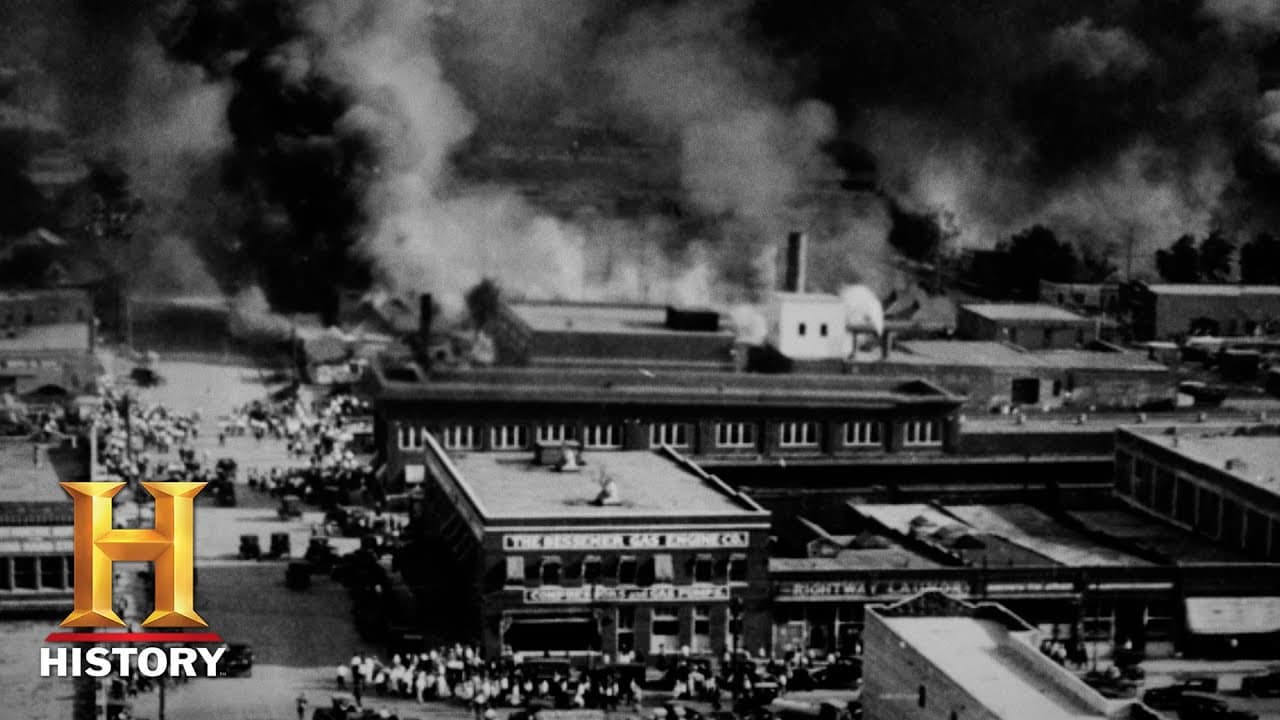
The Tulsa Race Massacre began after Dick Rowland, a young Black shoeshiner, had an encounter with Sarah Page, a white elevator operator, on Memorial Day 1921. A Tulsa Tribune story falsely framed it as an attack. A white lynch mob then gathered at the courthouse, and armed Black World War I veterans came to defend Rowland. A struggle over a gun set off the shooting.
Transcript
the story of the deadliest race massacre in american history begins with two individuals dick rowland and sarah page on memorial day may 30th 1921 a young african-american male is walking in downtown tulsa on main street his name is dick rowland he dropped out of booker t washington high school where he's a football player to take a job shining sho... Read More
Key Insights
- The Tulsa Race Massacre began with an encounter between two people, Dick Rowland and Sarah Page, in a downtown Tulsa elevator on Memorial Day, May 30, 1921. It became the deadliest race massacre in American history.
- Segregation put Dick Rowland in the elevator. His white-patronized shoeshine parlor had no toilets for African Americans, so Black employees walked to the Drexel Building and rode to a fourth-floor colored bathroom.
- What actually happened in the elevator is unknown. Historians suggest the elevator may have jerked, or Rowland may have bumped into Page or stepped on her shoe. She screamed and he ran.
- The Tulsa Tribune turned the incident into a crisis. Its story, 'Nab Negro for Attacking Girl in an Elevator,' was a false narrative of attempted rape that used incendiary buzzwords and menacing images.
- The lynch mob formed fast. The story came out around three o'clock, and by four o'clock white men were gathering at the courthouse. The crowd grew from 50 to about 500 and demanded Rowland be handed over.
- A.J. Smitherman, editor of the Tulsa Star, was a civil rights advocate who read the coverage as a call for lynching. He said that if a member of his community was mobbed, the streets would be bathed in blood.
- Armed Black World War I veterans, many in army uniform, went to the courthouse and offered Sheriff McAuliffe help defending the prisoner. Seeing them electrified the white mob, whose members went home and came back with guns and more people.
- The violence started with a confrontation over a gun. A white man asked a Black man why he had a weapon and tried to take it. A shot went off, and in the sheriff's words, all hell broke loose.
Install to Summarize YouTube Videos and Get Transcripts
Explore YouTube Video Summarizer or Get YouTube Transcript Extractor
Questions & Answers
Q: How did the Tulsa Race Massacre start?
It started with an elevator encounter in the Drexel Building on May 30, 1921, between Dick Rowland, a young Black shoeshiner, and Sarah Page, a white elevator operator. She screamed and he ran. After Rowland was arrested, the Tulsa Tribune ran a false story about an attempted assault. A white lynch mob gathered at the courthouse, armed Black men came to defend Rowland, and a struggle over a gun set off the shooting.
Q: Who was Dick Rowland?
Dick Rowland was a young African American man who dropped out of Booker T. Washington High School in Tulsa, where he played football, to shine shoes downtown. The white-patronized shoeshine parlor where he worked had no toilets for Black employees, so he rode the Drexel Building elevator to a colored bathroom on the fourth floor. His encounter with elevator operator Sarah Page led to his arrest and to the events that set off the massacre.
Q: What happened between Dick Rowland and Sarah Page in the elevator?
No one knows exactly. Sarah Page was operating the elevator by hand, and something made it jerk or lurch. Rowland may have bumped into her or stepped on her shoe. She was not expecting it and screamed, and a frightened Rowland was seen running out of the Drexel Building. A clerk from a store called Renberg's comforted Page, heard her describe an assault, and called the police.
Q: What role did the Tulsa Tribune play in the massacre?
The Tulsa Tribune, the city's daily afternoon paper, ran a story headlined 'Nab Negro for Attacking Girl in an Elevator.' It was a false narrative of attempted rape in broad daylight, using incendiary buzzwords and menacing images of a Black man assaulting a white woman. The story came out around three o'clock, and by four o'clock white men were gathering at the courthouse. Without it, the incident might have gone no further.
Q: How large did the white mob at the Tulsa County Courthouse grow?
The crowd started with a small group of white men and grew over several hours: 50, then 100, 200, 300, 400 and 500 people, all demanding the sheriff turn over Dick Rowland so they could lynch him. After armed Black veterans appeared, members went home for guns and brought others back. The mob reached 600 to 800 armed people and eventually nearly 2,000 or more.
Q: Who was A.J. Smitherman?
A.J. Smitherman was the editor of the Tulsa Star and a civil rights advocate. His newspaper gave him a voice, and he also put himself at risk by confronting threats of racial violence in person. When news of the possible lynching spread, he met with O.W. Gurley and J.B. Stradford at the Tulsa Star's offices. He declared that if a member of their community was mobbed, the streets would be bathed in blood, and that he would go alone if he had to.
Q: Why did Black World War I veterans go to the courthouse?
After a debate at the Tulsa Star, the leaders chose to go downtown armed to stop the lynching. Around nine o'clock, a group of Black World War I veterans with pistols, rifles and shotguns, many in army uniform, went to the courthouse steps and offered Sheriff McAuliffe help defending the prisoner. They were told Rowland was safe and left. The sight of armed Black men electrified the white mob, which then armed itself.
Q: What was the first shot of the Tulsa Race Massacre?
After a larger group of Black men came back downtown, a white man in a crowd of nearly 2,000 asked a Black man why he was holding a gun. The Black man replied, 'What's it to you?' The white man tried to take the gun, they struggled, and a shot went off, then more shots. In the sheriff's words, all hell broke loose, and the worst single incident of racial violence in American history began.
Summary & Key Takeaways
-
On Memorial Day, May 30, 1921, Dick Rowland, a Black shoeshiner who had dropped out of Booker T. Washington High School, rode the Drexel Building elevator to reach a colored bathroom. Something happened with white operator Sarah Page, she screamed, and Rowland was seen running from the building.
-
Rowland was arrested the next day. The Tulsa Tribune then published a story headlined 'Nab Negro for Attacking Girl in an Elevator,' a false narrative suggesting attempted rape. Within an hour, white men began gathering at the courthouse, and the crowd grew into the hundreds, demanding that Rowland be handed over for lynching.
-
Black leaders including A.J. Smitherman, O.W. Gurley and J.B. Stradford met at the Tulsa Star and chose to go downtown armed. Black World War I veterans offered the sheriff help, which electrified the white mob. When a crowd of nearly 2,000 confronted a larger returning group, a struggle over a gun set off gunfire and the massacre began.
Read in Other Languages (beta)
Share This Summary 📚
Summarize YouTube Videos and Get Video Transcripts with 1-Click
Try YouTube Summary with ChatGPT & Claude or YouTube Transcript Generator
Explore More Summaries from HISTORY 📚


Summarize YouTube Videos and Get Video Transcripts with 1-Click
Try YouTube Summary with ChatGPT & Claude or YouTube Transcript Generator