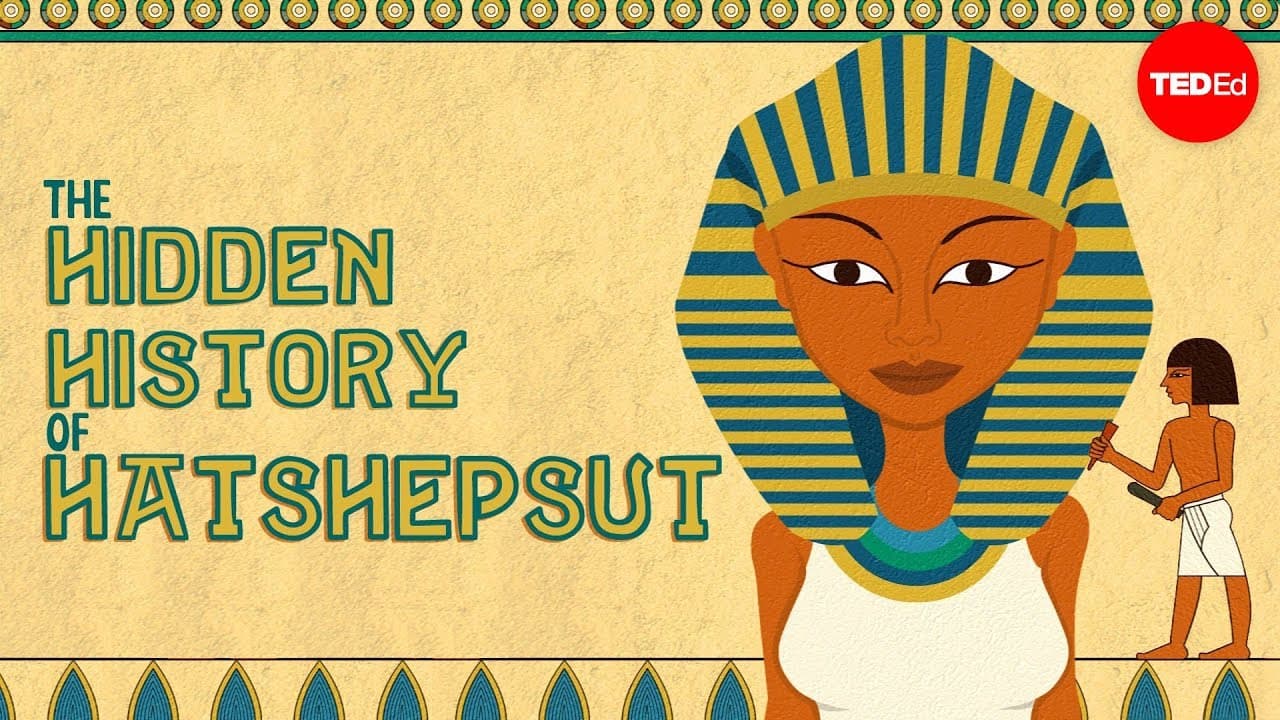
Who Was Pharaoh Hatshepsut and Why Was She Erased?
TL;DR
Pharaoh Hatshepsut, a female ruler of ancient Egypt, was the target of damnatio memoriae, an attempt to erase her name and legacy due to her challenge to traditional male power. Although not a legitimate heir, she ruled successfully alongside her stepson Thutmose III, known for her architectural achievements and economic prosperity. Her erasure reflects deep-rooted gender norms and the societal need for stability in ancient Egyptian beliefs.
Transcript
Three and a half thousand years ago in Egypt, a noble pharaoh was the victim of a violent attack. But the attack was not physical. This royal had been dead for 20 years. The attack was historical, an act of damnatio memoriae, the damnation of memory. Somebody smashed the pharaoh's statues, took a chisel and attempted to erase the pharaoh's name a... Read More
Key Insights
- ⚧️ Damnatio memoriae was used against Hatshepsut to erase her from history, reflecting the significance of gender and traditional beliefs in ancient Egyptian society.
- 🕵️♀️ Hatshepsut's rule as a female pharaoh challenged the norms, but she achieved economic, architectural, religious, and military success during her reign.
- 🥶 Thutmose III, Hatshepsut's stepson and co-ruler, is the primary suspect in erasing her images, but the exact motivation remains unclear.
Install to Summarize YouTube Videos and Get Transcripts
Explore YouTube Video Summarizer or Get YouTube Transcript Extractor
Questions & Answers
Q: Why was Hatshepsut's memory attacked?
The erasure of Hatshepsut's memory was likely motivated by her gender and the disturbance it caused to traditional beliefs of order and justice in ancient Egypt.
Q: Who was suspected of erasing Hatshepsut's images?
The most popular suspect is Thutmose III, Hatshepsut's stepson and co-ruler. However, it is also possible that someone else or multiple individuals were involved.
Q: What were some of Hatshepsut's significant achievements?
Hatshepsut was known for her architectural marvels, successful trade missions, strong religious connections, and military accomplishments during her reign as pharaoh.
Q: How do we know about Hatshepsut's story if her memory was attempted to be erased?
Evidence of Hatshepsut's accomplishments survived through the writings and depictions found in her mortuary temple and the red chapel she built for Amun.
Summary & Key Takeaways
-
Hatshepsut, a female pharaoh in ancient Egypt, faced opposition and attempts to erase her from history due to the traditional beliefs and challenges to the order of rule by men.
-
Despite not being the legitimate heir, Hatshepsut ruled as a regent and co-monarch alongside her stepson Thutmose III.
-
Hatshepsut's rule was successful, marked by impressive architectural endeavors, economic growth, religious connections, and military accomplishments.
Read in Other Languages (beta)
Share This Summary 📚
Summarize YouTube Videos and Get Video Transcripts with 1-Click
Try YouTube Summary with ChatGPT & Claude or YouTube Transcript Generator
Explore More Summaries from TED-Ed 📚





Summarize YouTube Videos and Get Video Transcripts with 1-Click
Try YouTube Summary with ChatGPT & Claude or YouTube Transcript Generator