How Can You Negotiate to Get What You Want?
TL;DR
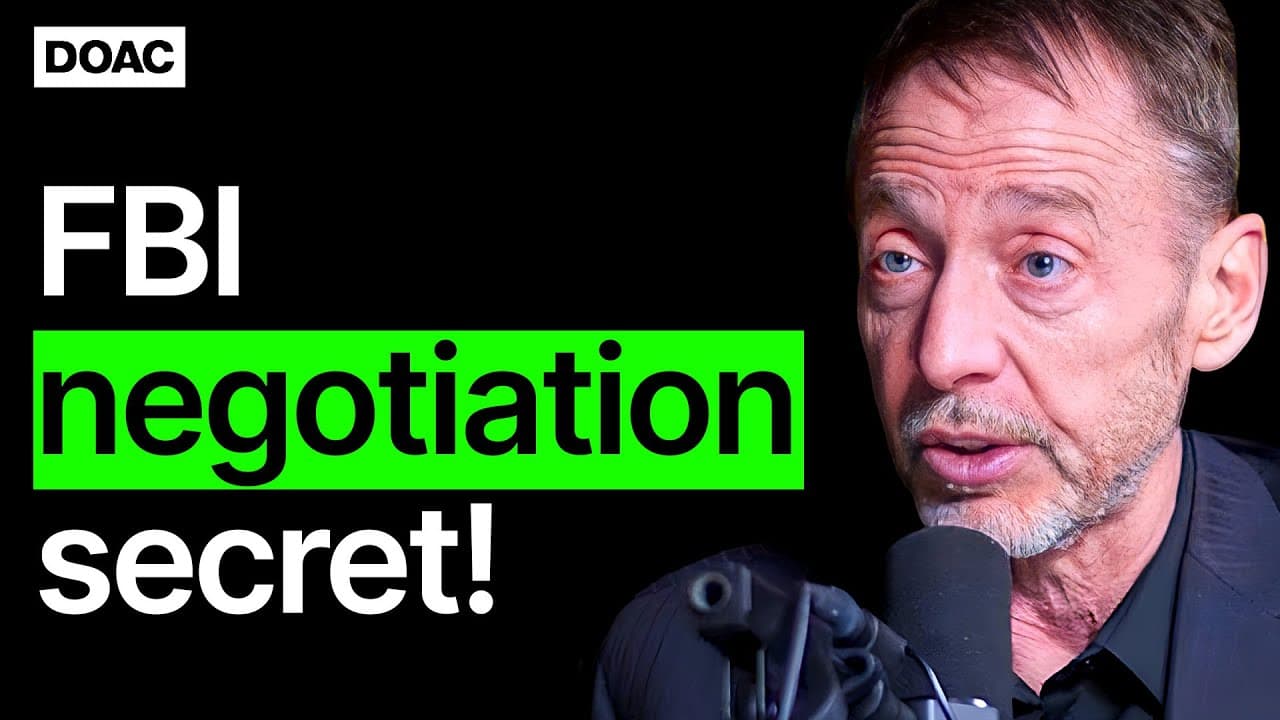
To negotiate effectively, prioritize active listening to understand the other party's perspective and build trust. Chris Voss, a former FBI hostage negotiator, emphasizes that listening accelerates deal-making and enhances relationships, whether in business or personal scenarios. Skills like mirroring and labeling emotions can also improve communication and foster collaboration.
Transcript
two of the three remaining hostages were killed and they were shot by friendly fire that was the first time that i'd worked anything where people had gotten killed former fbi kidnapping negotiator best-selling co-author of the founder and principal of the black swan group i'm chris voss how important is it generally in negotiations to listen whethe... Read More
Key Insights
- 🎯 Active listening is critical in negotiations, whether in business or law enforcement. Taking the time to truly hear someone out builds trust and leads to faster deal-making in the future.
- 🗡️ The cost of a demanding job like being an FBI hostage negotiator is the potential for becoming distant in personal relationships. It can be difficult to understand others' perspectives when immersed in high-stress work.
- 🪦 Traumatic events can lead to post-traumatic stress growth, where individuals use their experiences as an opportunity to become better than before. The goal is to prevent similar events from happening again and strive for personal growth.
- 💼 Chris Voss, former FBI negotiator and author, shares his insights and experiences in various aspects of negotiations and the impact they have on one's personal and professional life.
- 🧰 A strong work ethic and problem-solving mindset were instilled in Chris Voss from an early age. Working hard, being honest, and figuring things out became key principles for him.
- 👥 The ability to adapt and learn from a father who never assigned tasks he wouldn't do himself taught Chris Voss valuable lessons that have carried over into his negotiation career. ⏰ Time spent in the SWAT team and hostage rescue training with the FBI shaped Chris Voss' decision-making mentality. Crisis response and being a decision-oriented individual propelled him forward.
- 💔 The loss of hostages and colleagues during his career as an FBI negotiator affected Chris Voss deeply. These experiences have pushed him to strive for growth and improvement in his negotiating techniques.
- 🔑 Key negotiation skills, like mirroring and labeling, are effective in various areas of life, including romantic relationships. These skills enhance understanding, build trust, and foster effective communication.
- 🎙️ More videos with Chris Voss:
Install to Summarize YouTube Videos and Get Transcripts
Explore YouTube Video Summarizer or Get YouTube Transcript Extractor
Questions & Answers
Q: How does active listening contribute to successful negotiations?
Active listening is essential in negotiations because it allows you to truly understand the other person's perspective and needs. By listening attentively, you can uncover valuable information and build rapport, which increases the chances of reaching a mutually beneficial agreement. Effective listening shows respect and empathy, enhancing trust and eliminating misunderstandings.
Q: How can traumatic events lead to personal growth and resilience?
Traumatic events can lead to personal growth and resilience if we choose to learn from them and strive to be better. Post-traumatic stress growth is possible, where we take the experience as a catalyst for positive change and commit to preventing such events from happening again. By channeling our emotions into growth and improvement, we can develop resilience and transform our lives and mindset.
Q: How does mirroring and labeling help in negotiations?
Mirroring and labeling are powerful techniques in negotiations. Mirroring involves subtly imitating the other person's body language and speech patterns, which creates a sense of familiarity and trust. Labeling, on the other hand, involves summarizing or acknowledging the other person's emotions or concerns. It helps validate their feelings and builds rapport. Both techniques facilitate effective communication and enhance the negotiation process.
Q: Can listening skills be applied outside of negotiations, such as in personal relationships?
Absolutely, listening skills are valuable in all types of relationships, including personal ones. Actively listening to our loved ones strengthens the bond and understanding between individuals. By genuinely hearing someone out, we show empathy and respect, fostering open communication and deeper connections. Just as in negotiations, active listening in personal relationships can lead to better outcomes and harmonious interactions.
Summary & Key Takeaways
-
Chris Voss emphasizes the critical role of listening in negotiations, whether in business or law enforcement.
-
He shares a personal story of losing hostages during a negotiation and the importance of growth and learning from traumatic events.
-
Voss also discusses his upbringing and early years, as well as his experience as a member of the SWAT team and FBI hostage rescue team.
Read in Other Languages (beta)
Share This Summary 📚
Summarize YouTube Videos and Get Video Transcripts with 1-Click
Try YouTube Summary with ChatGPT & Claude or YouTube Transcript Generator
Explore More Summaries from The Diary Of A CEO 📚



Summarize YouTube Videos and Get Video Transcripts with 1-Click
Try YouTube Summary with ChatGPT & Claude or YouTube Transcript Generator