What Are Glass Frogs and Why Are They Transparent?
TL;DR
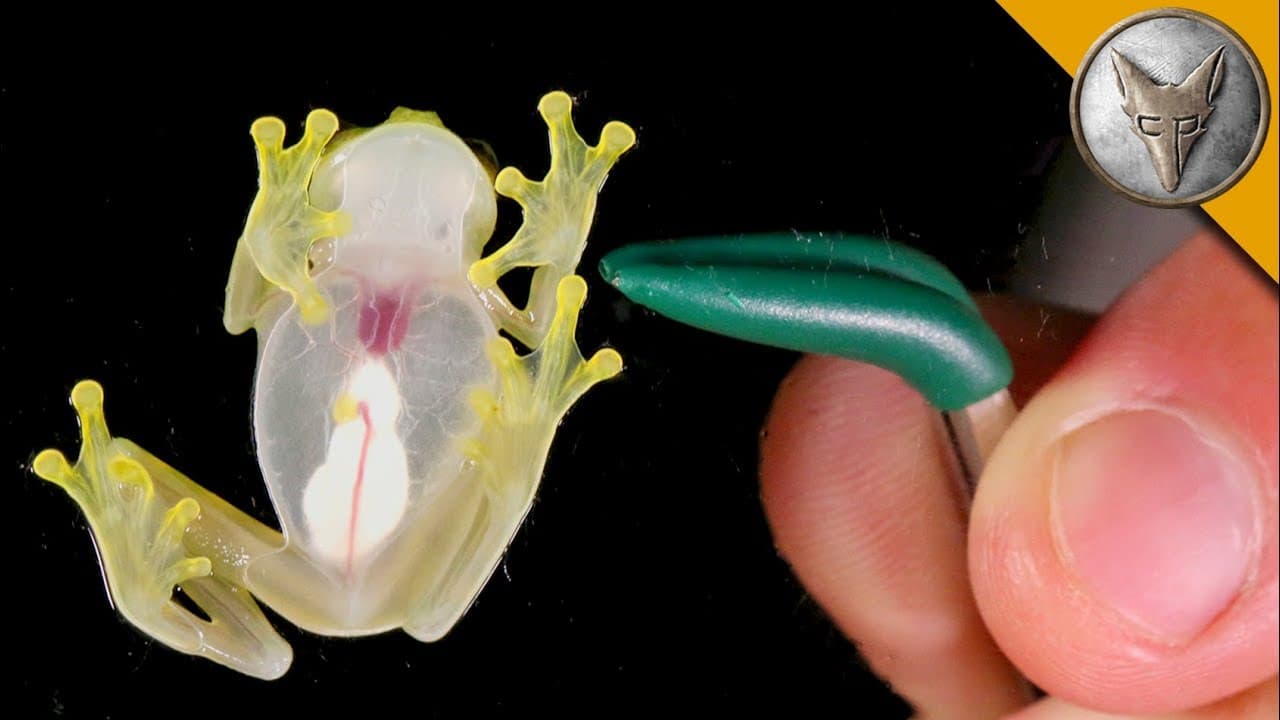
Glass frogs are unique amphibians known for their semi-transparent skin, which allows visibility of their internal organs. In this exploration, two species, the dwarf glass frog and the green stripe glass frog, were studied to showcase their transparent ventral sides. Costa Rica is home to many glass frog species, and these fascinating creatures lay their eggs on low hanging leaves near water, with males caring for the eggs until they hatch.
Transcript
(hacking grass) - Oh, I heard it. - [Mark] Oh. - [Brian] Hurry, he's right here. - [Coyote] Get him in the bag before he jumps again. Oh, oh, oh, he's on my hand. - [Mark] I've been waiting to get this shot for years. - (blows air) Look at that. You can see right through the underside of that amphibian. (fast-paced drum music) (roaring) (water spla... Read More
Key Insights
- 👻 Glass frogs have a unique semi-translucent skin, allowing visibility of their internal organs.
- 😎 The team captured two species of glass frogs - dwarf glass frog and green stripe glass frog - to study their transparent ventral sides.
- 🐸 Brian Kubicki, a renowned frog expert, assisted the team in locating and identifying the frogs.
- 💐 Glass frogs lay their eggs on low hanging leaves near flowing water, and the males take care of the eggs until they hatch.
- 🇨🇷 Costa Rica is home to numerous species of glass frogs, making it an ideal destination for amphibian enthusiasts.
- 👓 The glass frog's skin is moist and shiny, and their eyes rest on the front of their skulls.
- 🐸 Glass frogs have minimal webbing between their toes and are proficient climbers.
Install to Summarize YouTube Videos and Get Transcripts
Explore YouTube Video Summarizer or Get YouTube Transcript Extractor
Questions & Answers
Q: How do glass frogs differ from other frog species?
Glass frogs are unique because of their semi-translucent skin, allowing visibility of their internal organs. They also have sticky toes for climbing and jumping.
Q: Why are glass frogs associated with streams and rivers?
Glass frogs are typically found near flowing water because they lay their egg masses on low hanging leaves near it. When the eggs hatch, the tadpoles drop into the water.
Q: How did the team study the transparent ventral side of the glass frogs?
The team placed the frogs on specially prepared glass surfaces, allowing for an unobstructed view of their undersides. They used a flashlight to illuminate the frogs from behind, revealing their delicate internal structures.
Q: How rare are glass frogs in Costa Rica?
Costa Rica is home to 14 described species of glass frogs. The green stripe glass frog, in particular, is incredibly rare and was only rediscovered in 2004 after being missing for several decades.
Summary & Key Takeaways
-
The team, led by frog expert Brian Kubicki, explores the rainforests of Central and South America to find glass frogs.
-
They search for glass frogs along streams and rivers and listen for their calls before spotting them with flashlights.
-
The team successfully captures and studies the dwarf glass frog and the green stripe glass frog, both known for their transparent ventral sides.
Read in Other Languages (beta)
Share This Summary 📚
Summarize YouTube Videos and Get Video Transcripts with 1-Click
Try YouTube Summary with ChatGPT & Claude or YouTube Transcript Generator
Explore More Summaries from Brave Wilderness 📚




Summarize YouTube Videos and Get Video Transcripts with 1-Click
Try YouTube Summary with ChatGPT & Claude or YouTube Transcript Generator